
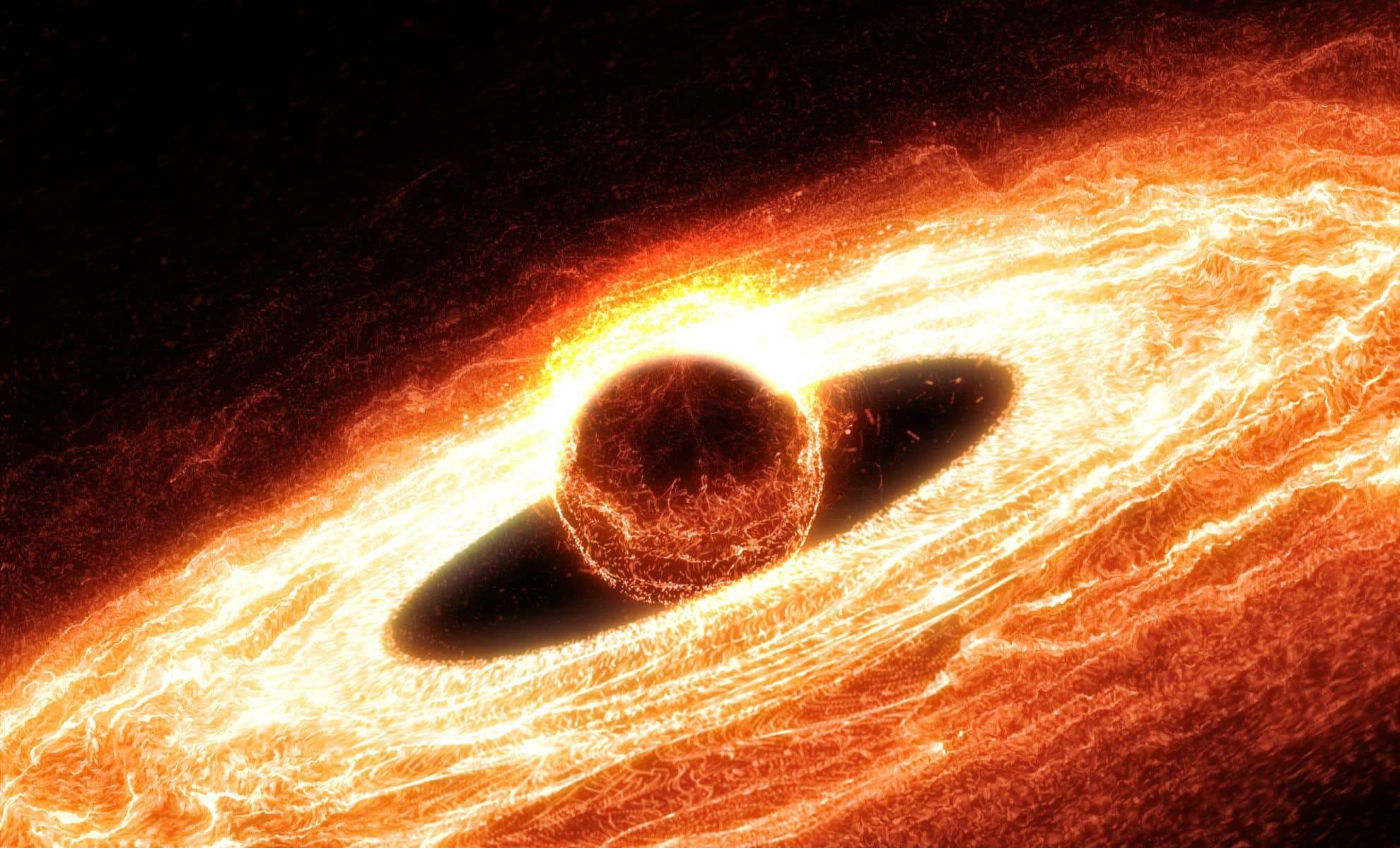
A recent cosmic observation has surprised astronomers by revealing an unusual event involving a star's interaction with a supermassive black hole. For the first time, researchers from Tel Aviv University witnessed a luminous flare caused by a star partially torn apart by a black hole, occurring twice, separated by two years. This discovery raises new questions about the mechanisms behind tidal disruption events and their aftermath. The detailed results appear in The Astrophysical Journal Letters.
Unexpected Repetition of Flares Over Two Years
Deep within the core of massive galaxies lies a supermassive black hole, whose immense gravitational pull can devastate any star stray enough to approach. These black holes, ranging from millions to billions of solar masses, can rip stars apart through what is known as a tidal disruption event. When this happens, the star’s debris is partly absorbed by the black hole, while the expelled matter emits a brilliant burst detectable across enormous distances.
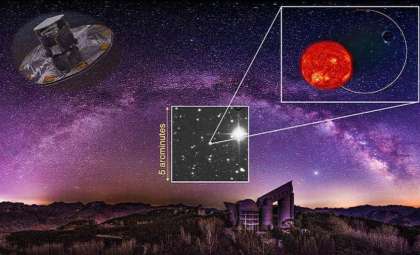
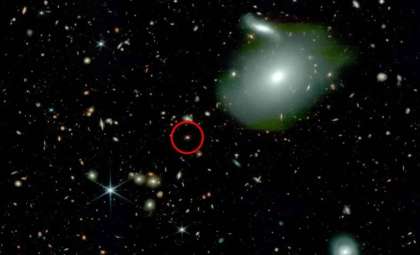
The 2022 observation of the flare AT 2022dbl initially fitted the typical profile of such an event. However, a subsequent discovery saw a remarkably similar flare detected from the same black hole just two years later. This unprecedented finding indicates that the star survived its first encounter, returning to produce a second flare closely mirroring the first.

Reevaluating Tidal Disruption Dynamics
This phenomenon challenges the long-standing assumption that tidal disruption events obliterate stars entirely. Until now, it was believed that stars were fully consumed during these close black hole encounters. The detection of a repeated flare strongly suggests that the initial event only partially disrupted the star, allowing it to persist and interact again later.
“The key question becomes whether a third flare will appear around early 2026,” explains Prof. Iair Arcavi, lead author of the research. “Should a third flare occur, it would imply that the second was also a partial disruption. This might mean that all previously studied flares, which have been interpreted as total stellar destruction, could actually be partial disruptions.”
This insight compels a fresh examination of the processes behind these explosive flares. If the star’s repeated flare behavior is typical, the conventional view of tidal disruptions may require significant revision.
New Insights into the Influence of Supermassive Black Holes
Under the leadership of Dr. Lydia Makrygianni at Lancaster University, with guidance from Prof. Arcavi, the team suggests this discovery reshapes our understanding of supermassive black holes’ impact on galactic environments. These cosmic giants, central to most large galaxies, may engage in more complex interactions with stars than previously thought, involving cycles of partial destruction and survival.
“The possibility that the second flare was a complete disruption cannot be dismissed,” says Prof. Arcavi. “Our hypothesis aligns with predictions made by Prof. Tsvi Piran’s research group at Hebrew University, proposing that partial and total disruptions produce similar observational signals.” Confirming this would transform how astronomers interpret tidal disruption events and the nature of black holes. “Evidently,” Arcavi adds, “our understanding of these luminous flares and the monstrous black holes that generate them must evolve.”
- Categories:
- News








0 comments
Sign in to Comment