

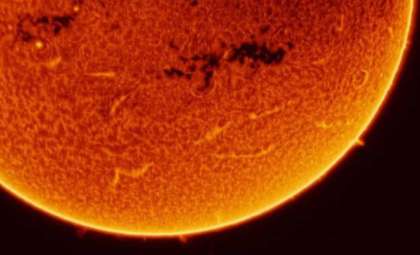
Aurora enthusiasts should prepare for a potential celestial spectacle as Earth braces for a pair of solar storms. The NOAA Space Weather Prediction Center (SWPC) reports that two coronal mass ejections (CMEs), triggered by an unusual double eruption of solar filaments on April 12 and 13, are on a collision course with our planet. These solar blasts are anticipated to reach Earth on April 16, prompting SWPC to issue a geomagnetic storm watch.
Geomagnetic Storm Alert Issued
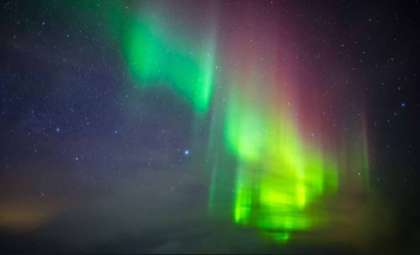
The incoming CMEs are expected to produce G2-class geomagnetic storm conditions—moderate in intensity but capable of accelerating auroral activity. This means the northern lights could be visible not only across Canadian skies but also in several northern U.S. states such as New York and Idaho. Space weather expert Tamitha Skov notes that while these storms might travel slowly, their dense plasma could result in significant geomagnetic effects.
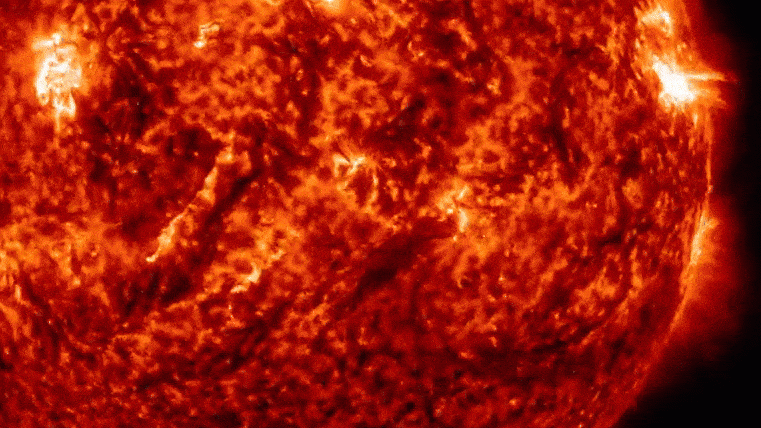
“These solar storms will likely travel slowly, but they are dense and could pack a decent punch!” Skov explained. She also mentioned, “Still waiting for coronagraph data to inform model runs, but impact could be late April 15 or early April 16.”

Anticipated Views and Timing
Observers might catch glimpses of the northern lights as far south as New York, where auroras have been spotted over landmarks like Bear Mountain. However, predicting the exact timing of the CME impact is challenging due to the complex nature of space weather. Geomagnetic disturbances are forecast to intensify late on April 15 or early on April 16, with the most strong activity expected during daylight hours.
The brightness and extent of auroral displays will largely depend on how the incoming solar particles interact with Earth's magnetic field. If the solar storm's magnetic orientation aligns favorably with Earth's magnetosphere, dazzling light shows could light up the night sky. Conversely, if Earth's magnetic shield deflects the plasma, those hoping to witness the aurora might only see a faint glow.
- Categories:
- News










0 comments
Sign in to Comment