
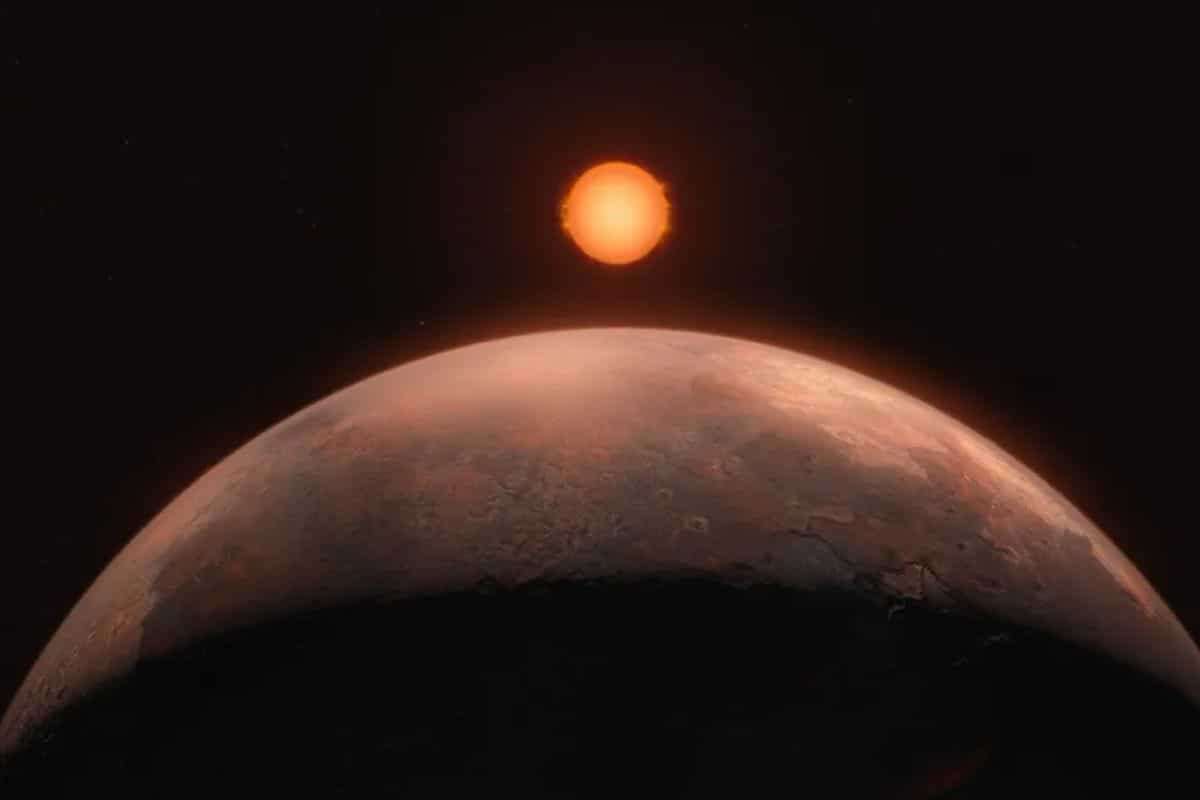
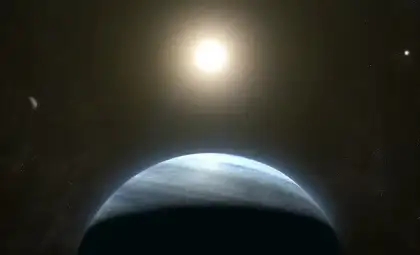
Scientists have uncovered four small exoplanets circling Barnard’s Star, a nearby star located merely six light-years from Earth. This breakthrough, featured in The Astrophysical Journal Letters, represents a major advance in identifying rocky planets outside our solar neighborhood.
These newly found planets rank among the tiniest discovered to date using radial velocity measurements, signaling a promising future where spotting Earth-sized exoplanets around nearby stars becomes increasingly achievable.
Barnard’s Star: An Iconic Stellar Neighbor
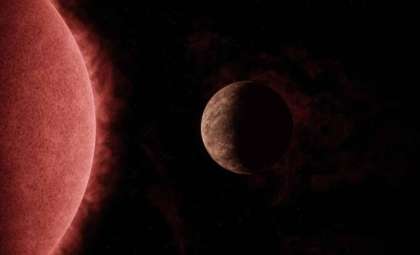
Known since 1916 thanks to E. E. Barnard’s observations, Barnard’s Star is celebrated for its swift apparent motion across the sky. It belongs to the class of M-dwarfs, red dwarf stars distinguished by their longevity and a tendency to harbor multiple planets.
Though earlier attempts to detect planets orbiting this star were inconclusive, modern technological progress has now verified the presence of four minuscule planetary bodies in its system.

In contrast to Proxima Centauri, Earth’s closest stellar system known to have at least one habitable zone exoplanet, Barnard’s Star is a solitary star without stellar companions.
Detecting Planets Using MAROON-X and ESPRESSO Instruments
Rather than capturing images of the planets, researchers employed the radial velocity method, which measures tiny stellar movements—"wobbles"—caused by the gravitational tug of orbiting planets.
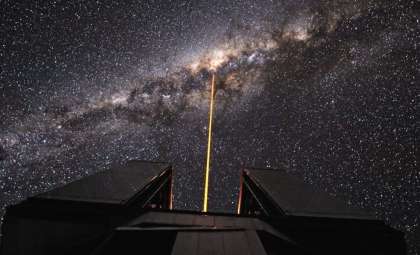
Key data came from MAROON-X, a cutting-edge spectrograph mounted on Hawaii’s Gemini Telescope capable of detecting subtle changes in the star’s light spectrum.
The first three planets were discovered through MAROON-X observations, with the fourth confirmed using follow-up measurements from the ESPRESSO instrument situated in Chile.
“Our teams worked independently, observing at different times from afar—Chile and Hawaii,” noted Ritvik Basant, lead author and University of Chicago Ph.D. candidate.
Characteristics of the Newly Identified Planets
These four small planets each possess roughly 20–30% of Earth’s mass, making them some of the smallest confirmed via radial velocity to date. Their orbits are extremely tight, taking only days to circle Barnard’s Star completely.
Because they don’t block their star’s light from our perspective, determining their composition remains challenging. Nonetheless, scientists strongly believe these planets are rocky, akin to Mercury, Venus, Earth, and Mars.
The closeness to Barnard’s Star likely creates surface conditions too hot to support liquid water or life as currently understood. Still, this achievement marks an essential leap toward identifying small exoplanets nearby.
The Significance of This Finding
This discovery is pivotal for exoplanet exploration. The capability to detect such diminutive worlds highlights the potential for upcoming telescopes to uncover even more Earth-like planets around similar stars.
“Analyzing this data late last year was intense and consuming,” said Jacob Bean, University of Chicago professor and study co-author. “Scientific progress often feels incremental, but moments like these reveal the bigger picture.”
- Categories:
- Space





0 comments
Sign in to Comment