
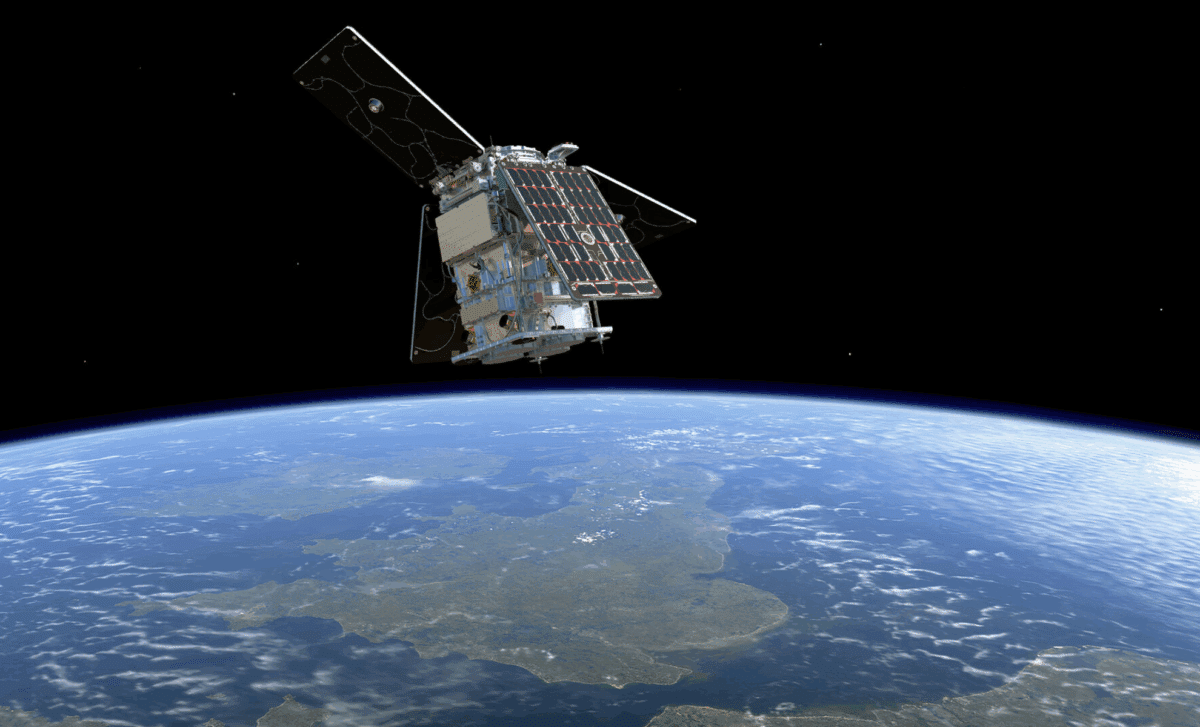
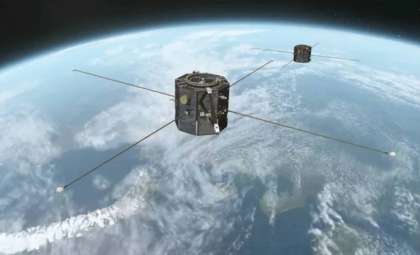
ESA’s HydroGNSS Scout satellites are on the verge of launch, marking a pivotal advance in the European Space Agency’s pursuit of enhanced Earth observation through compact, innovative satellite missions. These twin microsatellites are engineered to track essential climate indicators tied to the planet’s water systems, granting fresh perspectives on critical environmental factors like soil moisture, flood forecasts, and permafrost behavior.
ESA’s HydroGNSS Scout Satellites: Preparing to Explore Water Dynamics
ESA's inaugural Scout mission, HydroGNSS, is set for deployment. Following extensive finalization at the launch facility in California, the pair of identical small satellites will be aboard a SpaceX Falcon 9 vehicle as they commence their mission. This project signifies a significant technological stride, employing GNSS (Global Navigation Satellite System) reflectometry to capture vital climatic data focused on aquatic elements.
Jean-Pascal Lejault, HydroGNSS Project Manager at ESA, highlighted the remarkable efforts behind this mission: “Achieving this milestone is a significant accomplishment, and I am deeply grateful to everyone involved. Creating ESA’s first Scout project within stringent time and budget constraints demanded immense dedication and creativity. Special thanks to Surrey Satellite Technology Ltd, our prime contractor in the UK, and the ESA project team—without their brilliance, HydroGNSS wouldn’t have succeeded.”

The HydroGNSS mission represents a cornerstone in ESA’s Earth observation initiatives, balancing cost-effectiveness with the delivery of high-impact scientific data. Operating 180 degrees apart in orbit, the satellites aim to optimize coverage, offering a comprehensive global perspective on vital climate variables. This mission is a key component of ESA’s FutureEO program, which champions nimble and affordable strategies for monitoring Earth.
Understanding GNSS Reflectometry: How HydroGNSS Probes the Water Cycle
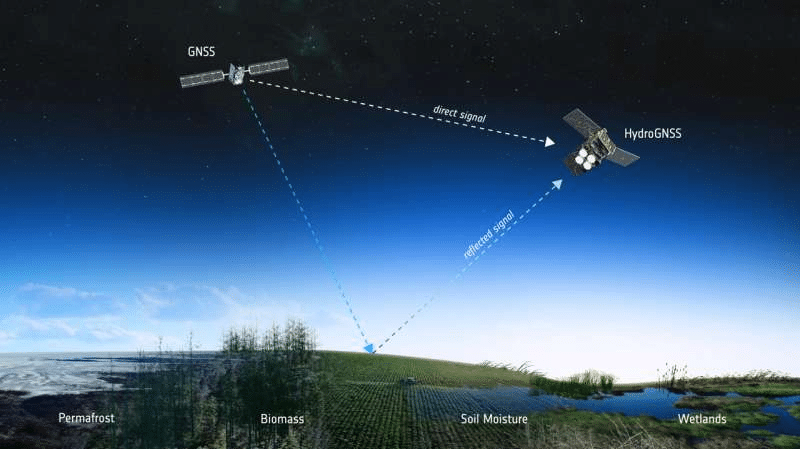
At the heart of HydroGNSS technology lies Global Navigation Satellite System (GNSS) reflectometry, a cutting-edge technique that capitalizes on signals from satellites such as GPS and Galileo. These satellites emit L-band microwave signals that alter after reflecting off Earth’s surface. By analyzing the differences between direct and reflected signals, HydroGNSS extracts critical geophysical insights related to water cycle processes.
This approach proves especially effective for assessing soil moisture, freeze-thaw cycles, flood extent, and above-ground forest biomass. These four parameters are vital to understanding hydrological functions on Earth and hold considerable importance for agriculture, climate adaptation, and flood risk mitigation. The mission’s data will empower scientists to refine flood prediction models and bolster agricultural management worldwide.
ESA’s Trailblazing Scout Mission: A Leap for Small Satellite Science
HydroGNSS marks a technological breakthrough and a paradigm shift in mission development. As ESA’s inaugural Scout mission, it embraces the “New Space” philosophy centered on rapid, budget-conscious innovation. With a development budget capped at €35 million and a brisk timeline of just three years, the mission exemplifies ESA’s new approach to agile space exploration.
The Scout initiative aims to deliver impactful scientific missions quickly and affordably. Launching only three years post-project start, HydroGNSS showcases what fast-tracked European space science programs can achieve. Within ESA’s Earth Observation program, Scout missions complement larger, more intricate Earth Explorer efforts, pushing the boundaries of remote sensing via leaner, faster projects.
- Categories:
- News





0 comments
Sign in to Comment