
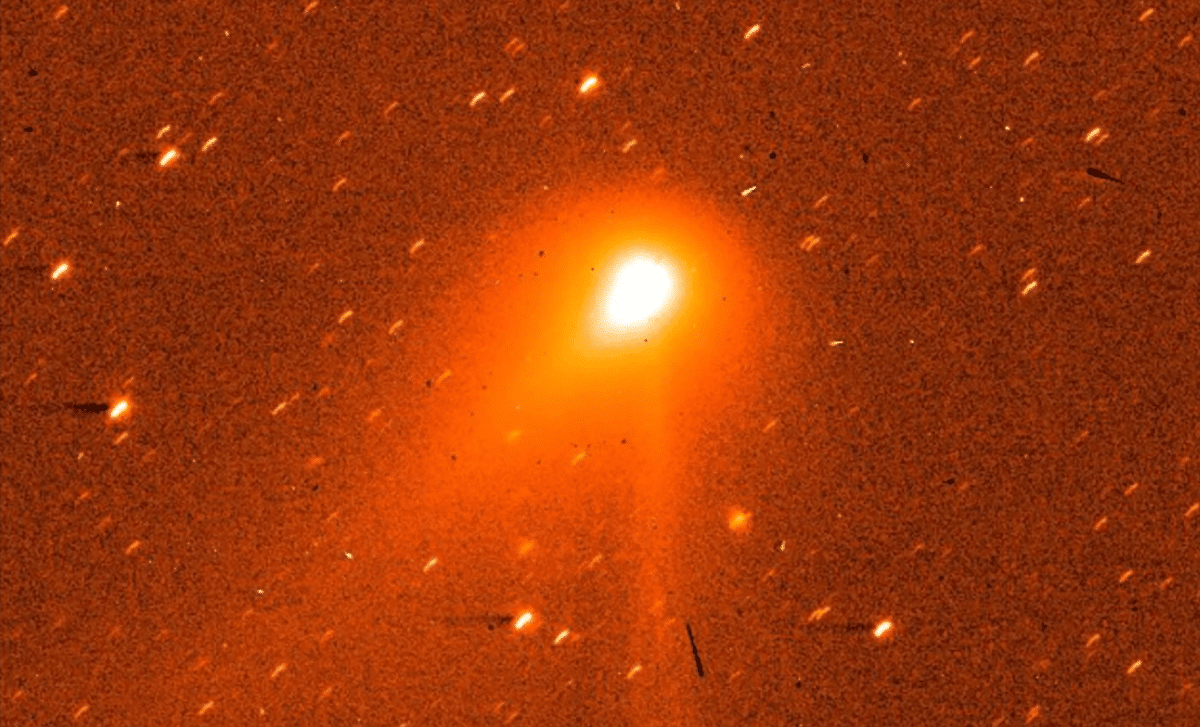
The European Space Agency’s JUICE spacecraft, while en route to investigate Jupiter’s icy satellites, achieved a remarkable scientific milestone by observing comet 3I/ATLAS. This rare visitor from beyond our solar system presented an exceptional chance for astronomers to analyze ancient material predating our planetary neighborhood. The novel information collected from this cosmic meeting is reshaping current theories about interstellar objects, with ongoing research revealing extraordinary details about the comet’s composition and dynamics.
JUICE’s Unexpected Observation of Comet 3I/ATLAS
During late 2025, the comet 3I/ATLAS, originating from another star system, traversed the inner solar system, surprising astronomers. Simultaneously, ESA's JUICE spacecraft, which had been charting a course toward Jupiter for several years, was perfectly positioned to monitor the comet’s activity near the Sun.
Although JUICE’s primary mission, launched in 2022, was to analyze Jupiter’s moons like Europa, Ganymede, and Callisto, it seized an unforeseen opportunity as the comet’s trajectory intersected with its own path. This alignment allowed mission scientists to adjust JUICE's instruments specifically for comet observation.

“3I/ATLAS arrived unexpectedly, making it a precious subject of study,” explained Olivier Witasse, ESA Juice Project Scientist. Having traveled billions of miles across interstellar space, the comet embodies a piece of a distant star system, offering unique insights into the building blocks and conditions of a far-off region of the cosmos.
Groundbreaking Discoveries in Water Emission and Tail Development
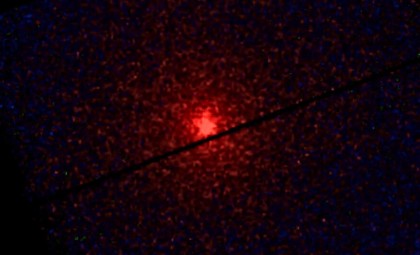
One key discovery from JUICE’s instruments was the intense water vapor emission detected as 3I/ATLAS neared the Sun. With the comet’s icy surface warming, volatiles released massive amounts of gas and water vapor into space. JUICE measured an astonishing discharge of roughly 2,000 kilograms of water vapor per second, comparable to 70 Olympic swimming pools daily.
While this output is notable, it is somewhat typical among comets. Nevertheless, what truly surprised scientists was the steady emission rate that persisted for days following the comet’s closest solar pass.
Researchers also observed that water vapor emission was predominantly from the sunlit side of the nucleus, highlighting thermal effects on comet activity. Even more intriguing was the idea that much of the water vapor likely originated from sublimating icy dust grains surrounding the comet, not solely from the core itself.
Such findings enrich our comprehension of cometary responses to solar heating and provide critical clues about the evolutionary processes shaping these primordial space travelers.
Massive Tail and Chemical Composition Insights
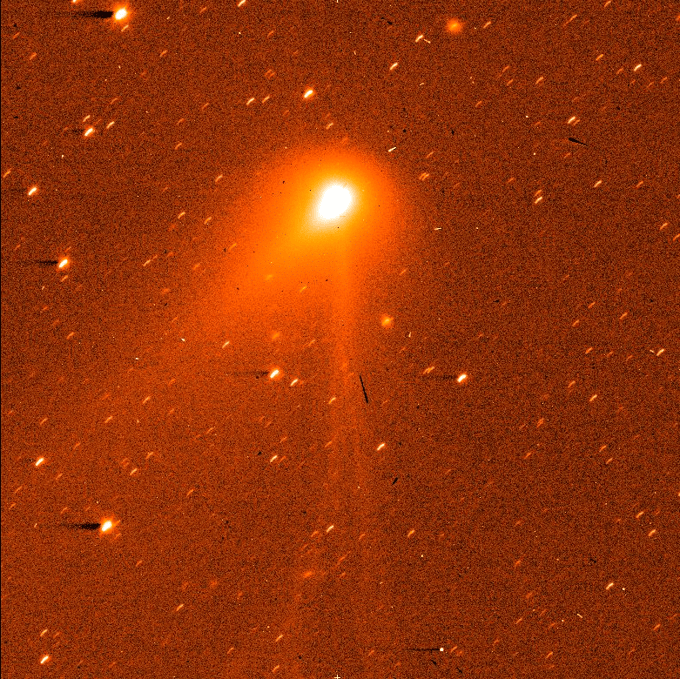
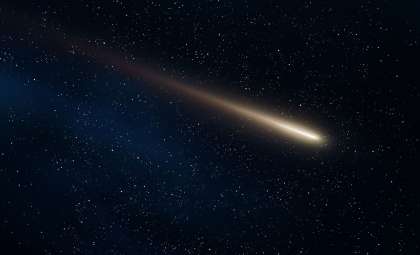
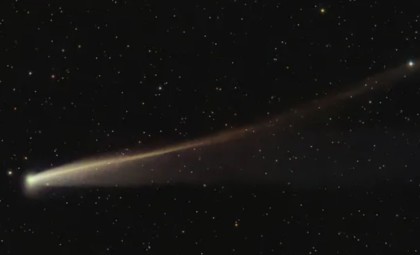
Additionally, scientists marveled at the scale of the comet’s tail as it journeyed through the solar system, stretching about 5 million kilometers (3.1 million miles) in length. This extensive trail, composed of hydrogen, oxygen, and carbon, is vital to deciphering the comet’s primordial origins.
The tail forms through the interaction of solar radiation and solar wind, which push gas and dust away from the comet’s nucleus, producing the iconic glowing stream. Studying this tail gave researchers valuable clues about the comet’s elemental makeup, potentially reflecting conditions from both the early solar system and the interstellar environment the comet originated from.
Despite its interstellar roots, 3I/ATLAS displayed classic cometary features, including a luminous coma enveloping the nucleus and two distinguishable tails. Witasse commented, “Though observing the comet was a challenge with no guaranteed results, it became an extraordinary bonus for the JUICE mission en route to Jupiter.”
A Rare Opportunity for Science and Planetary Protection
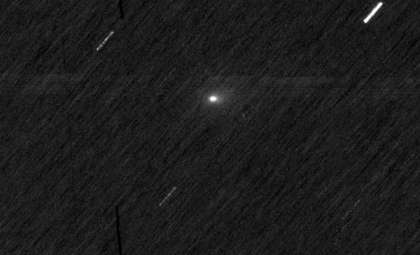
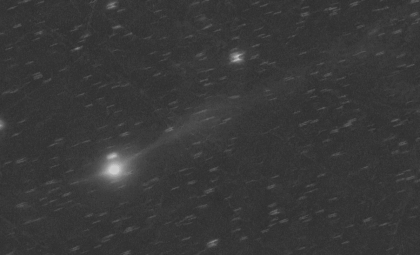
JUICE’s onboard camera, initially intended for navigating Jupiter’s moons, unexpectedly contributed vital imagery of 3I/ATLAS from approximately 60 million kilometers (37 million miles) away. Combining this data with observations from Earth-based telescopes allowed extremely precise tracking of the comet’s orbit.
Such precise monitoring not only advances cometary science but also enhances planetary defense efforts. Understanding how cometary jets alter trajectories improves predictions of potentially threatening celestial objects. This serendipitous discovery highlights how unexpected events can yield groundbreaking scientific achievements.
- Categories:
- Space







0 comments
Sign in to Comment