
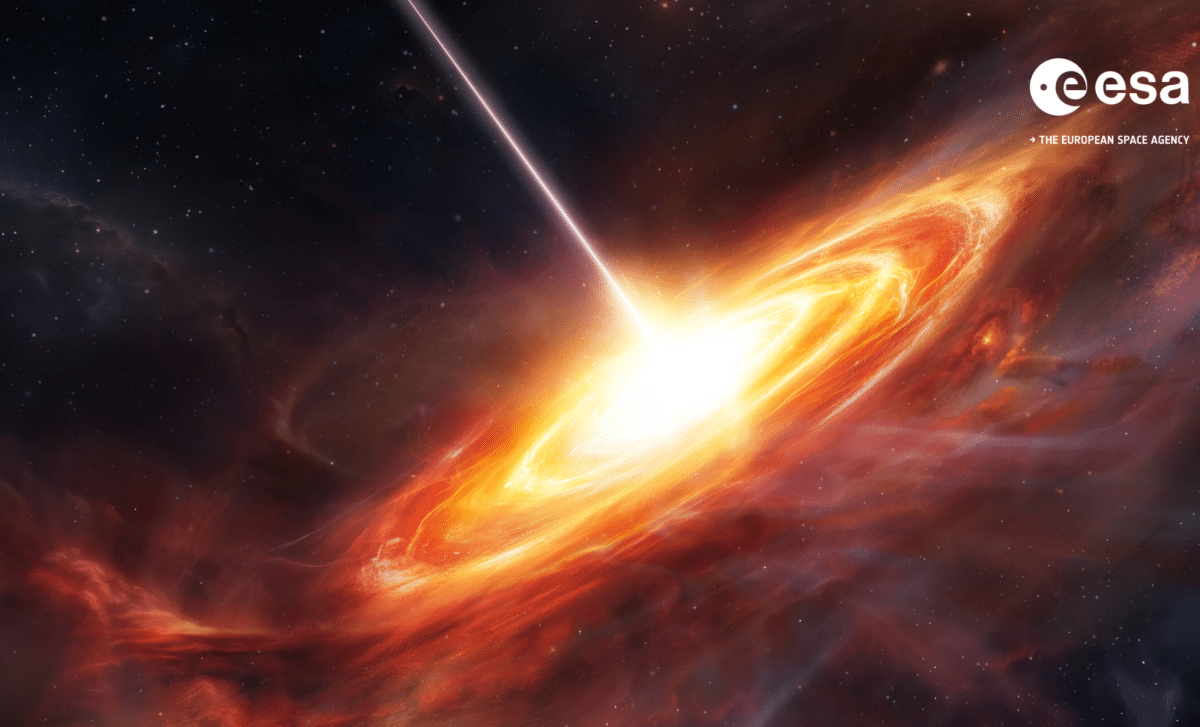
The ESA's Euclid space observatory has pinpointed 31 ancient quasars, featuring the two oldest ever recorded, granting an extraordinary window into the cosmos from when it was merely 670 million years old. Documented in Astronomy and Astrophysics, this finding greatly broadens astronomers’ understanding of the universe's initial supermassive black holes and their host galaxies, marking a pivotal milestone in early universe exploration.
A Fresh Perspective on the Universe’s First Luminaries
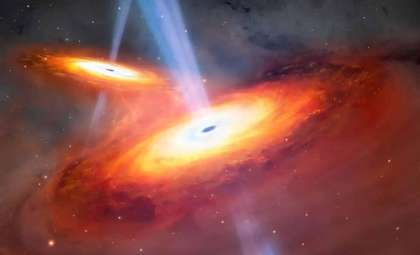
Quasars are among the universe’s most luminous entities, powered by vast supermassive black holes that voraciously consume gas within fledgling galaxies. In this fleeting stage, the galactic nuclei can outshine the combined starlight of their entire host galaxies multiple times over. Locating these remote beacons has been a significant challenge due to their rarity, faintness, and potential confusion with nearer stellar objects. However, Euclid is revolutionizing this quest.
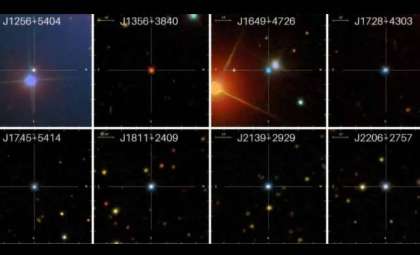
The mission uncovered 31 previously unknown quasars from the cosmos’s infancy, with 12 possessing redshifts beyond 7, reflecting an era when the universe was still in its earliest phases. Notably, EUCL J172902.75+641018.1 at a redshift of 7.77 and EUCL J125308.55+705432.3 at 7.69 are now the most ancient quasars ever observed, their light having traveled over 13 billion years before reaching Earth.

"These quasars formed during the universe’s earliest moments," explains Daming Yang from Leiden University, lead author of the Euclid study. "Studying them helps unravel how such massive structures assembled and grew rapidly, a profound astrophysical conundrum."
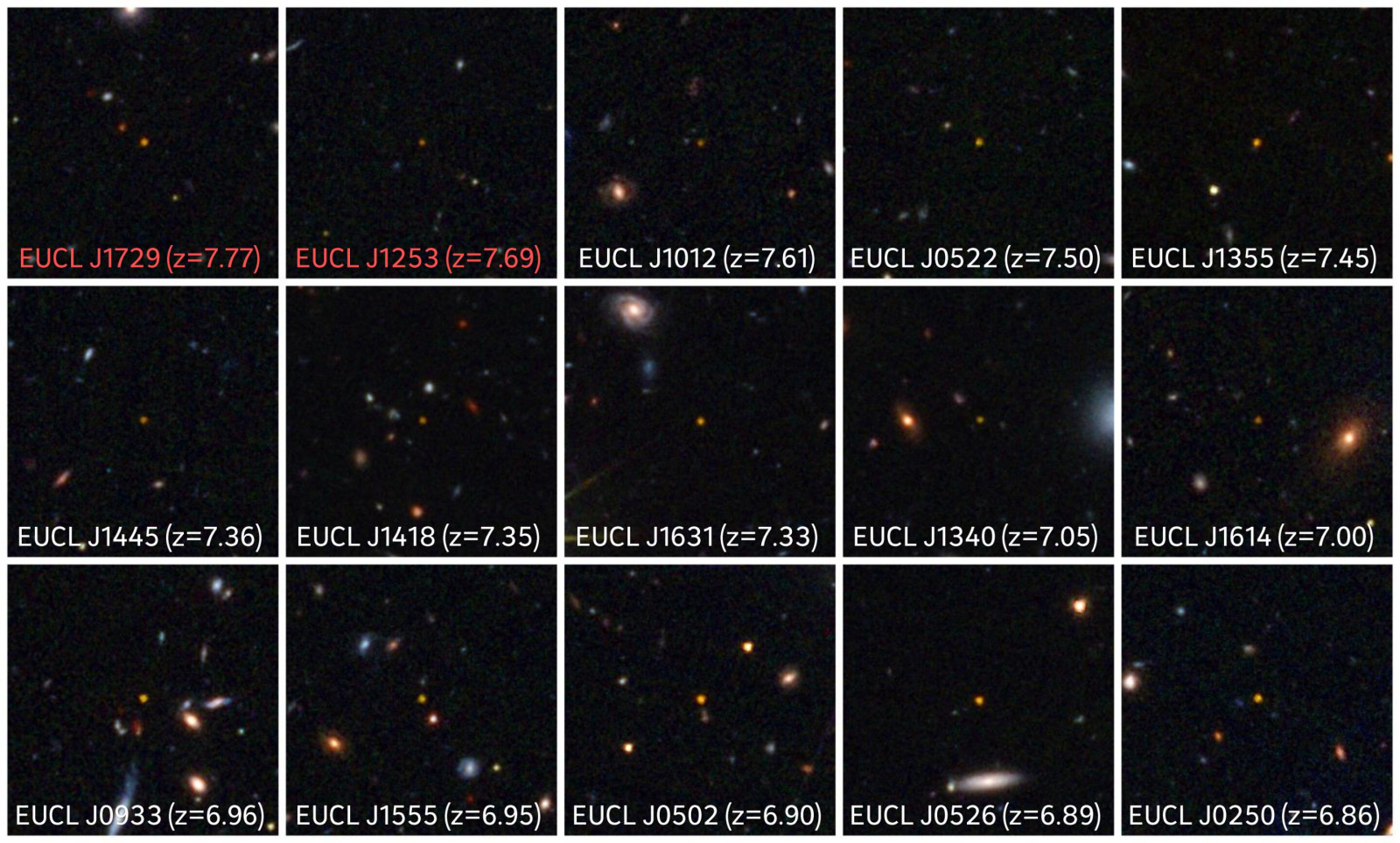
Euclid Revolutionizes the Hunt for the Universe’s Earliest Quasars
Historically, only the brightest and most exceptional ancient quasars have been detectable, providing valuable yet limited insights, as they represent only a small slice of the primordial population. Euclid’s innovative combination of expansive sky coverage, profound infrared sensitivity, and crisp space-based imaging enables astronomers to conduct comprehensive surveys sensitive enough to reveal much fainter and previously overlooked objects.
Scientists describe this mission as producing the first extensive census of early quasars rather than merely identifying isolated rare examples. The results, featured in Astronomy and Astrophysics, showcase how large surveys have become essential tools in unveiling cosmic dawn phenomena. As Euclid continues to map over a third of the sky, additional distant quasars are expected to be uncovered from its expanding catalog.
"Euclid is transformative," Yang emphasizes. "Prior efforts found only a few of the brightest quasars from the early universe, but Euclid’s capability to scan immense sky areas allows us to detect much dimmer targets efficiently. It’s a groundbreaking asset for quasar exploration."
The Most Extensive Inventory to Date of Primordial Quasars
This achievement ranks among the most impactful developments in early-universe astronomy in recent years. Initially, gathering about ten quasars with redshifts exceeding 7 required over ten years using multiple global observatories. Remarkably, Euclid has exceeded this number within its first year, signaling a remarkable leap in observational technology. Far from simply expanding existing catalogs, the mission now begins to reveal the distribution patterns of quasars during a crucial epoch of cosmic history. This expanded dataset allows comparison of black hole evolution, galaxy formation, and local environmental influences across multiple sources rather than from just a few isolated observations, promising to reshape models explaining rapid supermassive black hole growth after the Big Bang.
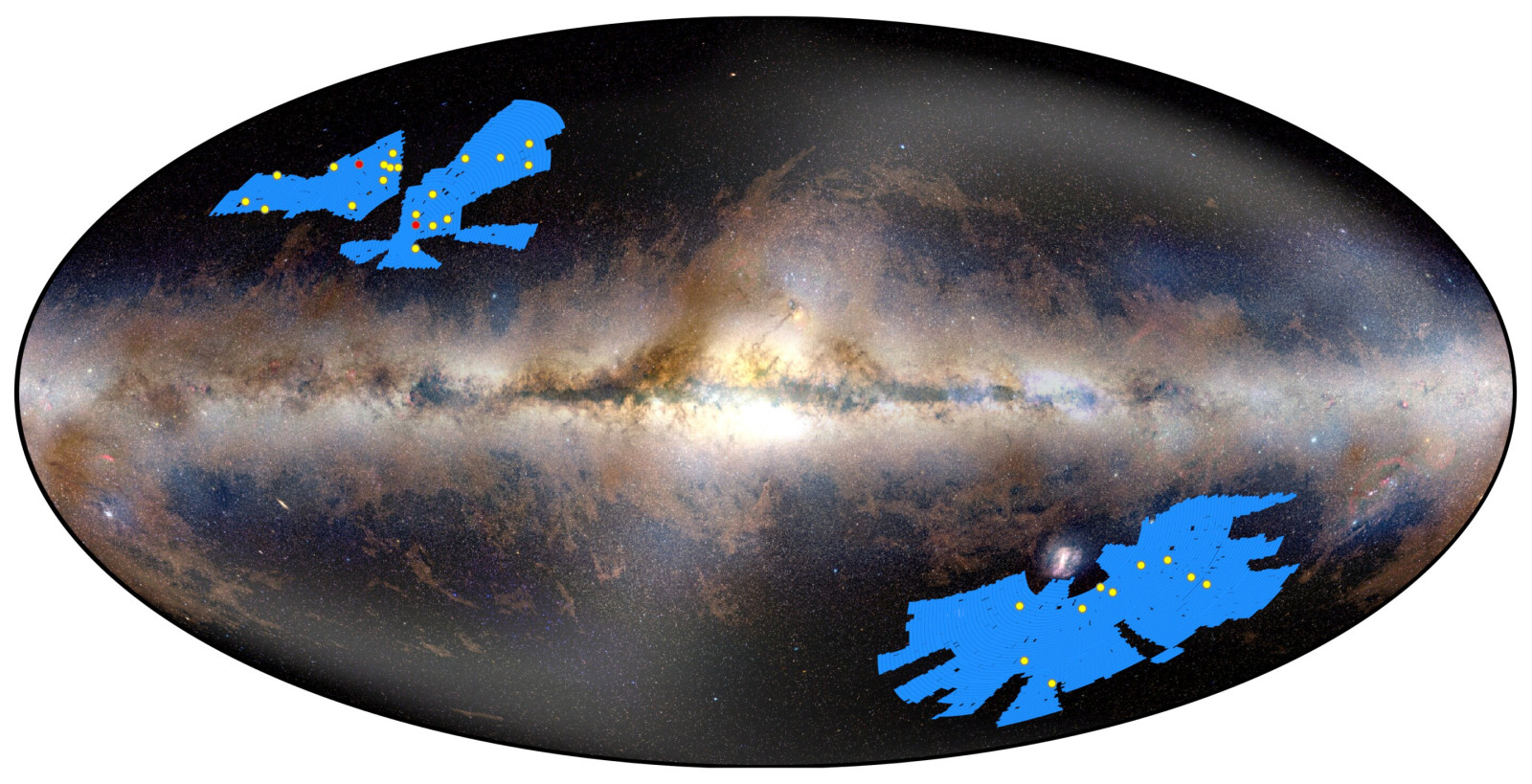
“This discovery has more than doubled the known number of such ancient quasars,” states Antonio La Marca, ESA research fellow with the Euclid project. Identifying roughly ten quasars beyond redshift 7 took over a decade previously, yet Euclid surpassed this total in under a year.
“For the first time, the Euclid team conducted a comprehensive ‘census’ of early-universe quasars,” La Marca adds. “This marks a significant advance in grasping these extraordinary cosmic phenomena.”
Insights Into the Cosmic Era That Shaped the Modern Universe
The recently found quasars date to the Epoch of Reionization, a fundamental phase where the cosmos transitioned from darkness into an era filled with ionized gas energized by the first stars and galaxies. This epoch is believed to have set the foundation for today’s large-scale cosmic structures, making each quasar a vital probe of early conditions. Follow-up observations of one quasar revealed a dusty, gas-rich galaxy undergoing vigorous star formation, highlighting that intense black hole growth and galaxy evolution occurred simultaneously very early on. Continued observations will help decode how galaxies assembled, how black holes rapidly gained mass, and how their radiation shaped their surroundings. As Euclid’s survey continues, new discoveries promise to fill crucial gaps in our knowledge of the early universe.
“Discovering ancient quasars is rare but vital—they serve as time capsules to explore the universe’s earliest galaxies,” comments Valeria Pettorino, ESA Euclid Project Scientist.
- Categories:
- News






0 comments
Sign in to Comment