
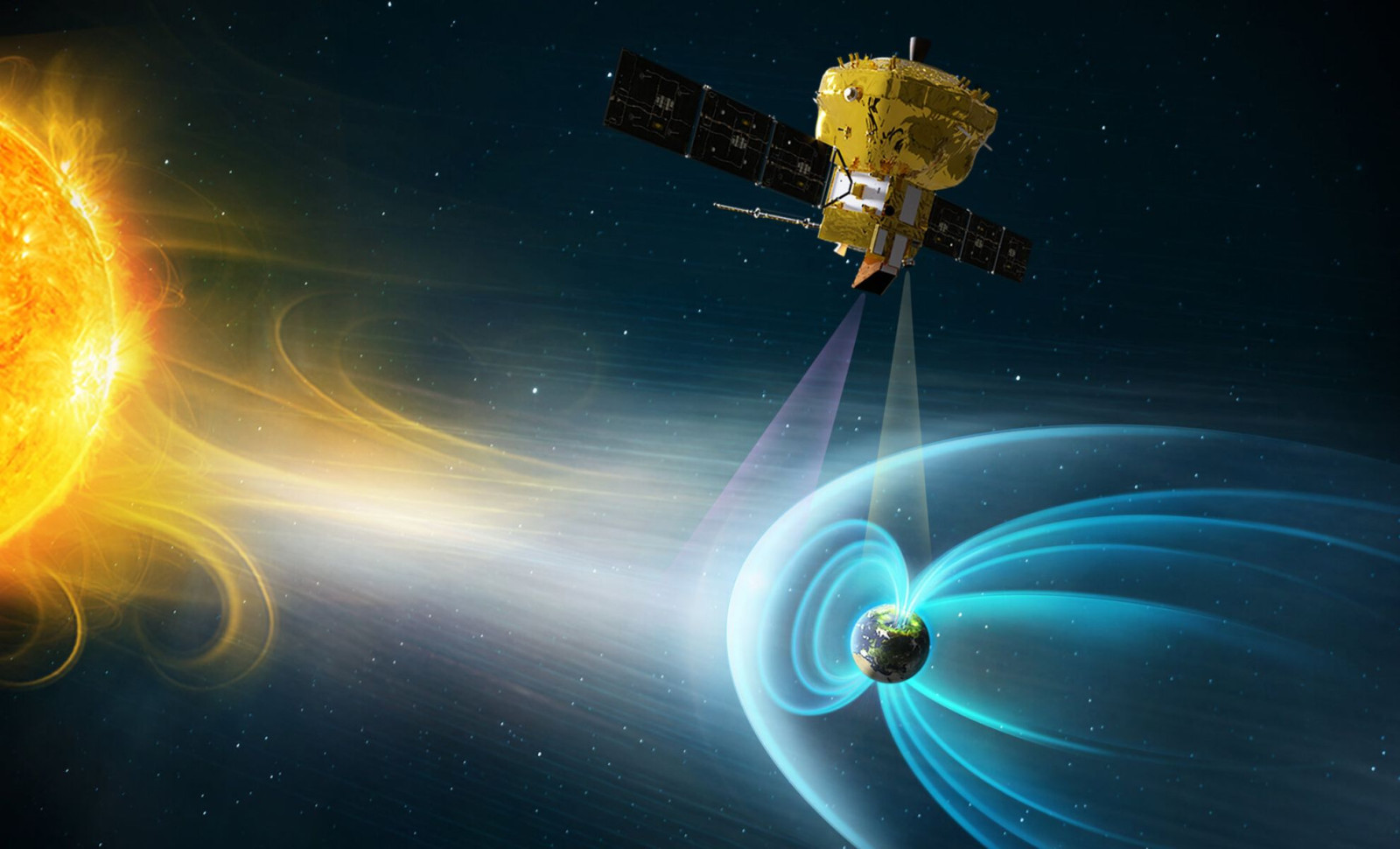
On Tuesday, a collaborative mission between Europe and China is launching a spacecraft designed to investigate the effects of intense solar storms on Earth’s magnetic shield. Named SMILE, this mission will deliver the first-ever X-ray imagery of the planet’s magnetosphere during solar storm events.
Researchers anticipate that this mission will enhance insights into space weather, which has the potential to disrupt satellites, space travelers, and Earth-based communication networks. The European Space Agency reports that SMILE will be launched aboard a Vega-C rocket from the spaceport in Kourou, French Guiana.
Officially titled the Solar Wind Magnetosphere Ionosphere Link Explorer, this spacecraft is a product of joint efforts by the ESA and the Chinese Academy of Sciences. Its core objective is to study the interaction of solar wind particles with Earth’s magnetic defenses.

Imminent Solar Storms Could Impact Earth Within Days
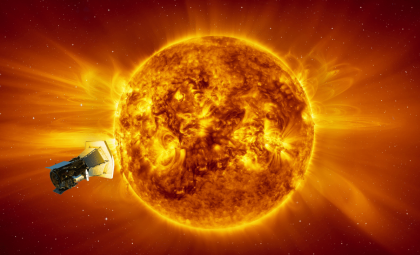
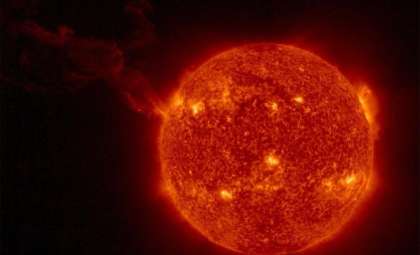
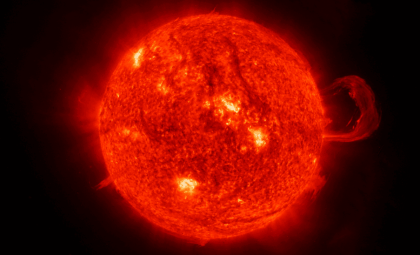
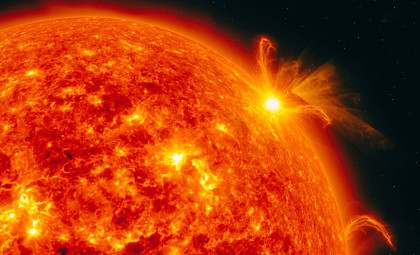
The sun constantly emits a stream of charged particles known as the solar wind. Occasionally, these flows intensify dramatically due to massive plasma outbursts called coronal mass ejections, propelling particles through space at speeds near two million kilometers per hour.
Philippe Escoubet, a scientist with ESA, explained that the mission aims to deepen understanding of "how Earth and the sun interact." Originally set for April 9, the launch was postponed due to technical challenges.
These solar eruptions generally take one to two days to arrive at Earth. Upon reaching our planet, Earth’s magnetic field deflects most of the incoming charged particles. However, intense storms allow some of this radiation to penetrate the upper atmosphere.
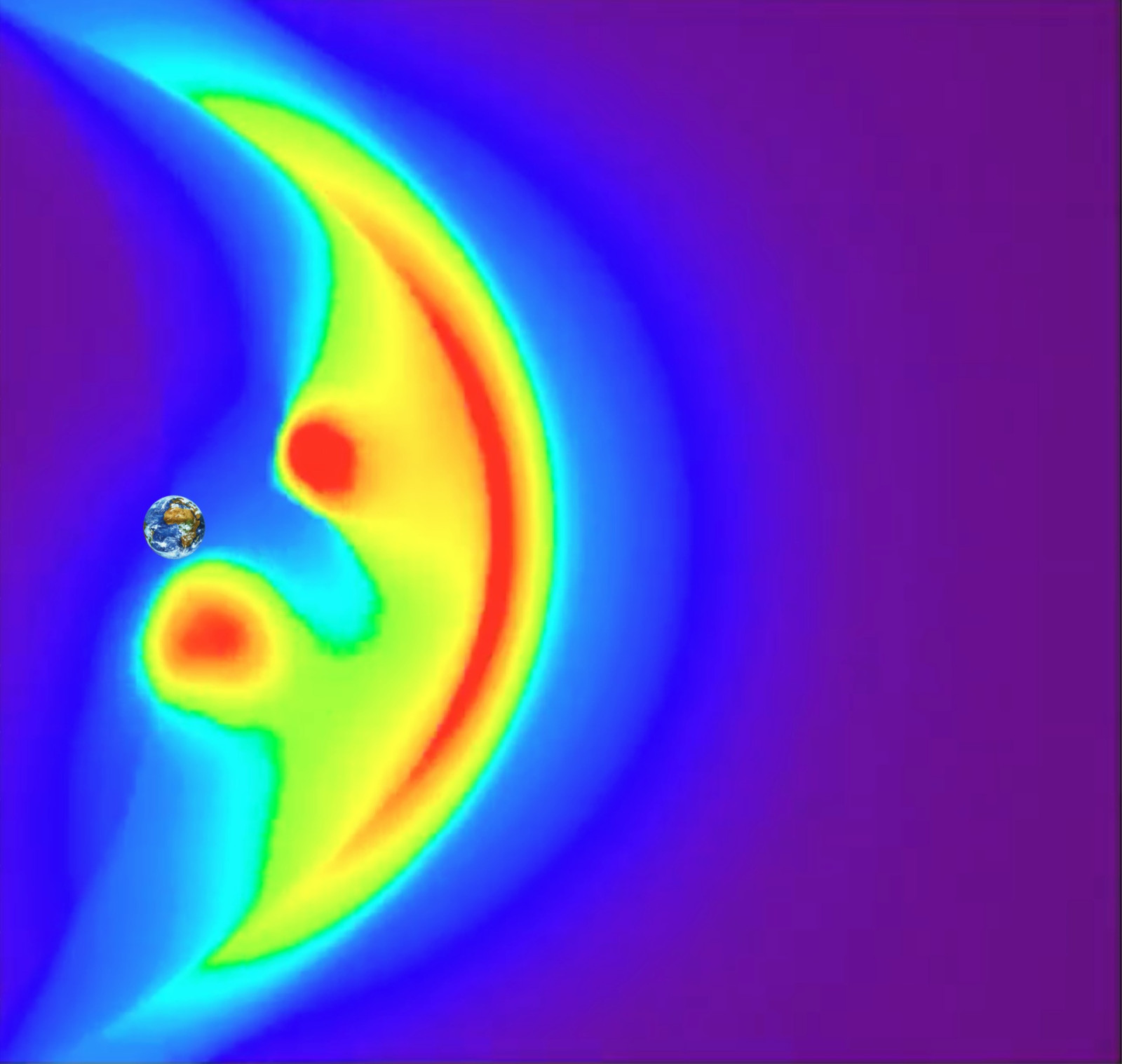
According to the source article, powerful geomagnetic storms can disrupt electrical grids and communication systems. These storms also generate spectacular auroras at high latitudes, with historic events like the 1859 geomagnetic storm producing auroras visible as far south as Panama and causing electric shocks among telegraph operators.
Modern advances in technology heighten the risks posed by such solar activity since satellites and astronauts in orbit are susceptible to these disturbances.
Monitoring the Magnetosphere Using X-Ray Technology
The main goal of SMILE is to capture X-ray emissions generated when solar wind particles collide with neutral atoms in Earth's upper atmosphere. ESA highlighted in a press release:
“SMILE will be the first mission to observe Earth’s magnetosphere in X-ray light, revealing exactly when, where and how the solar wind interacts with Earth’s magnetic environment.”
The spacecraft will focus on distinct regions of the magnetic shield such as the magnetopause, where solar particles first meet Earth’s magnetic field. As Dimitra Koutroumpa from CNRS in France noted, SMILE will also study the polar regions where X-ray emissions become visible.
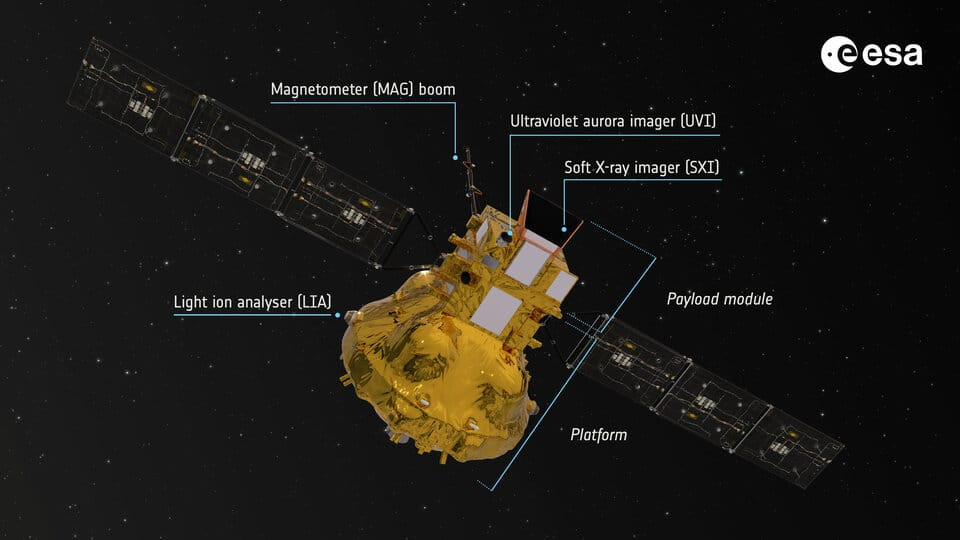
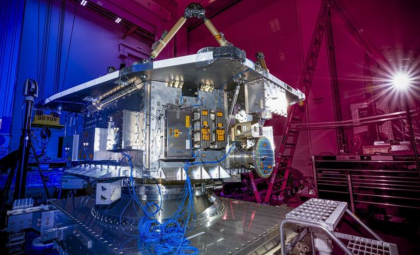
Equipped with four scientific instruments, SMILE carries a UK-designed X-ray imager, alongside a UV imager, an ion analyzer, and a magnetometer contributed by the Chinese Academy of Sciences.
As detailed by Phys.org, data collection will commence approximately one hour after the satellite reaches orbit.
Highly Elliptical Orbit Enables Extended Observations
Following launch, SMILE will first orbit approximately 700 kilometers above Earth before transitioning into a highly elliptical path. The spacecraft will pass roughly 5,000 kilometers over the South Pole to transmit data to the Bernardo O’Higgins station in Antarctica. At its northernmost point, SMILE will travel as far as 121,000 kilometers away from Earth.
This orbit design facilitates prolonged observations over the northern polar region. According to the European Space Agency, it will enable continuous monitoring of northern lights for up to 45 hours at a stretch.
The mission is expected to operate for three years, though ESA mentioned the possibility of extending the mission if the spacecraft remains fully operational.
- Categories:
- Space





0 comments
Sign in to Comment