
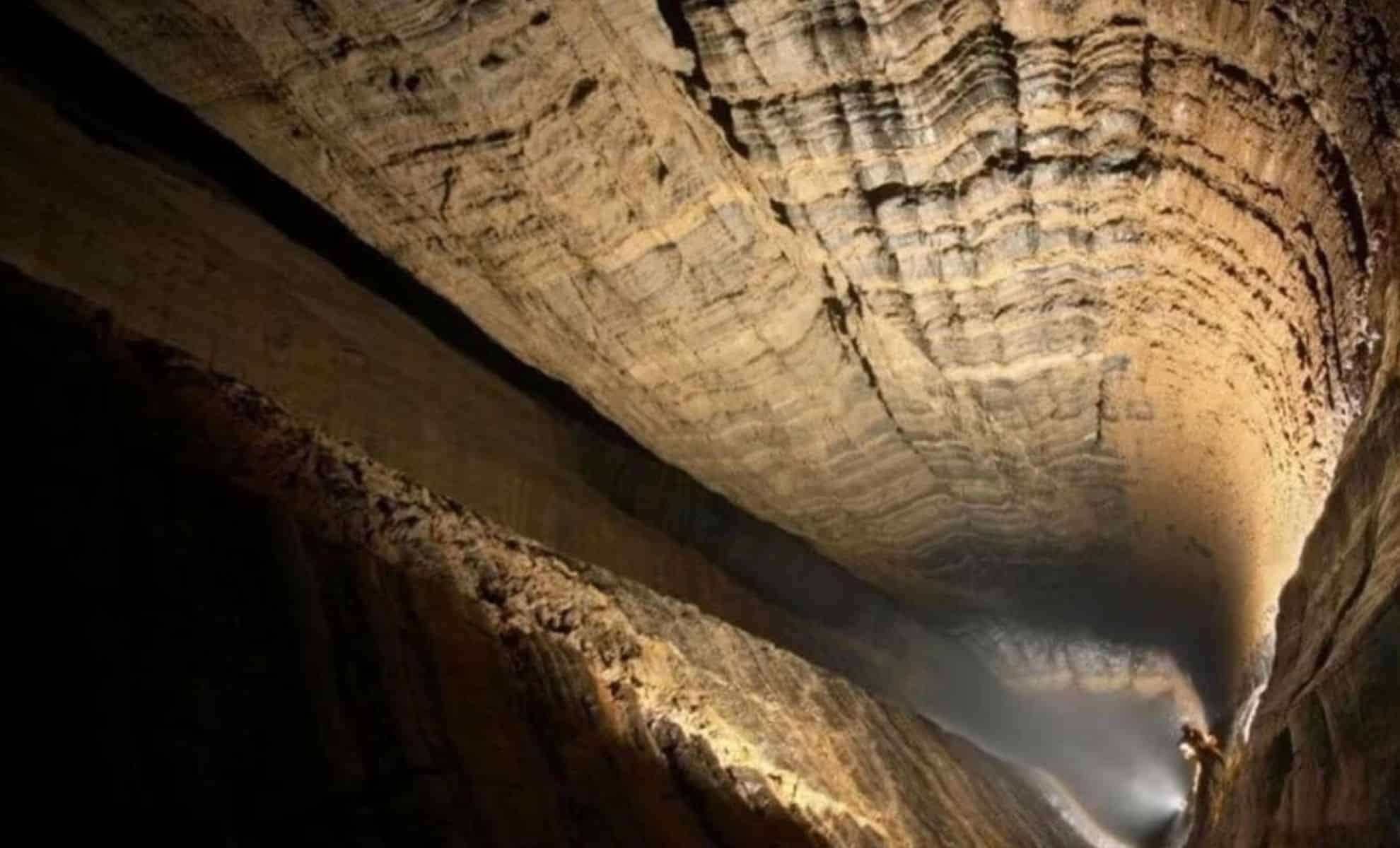
Far beneath the Earth’s crust lies an extraordinary environment so remote and severe it resembles an extraterrestrial landscape. Veryovkina Cave, holding the record as the planet’s deepest cave, extends down an incredible 7,257 feet (2,212 meters) into complete darkness. Inside, the terrain is shaped by frigid temperatures, cascading waterfalls, and sudden floods that rapidly turn safe corridors into deadly traps. Only the most experienced and resilient adventurers have braved this perilous descent, confronting an alien world that tests the boundaries of human capability.
Journey to the Abyss
Situated within the Arabika Massif of the Western Caucasus, Veryovkina Cave was first identified in 1968, though its full depth remained a mystery for decades. It took nearly 30 expeditions before spelunkers successfully reached its lowest point, uncovering a complex network of vertical chasms, freefall drops, and confined pathways. The cave demands exceptional stamina as explorers contend with near-freezing cold, saturated air, and utter darkness.
Per Forbes, this treacherous exploration has cost lives. In 2018, a Russian diver was trapped at the bottom by a sudden flood. Later, in 2021, Sergei Kozeev tragically died of hypothermia while alone at 1,100 meters deep, his body undiscovered for nine months in the pitch-black.

A Deadly Flood Hazard
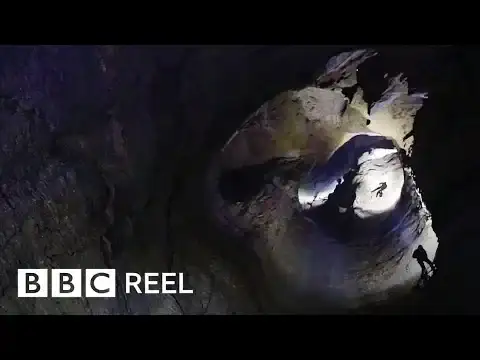
Veryovkina Cave is fraught with peril, particularly due to unpredictable flash flooding. In 2018, an expedition including National Geographic photographer Robbie Shone narrowly escaped disaster when a sudden torrent surged through the tunnels.
Shone recalls the harrowing escape:
“I just thought, ‘Oh my goodness. We have to leave right now. We cannot wait. If we just hang around, we’re all going to die.’”
The team climbed with ropes amid relentless waterfall blasts. The flood persisted for almost 20 hours, severing escape paths and flooding their campsite. When waters receded, their equipment was found lodged high on the cave ceiling—a stark sign of their near-fatal ordeal.
A Subterranean Realm Like No Other
Entering Veryovkina Cave means crossing into an environment utterly devoid of light. Beyond the sun’s reach lies a true void—a darkness so profound that the human eye cannot adjust. Deep inside, explorers’ brains conjure illusions of light to cope with the overwhelming absence of sensory input.
The cave’s deepest freefall shaft measures 475 feet (145 meters)—a terrifying vertical chasm that feels infinite. Descending requires trust in a slender rope as temperatures stay near a chilling 39°F (4°C) and air pressure climbs to 10% above surface levels, raising the risk of hypothermia.
Life Thriving Against All Odds
Despite such inhospitable conditions, life has found a way to exist within Veryovkina Cave. The organisms here display remarkable evolutionary traits that enable survival in utter darkness, near-freezing climate, and extreme scarcity of nutrients.
Some of the unique species inhabiting Veryovkina and surrounding deep caves include:
- Plutomurus ortobalaganensis – Recognized as the deepest-dwelling land animal, this eyeless insect, found at 1,980 meters inside Krubera Cave, relies on tactile and chemical cues to navigate and feeds on microscopic fungi.
- Xiphocaridinella demidovi – A blind cave shrimp subsisting in complete darkness by scavenging organic debris transported by subterranean waterflows.
- Duvalius abyssimus – A colorless, sightless beetle that depends on smell and touch to locate food.
- Heterocaucaseuma deprofundum – The deepest-recorded millipede species, flourishing where most life would be impossible.
Researchers believe that investigating these extreme life forms could shed light on how organisms might survive on other worlds, such as Mars or the icy moons orbiting Jupiter. The extraordinary adaptations of Veryovkina Cave’s inhabitants hint at the potential for life in similarly hostile extraterrestrial environments beneath frozen exteriors or deep oceans.
- Categories:
- News





0 comments
Sign in to Comment