

An extraordinary object from beyond our solar system recently underwent one of the most thorough searches for signs of extraterrestrial technology ever attempted on an interstellar visitor. As detailed in a study published in the Astronomical Journal, radio frequency analyses of the comet 3I/Atlas showed no traces of alien signals. This outcome addresses early speculations about the comet’s nature and showcases advancements in current SETI methodologies.
The Global Spotlight on 3I/Atlas
When 3I/Atlas was first observed, it sparked widespread excitement throughout the scientific community due to the rarity of interstellar objects. This comet represents only the third confirmed interstellar visitor to traverse our solar system. Its passage presented a rare window into material born in a stellar system far removed—possibly dating back billions of years before our Sun's formation.
As it moved near the inner solar system, some speculated about artificial origins, though evidence supporting these claims was lacking. Nevertheless, these speculations motivated astronomers to undertake a meticulous review of the comet. Searching for technologically produced signals from such an interstellar object, despite being improbable, was considered worthwhile.

The comet’s trajectory brought it within approximately 19 million miles of Mars, offering a unique observational opportunity despite its distance from Earth. Various ground-based and space observatories tracked its path as it headed back into interstellar space. Scientists approximate the comet's size between 440 meters and 5.6 kilometers and estimate it could be as old as 11 billion years, predating our solar system.
SETI’s Rigorous Radio Signal Examination for Technosignatures
Leading the effort, the SETI Institute used its Northern California radio observatories to dedicate over seven hours scanning 3I/Atlas. The search focused on a wide spectrum of radio frequencies that might harbor artificial transmissions.
The scan generated an immense volume of data, recording nearly 74 million narrow-band radio signals. Such narrow-band signals are often intriguing since artificial sources can produce these more easily than natural cosmic phenomena. However, filtering out terrestrial radio noise remained a significant challenge.
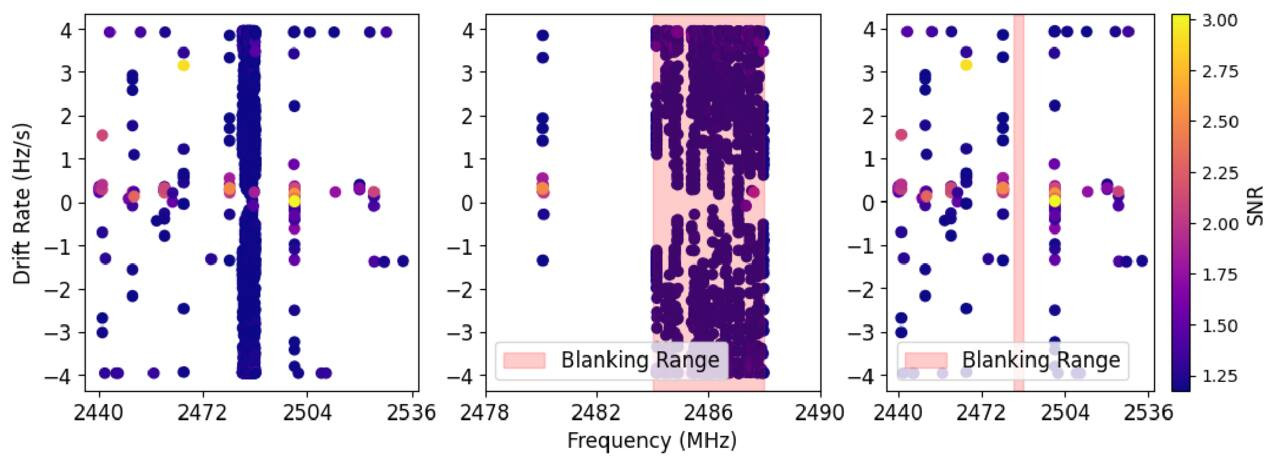
Researchers applied advanced filtering techniques to exclude Earth-based radio interference. They assessed characteristics such as signal pattern, frequency behavior, and motion to distinguish true candidates from terrestrial sources. After this rigorous filtering, just over 200 signals remained worthy of detailed review.
Upon further evaluation, all these remaining signals were attributable to Earth-originating technologies or orbiting satellites. There was no indication of any transmission stemming from 3I/Atlas. These conclusions were published in the Astronomical Journal, marking a benchmark in the technosignature examination of interstellar objects.
Insights Into the Search for Extraterrestrial Intelligence
Although the hunt did not detect alien technology signals, scientists stress that this investigation is a pivotal achievement for technosignature science. It proves that astronomers can now systematically scrutinize unusual celestial bodies and efficiently search for signals linked to intelligent life.
This endeavor also tested contemporary detection capabilities in real situations. By analyzing tens of millions of signals and filtering them down to a manageable few, the study validated approaches that will be crucial for analyzing future interstellar objects or more distant astronomical targets.
“These results ‘show how realistic it is to detect a signal with the technology we have today,’ co-author Valeria Garcia Lopez of Furman University noted in a statement. ‘That is why it is important to keep searching for technosignatures, even from objects we might not expect to have signals.’”
This comment underscores a fundamental principle in SETI: not every unusual finding is expected to reveal artificial signals. Rather, each search sharpens analysis tools, improves filtering methods, and increases confidence that an authentic technosignature could be discovered if present.

A Fascinating Link to Humanity's Deep-Space Missions
An intriguing aspect of the research highlights how Earth's own spacecraft relate to the concept of interstellar technology. Scientists point out that human-made objects have already ventured beyond our solar system.
The twin Voyager probes, launched in the 1970s, remain the most distant human-launched artifacts in space. Having escaped the heliosphere, they journey through the interstellar medium and, over vast timescales, will approach other stars—effectively becoming interstellar objects to those distant systems.
The team used this fact to justify the premise that searching for technological artifacts originating from other stars is scientifically plausible. Humanity’s own experience proves that technology can traverse between star systems.
“Voyager and similar probes will eventually become interstellar objects in other stellar systems. We thus know that no extrapolation is needed for the idea of interstellar technological objects, as we have a proof by existence,” they wrote.
This viewpoint frames the search for alien technology as a question rooted in measurable reality rather than fantasy. If humans can dispatch technology into interstellar space, then other civilizations might have done the same.
3I/Atlas Continues Its Cosmic Voyage
Presently, 3I/Atlas is receding from our solar system and won’t revisit it. Now about 1.3 billion kilometers from Earth, the comet follows a path back into the vastness between stars. While it did not yield any signs of alien technology, it presented an unparalleled chance to refine the approaches needed to identify such signals elsewhere in the galaxy.
The comet’s remarkable age, likely origin in a foreign star system, and fleeting journey through our solar neighborhood have cemented its place in cosmic history. The SETI examination adds a significant chapter, demonstrating how cutting-edge astronomy can rigorously explore extraordinary possibilities grounded in empirical evidence.
For the time being, 3I/Atlas remains what astronomers initially concluded: a natural interstellar comet. Yet the enhanced detection methods honed in this search may prove critical when the next mysterious visitor arrives from the depths of space.
- Categories:
- Science









0 comments
Sign in to Comment