
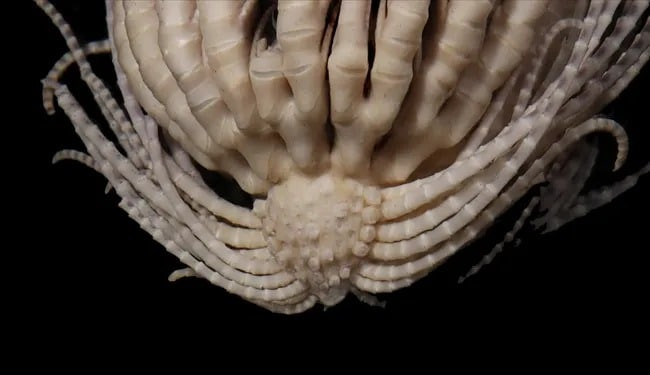
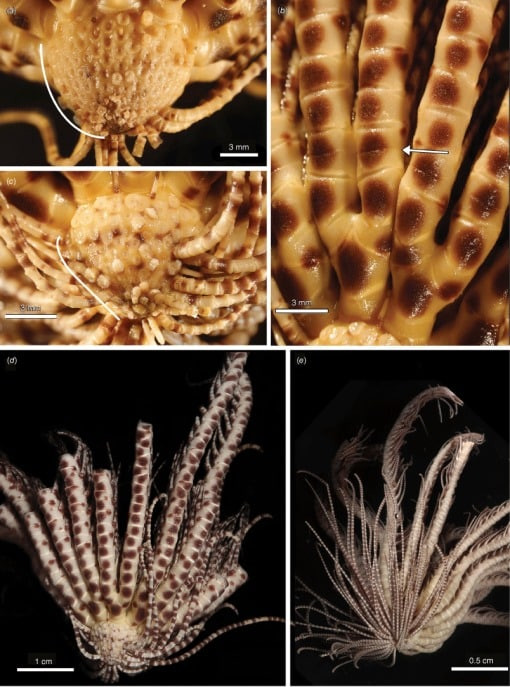
Deep within the icy Southern Ocean, scientists have uncovered an extraordinary marine animal that strikingly resembles a strawberry. Dubbed Promachocrinus fragarius, also known as the strawberry feather star, this unusual sea star features between 10 and 20 arms and displays a gamut of colors from purplish hues to rich dark reds.
Although labeled as "large," precise measurements remain unknown, and the creature’s deeper mysteries, concealed within the Antarctic waters, continue to intrigue experts. This finding, highlighted in a recent publication, emerges from extensive research focused on the unexplored biodiversity lurking in Antarctica’s oceanic depths.
Introducing the Strawberry Feather Star
The Promachocrinus fragarius, or strawberry feather star, was identified during exploratory missions to the Southern Ocean—a region that remains largely enigmatic to marine biologists. Its name is inspired by the distinctive strawberry-like shape it exhibits. Belonging to the feather star family, which is characterized by long, flexible arms, this species is thought to possess 10 to 20 arms. While specific size data is lacking, researchers describe it as considerably large.

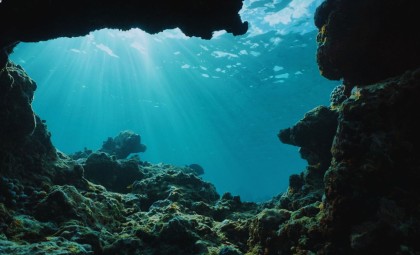
Beyond its vivid appearance, the strawberry feather star is remarkable for the environment it inhabits. The study published in Invertebrate Systematics reveals that this species dwells at depths spanning from 65 to 6,500 feet, far below the surface in zones where few life forms endure. Such extreme conditions are believed to play a pivotal role in shaping the Southern Ocean’s distinctive biodiversity.
Exploring Hidden Biodiversity
This discovery is part of a broader scientific effort focused on unveiling the "cryptic biodiversity" of Antarctica—species that are difficult to detect owing to their elusive nature or secluded habitats. The scientists involved dedicated nearly a decade to extensive research in the Southern Ocean.
“An increasing number of Antarctic invertebrate taxa have been revealed as cryptic species complexes following DNA-based assessments,” wrote the authors.
They further highlighted that: “the Southern Ocean has unique environmental conditions that may drive biodiversity,” where frigid temperatures and great depths prevail. Their findings suggest these conditions foster rare species capable of thriving in ways we have yet to comprehend fully. To date, the research team has identified four previously unknown species, emphasizing the ocean floor's vast, untapped reservoir of biodiversity concealed from scientific observation.
Unlocking the Southern Ocean’s Biological Riches
According to researchers, this remote region plays a crucial role in decoding global trends in biodiversity and understanding species adaptation to environmental shifts. Greg Rouse, a principal investigator in the study, underscored the significance of these findings for larger ecological inquiries.
The biodiversity revealed in the Southern Ocean could provide vital insights into how organisms might adjust to climate change stressors, especially as ocean temperatures continue rising.
- Categories:
- Science




0 comments
Sign in to Comment