
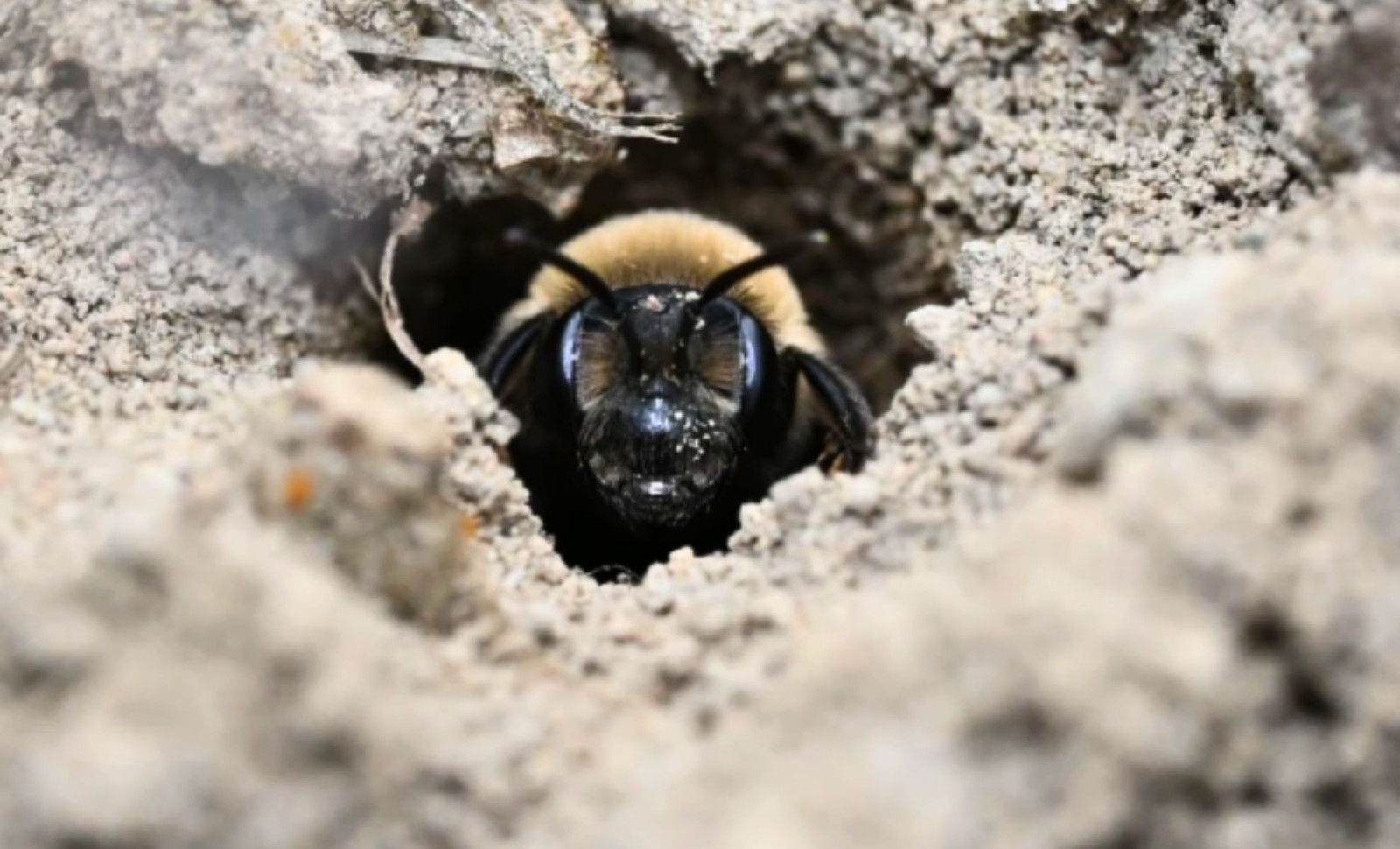
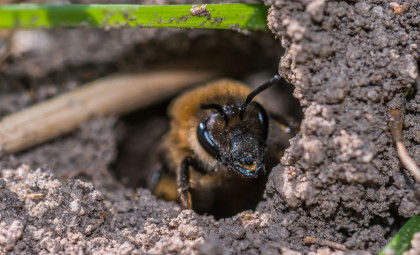
During her 2022 walk through a local cemetery, a Cornell University lab technician noticed bees emerging from the ground and collected them in a jar. This simple act unveiled one of the largest known assemblies of ground-nesting bees worldwide: an estimated 5.5 million Andrena regularis, commonly known as the regular mining bee, residing beneath East Lawn Cemetery in Ithaca, New York.
A detailed report in Apidologie confirms that specimens of this species have been collected at this location since 1935, indicating that this expansive population has likely inhabited the area for nearly 90 years. Researchers employed emergence traps—small mesh tents with funnels directing bees into collection jars—to monitor surface activity during spring. From March 30 to May 16, 2023, over 3,200 bees across 16 species were recorded, with A. regularis overwhelmingly predominant.
The Reason Behind Millions of Solitary Bees Sharing One Site
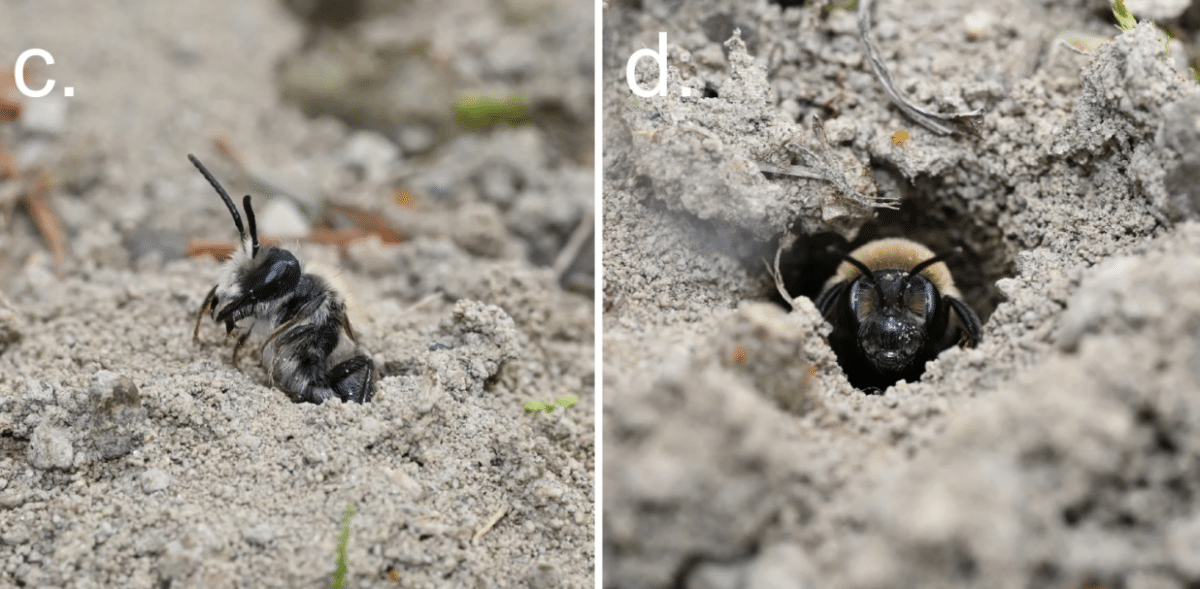
Unlike social honeybees, regular mining bees are solitary. Each female independently excavates a nest underground, creating four to five brood cells at depths ranging between 10 and 22 centimeters, provisioning them with pollen and nectar individually. Without a queen or hive, the cemetery is not a colony but an aggregation of countless solitary bees repeatedly selecting the same nesting grounds over generations.

The key attraction lies in the soil's composition and the habitat's stability. East Lawn Cemetery features sandy loam soil with about 66.5% sand content, ideal for A. regularis nesting habits. The area experiences minimal pesticide application, and while regularly mowed, it otherwise remains largely undisturbed.
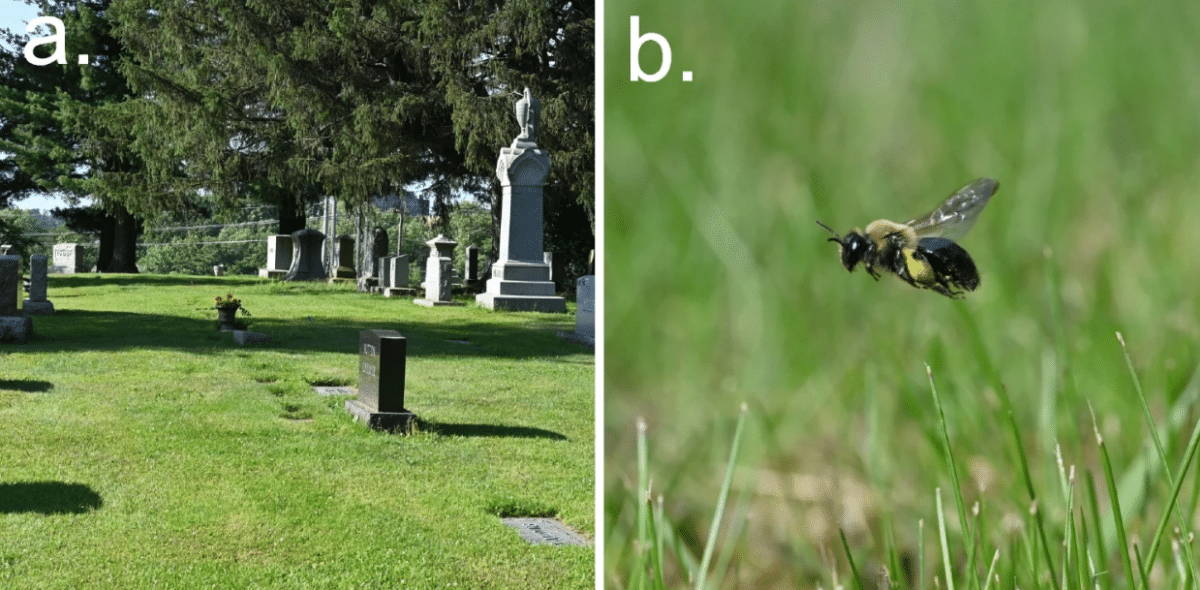
Bryan Danforth, a Cornell entomologist and lead author on the study, emphasized that the persistence of such large populations depends on undisturbed soil, limited pesticide exposure, and absence of paving.
Unveiling the 5.5 Million Bee Population Estimate
Before the 2023 emergence season, the team deployed ten emergence traps strategically over the nesting zone to gather bees as they surfaced. Daily sampling during the peak emergence period captured all bees coming through the soil.
On average, trap catches showed a density of 853 bees per square meter, though variability was observed among traps, reflecting the typical patchy nature of dense Andrena nesting. Projecting this data across the entire 6,500-square-meter nesting area estimated the total population at approximately 5.56 million bees, with a confidence interval between 3.1 and 8 million.
The scale is comparable to between 140 and 270 honeybee hives in just under one hectare. For context, commercial apple orchards in New York usually deploy two to three honeybee hives per hectare, highlighting the significance of this underground population in terms of pollination potential.
An Essential Pollinator for Apple Orchards Near Cornell University
Cornell Orchards lies about 600 meters away from East Lawn Cemetery. Surveys conducted there from 2008 to 2015 identified A. regularis as the most prominent flower visitor, outnumbering managed honeybee colonies, though the link to the nearby large nesting aggregation was only recognized when it was discovered in 2021.
Foraging females carry nearly pure apple pollen and frequently make contact with the reproductive components of Malus flowers, making them highly effective pollinators. Notably, the species overwinters as adults—a rare trait—and emerges early in spring to coincide with the apple tree bloom period.
Despite their ecological importance, A. regularis and many ground-nesting bee species remain insufficiently studied; the most recent comprehensive biological study on this bee dates back to 1978. While ground-nesting solitary bees make up roughly 75% of global bee diversity, they receive far less research attention compared to social bees like honeybees.
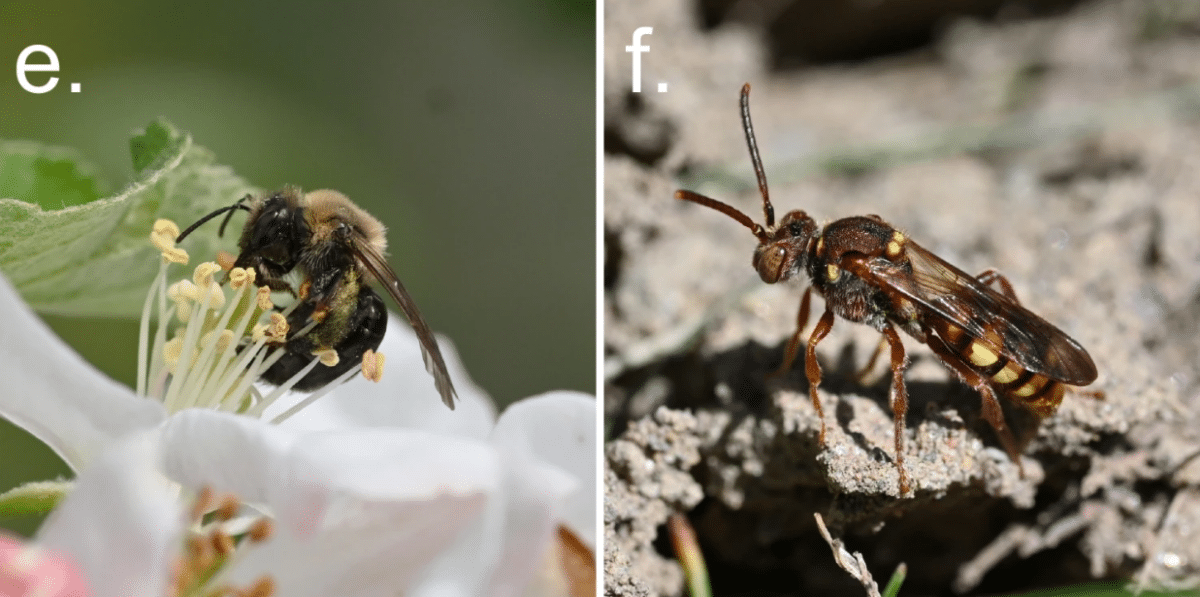
Emergence data illuminated the timing of the population's lifecycle: males appear first during warm days exceeding 20°C, followed by females several days later. This protandrous pattern ensures both sexes are active during the flowering of early-blooming Rosaceae plants. The traps also detected the main brood parasite, Nomada imbricata, a cuckoo bee species that lays eggs in Andrena brood cells.
Parasitism rates at East Lawn were low at only 1.4%, well below the 6.7% average reported in a review of 52 solitary bee parasite studies. Additionally, the female-biased emergence sex ratio indicates the population was thriving during the previous breeding cycle.
Building on this discovery, Danforth and colleagues have initiated a citizen science project focusing on ground-nesting bees to gather global observations. The existence of such a massive, long-overlooked population near a major research university suggests that similar sizable aggregations are likely hidden beneath other quiet urban and suburban spaces, including parks, road verges, and unremarkable old lawns.
- Categories:
- News







0 comments
Sign in to Comment