
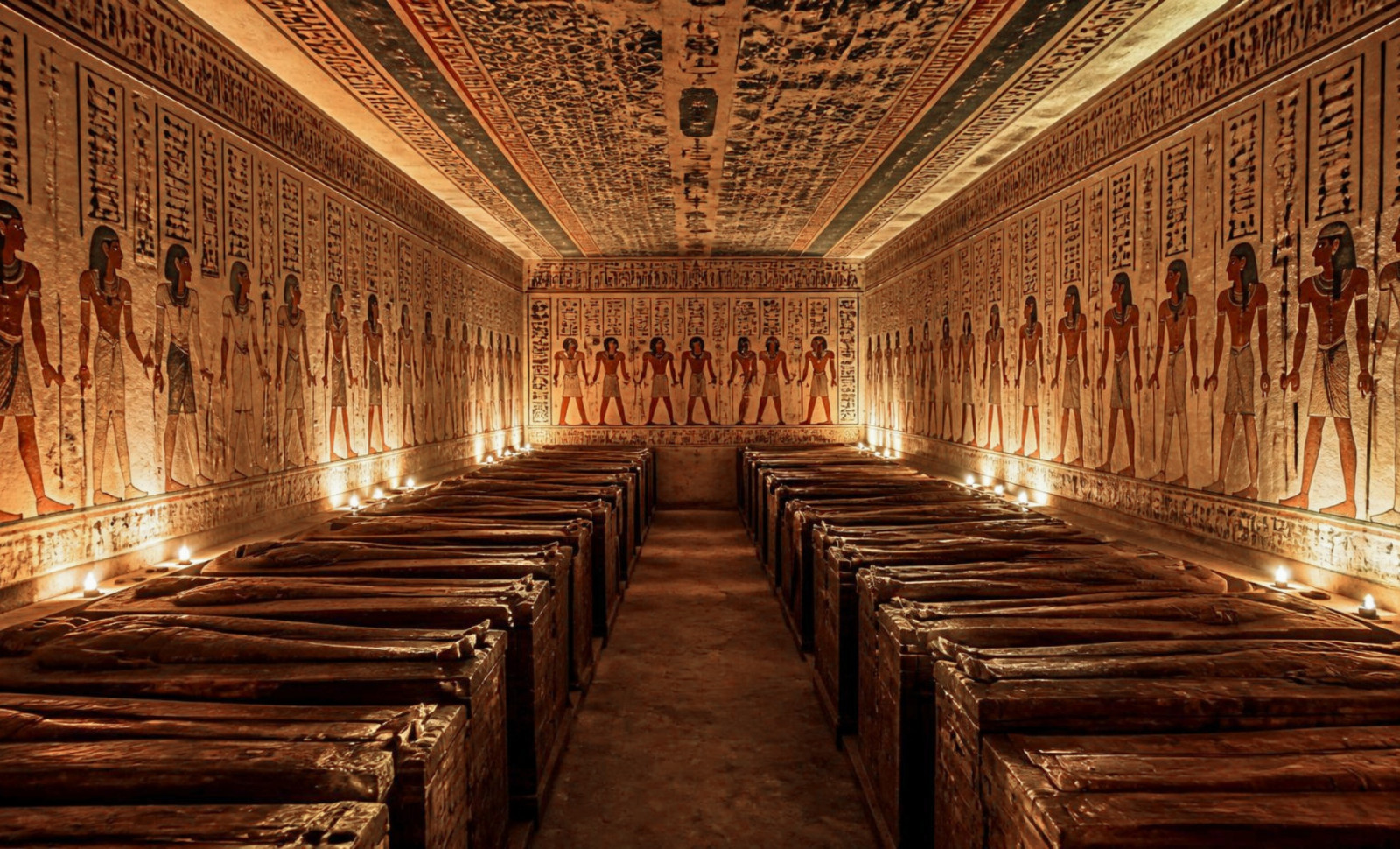
In a concealed rock-hewn chamber beneath the sands of Luxor, archaeologists have uncovered a remarkable assemblage from Egypt's Third Intermediate Period: 22 intricately painted wooden coffins belonging to female Singers of Amun, neatly arranged in ten horizontal tiers along with eight sealed papyri housed within a ceramic container. This exceptional find was revealed in March 2026 by Egypt’s Ministry of Tourism and Antiquities after excavations at the Asasif necropolis on the West Bank of Luxor.
The discovery emerged from a collaborative project led by the Supreme Council of Antiquities alongside the Zahi Hawass Foundation for Archaeology and Heritage. The cache was located in the southwestern part of the courtyard belonging to Sennep's tomb in the Qurna region, within the extensive Theban necropolis. Remarkably, the coffins still contained mummified remains, a notable rarity given the frequent disturbances and looting that have affected such burials over the centuries.
An Organized Chamber for Burial Storage
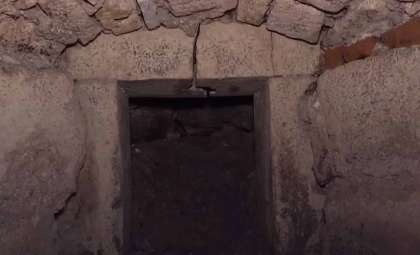
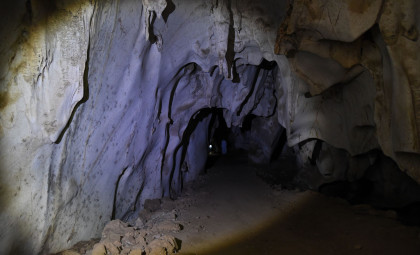
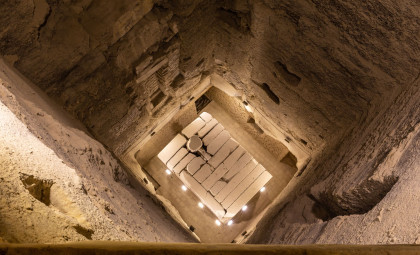
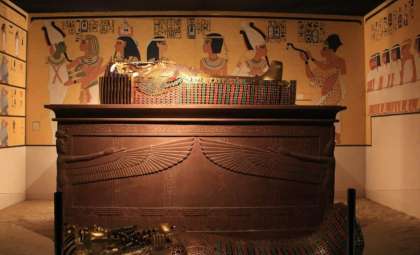
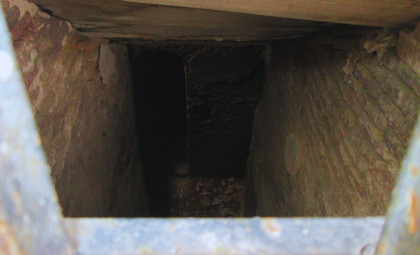
The burial site was excavated directly into the bedrock and appears to have served as a secondary storage space rather than the initial burial place. The coffin lids were detached from their bases, and the coffins were stacked across ten even rows, indicating a purposeful and methodical arrangement rather than a hurried reburial.

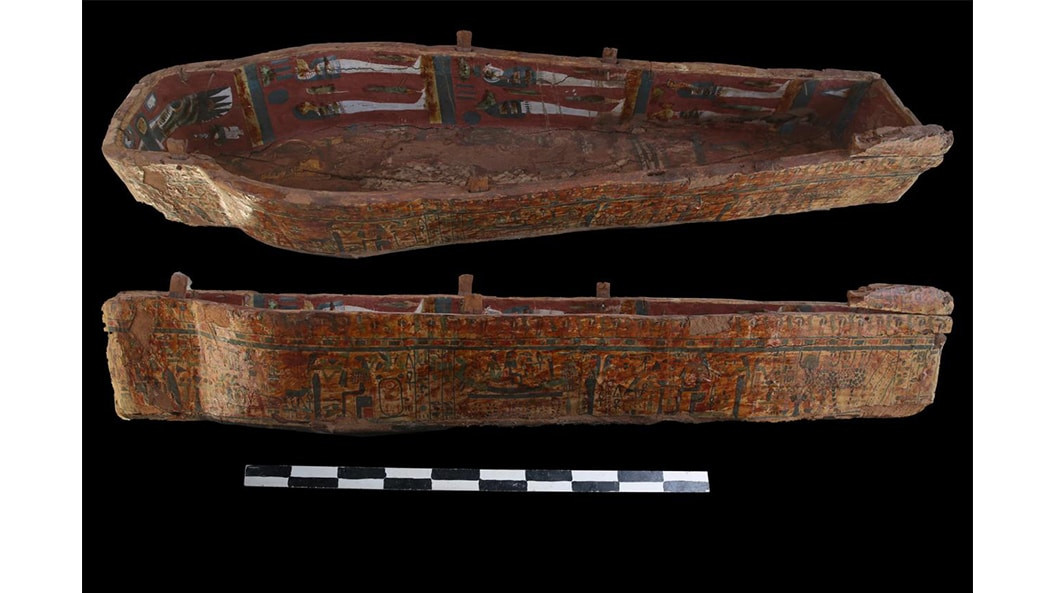
Experts surmise the layout reflects institutional coordination, likely orchestrated by temple officials. The meticulous stacking suggests a deliberate, planned consolidation instead of an emergency relocation. Most coffins lack individual names, but many are labeled with the title “Singer of Amun,” emphasizing their religious role over personal identity.
This detail sheds light on burial customs, where religious service seemingly outweighed lineage or personal history. The find provides valuable physical testimony of a collective burial practice directly associated with temple duties, expanding our understanding of Third Intermediate Period mortuary customs that have been sparsely documented.
The Role of the Singers of Amun
Spanning roughly 1070 to 664 BCE during Dynasties 21 to 25, the Third Intermediate Period was marked by political fragmentation. While northern Egypt centered at Tanis, Thebes remained firmly controlled by the powerful Amun priesthood at Karnak. The Singers of Amun were integral participants within this religious hierarchy.
These women held official roles in temple rituals, performing sacred chants and musical ceremonies at Karnak Temple. Far from marginal, they served a priestly institution that managed vast lands and held significant economic influence across Upper Egypt.
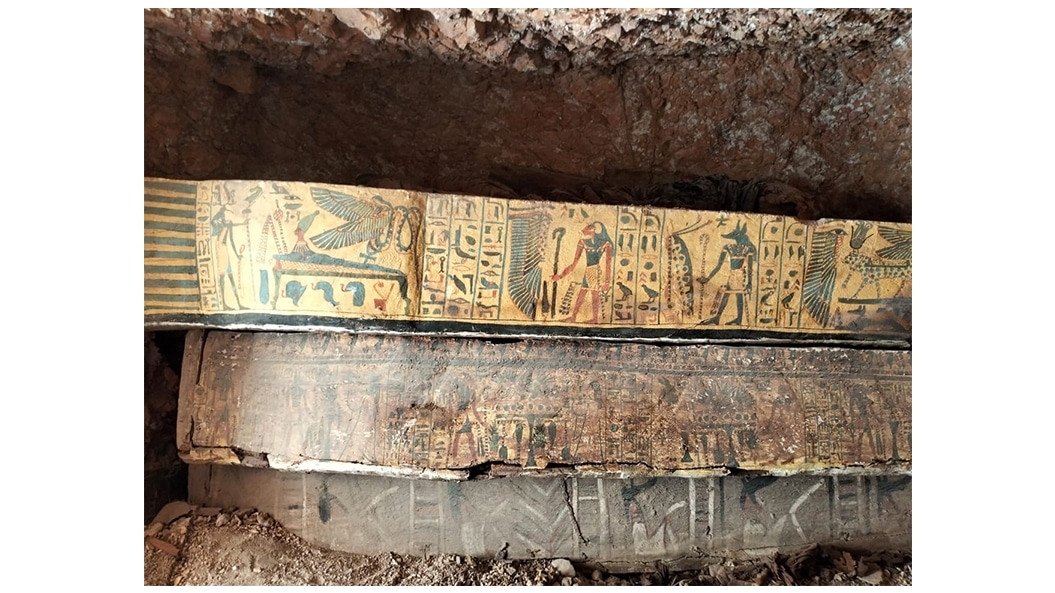
The predominance of the professional title over personal inscriptions highlights how their temple identity shaped their remembrance and burial. This assemblage from Asasif offers a rare glimpse into the collective mortuary management of this specific group of female religious officials.
Discovery of Eight Sealed Papyri
Alongside the coffins, eight papyrus scrolls were found inside a sizable pottery jar within the chamber. Several of these remain sealed with their original clay closures intact, which the Ministry of Tourism and Antiquities describes as an “information treasure” poised for future preservation and deciphering.
The papyri vary in size and the preservation of their seals indicates careful placement. Depending on their contents, these documents could provide new insights into temple administration, funerary rites, embalming techniques, or economic affairs related to the Amun cult. Since securely sealed papyri from controlled archaeological contexts are rare, the find holds significance beyond its textual information; material analysis might reveal how ancient Thebans stored and managed such records.
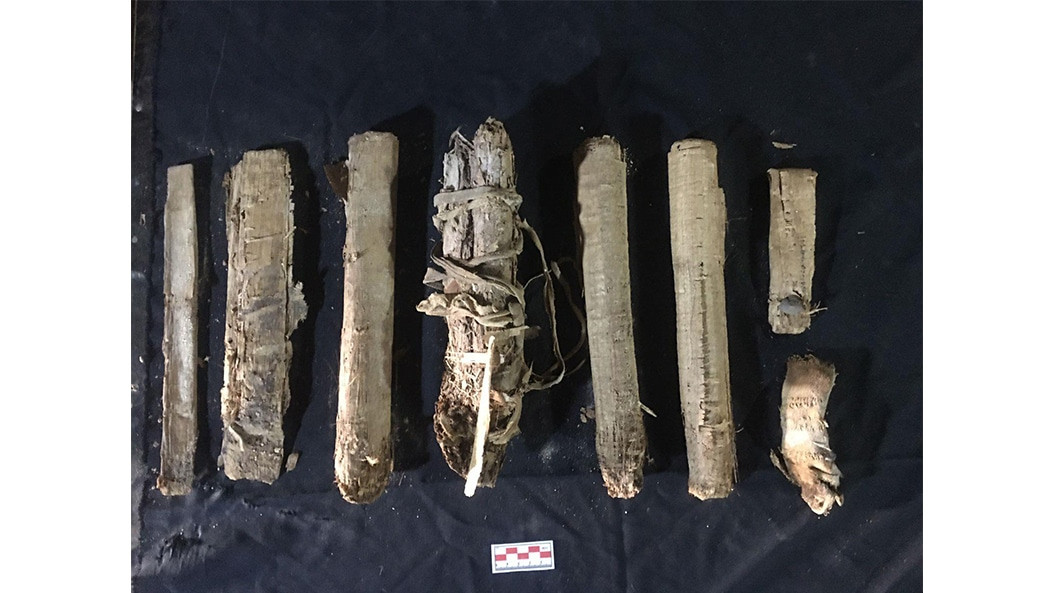
Also recovered were ceramic vessels likely linked to mummification, possibly utilized to hold natron, resins, or linen. Their presence alongside the coffins and papyri supports the idea of a carefully planned funerary consolidation rather than a single isolated event.
Restoration Efforts and Future Research
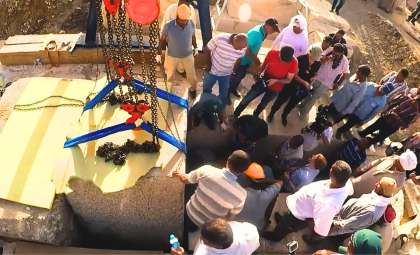
The discovered wooden coffins were fragile upon excavation. Conservators working on-site reinforced fragile fibers, stabilized flaking plaster, and carefully cleaned painted surfaces prior to comprehensive photographic and architectural recording. Subsequently, the artifacts were moved to preservation facilities for further treatment.
Excavations continue with efforts to locate the original burial sites from which these coffins were relocated. Researchers aim to determine whether these women were initially interred together as temple affiliates or later gathered from separate locations. Identifying these original tombs would advance understanding of the consolidation process and social connections among these women during life.
The Egyptian Ministry of Tourism and Antiquities has indicated that the sealed papyri have yet to undergo conservation or translation, leaving their content still unknown.
- Categories:
- Science





0 comments
Sign in to Comment