
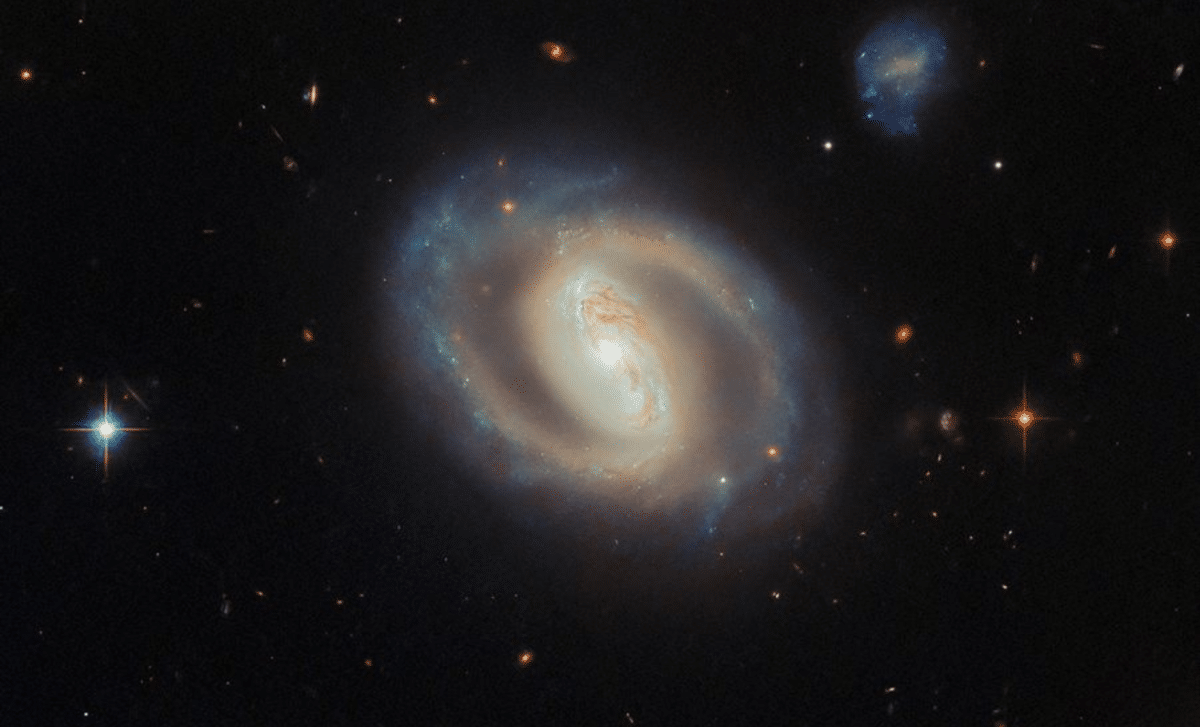
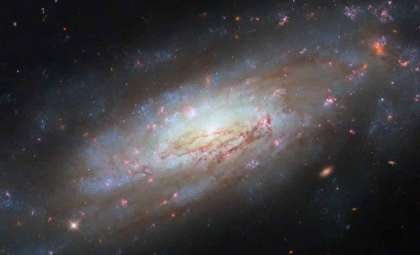
NASA’s Hubble Space Telescope has unveiled a captivating new image of the spiral galaxy IC 486, located roughly 380 million light-years distant. Although it appears calm, this galaxy is a hive of intense cosmic phenomena. At its core lies a supermassive black hole driving remarkable activity and shedding light on the violent processes shaping galaxy evolution.
This observation offers valuable insights into the mechanisms that influence galaxy growth and transformation. By studying the dynamic connections between stars, gas, dust, and the central black hole, researchers hope to expose the hidden elements that mold our cosmic environment. Beyond its aesthetic appeal, this image is a critical scientific asset for understanding universal evolution.
IC 486: A Barred Spiral Shaping the Boundaries of Gemini
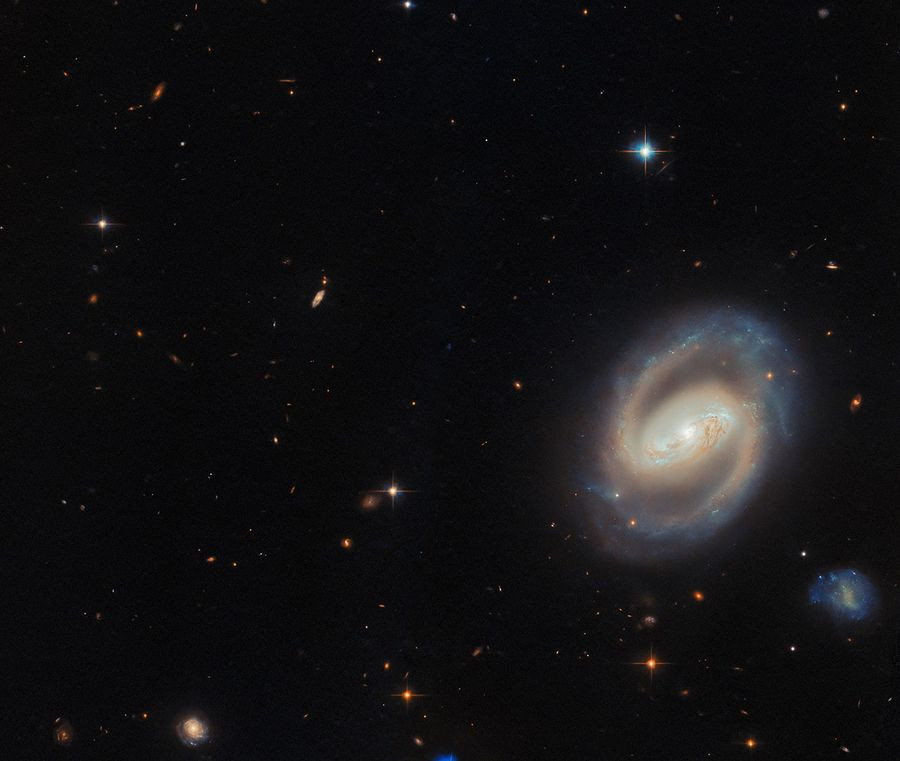
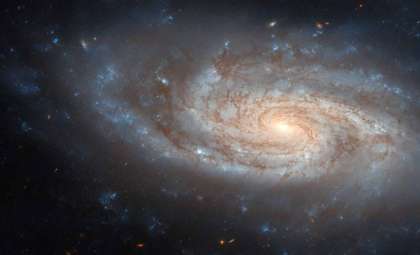
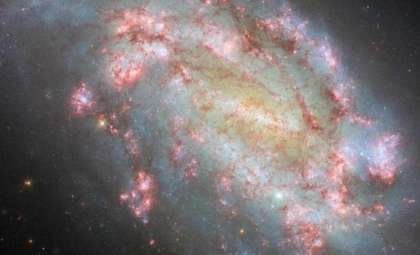
IC 486 is perched near the outer limits of the Gemini constellation, where its spiral arms elegantly unwind, tracing complex gravitational patterns. The galaxy features a distinct central bar, typical of barred spirals, which channels gas and dust inward toward its center. Hubble’s high-resolution imaging distinguishes the dense clusters of ancient stars at the core from the scattered bluish clouds along the arms, indicating ongoing stellar nurseries.

Far from a passive celestial body, IC 486 is an actively evolving system, rich in dust, gas, and emergent stars. Its spiral arms curl around a pale nucleus dominated by aged stars, while vibrant star-forming regions are interspersed across the disk. This contrast visually narrates the lifecycle phases within this galaxy.
Supermassive Black Hole: The Energetic Source Powering IC 486
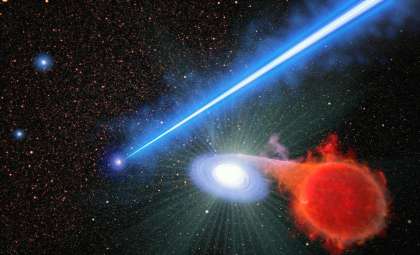
The centerpiece of this discovery is the galaxy’s active galactic nucleus (AGN), energized by a supermassive black hole. Weighing in at over 100 million times the mass of our Sun, this black hole consumes large quantities of gas and dust, creating a luminous accretion disk emitting intense radiation, including powerful X-rays.
This active core is characteristic of AGN-hosting galaxies, where energy output can outshine all the stars combined. The intense light from the accretion disk often masks the surrounding stellar glow, producing a distinctive, otherworldly luminosity. Such galaxies provide astronomers with a window into how black holes influence their host galaxies.
Advancing Galactic Research with NASA’s Observations
The remarkable data behind this image were collected through two observational campaigns led by M. J. Koss and A. J. Barth, focusing on central black hole activity in galaxies. Their work supports a broader NASA initiative to probe galaxy evolution by merging Hubble’s sharp imaging with comprehensive datasets, revealing links between structural features like bars and spiral arms and galactic nuclei activity.
This research also incorporates modern techniques such as machine learning and large language models to enhance galaxy classification efforts. Collaborations with citizen science projects like Galaxy Zoo empower astronomers to chart galaxy structures in detail on an unprecedented scale.
- Categories:
- Nasa



0 comments
Sign in to Comment