
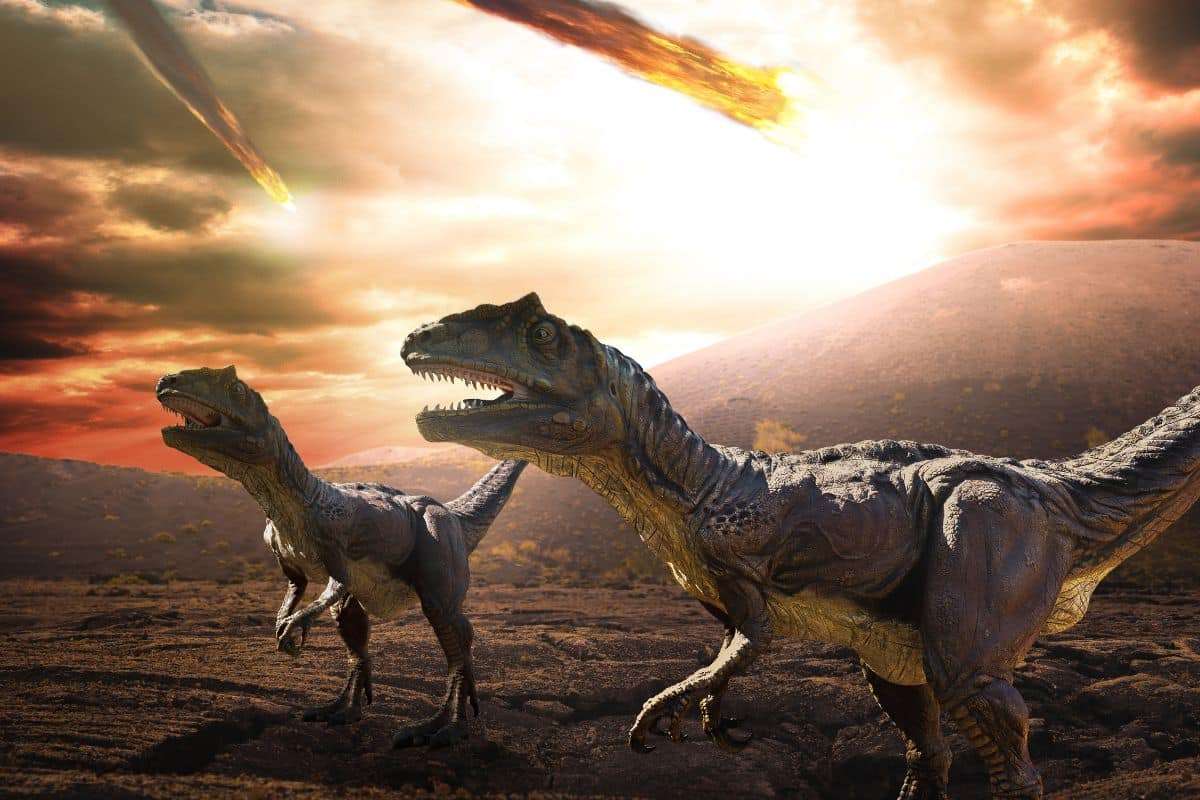
Approximately 66 million years ago, a massive asteroid collision eradicated nearly 75% of Earth's life forms, abruptly ending the era dominated by nonavian dinosaurs. This colossal 15-kilometer-wide (9 miles) celestial body struck near present-day Mexico, triggering widespread fires, acidic precipitation, and a prolonged planetary winter that transformed Earth's ecosystems.
But what might have happened if this asteroid had missed Earth? Could dinosaurs have continued to thrive and possibly evolved increased intelligence? And how would mammals, including our distant ancestors, have fared in a world still ruled by dinosaurs?
Could Dinosaurs Have Stayed as Earth's Dominant Creatures?
Dinosaurs had already flourished for some 165 million years, enduring environmental upheavals such as sea-level changes, volcanic activity, and shifting climates. Many paleontologists suggest that, had the asteroid event not occurred, dinosaurs might have further evolved and continued to shape Earth’s biodiversity in unpredictable ways.

Steve Brusatte, a professor of paleontology at the University of Edinburgh, notes that dinosaurs were thriving right up until the extinction event. According to fossil records, they exhibited remarkable diversity and occupied a wide variety of ecological niches.
However, some scientists argue that dinosaur populations were already in decline before the asteroid hit.
Would Dinosaurs Have Survived Drastic Climate Changes?
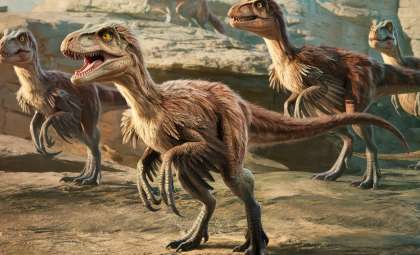
One obstacle for dinosaurs would have been adapting to severe climate fluctuations. Contrary to the common image of dinosaurs inhabiting mainly warm environments, some species lived in cold, snowy areas and even sported feathers, possibly providing insulation comparable to that of birds and mammals today.
This suggests that certain dinosaurs might have endured ice age conditions. Research indicates that species exhibiting warm-blooded traits, such as the Tyrannosaurus rex, might have withstood colder climates much like woolly mammoths did by developing thick fur during the last Ice Age.
If dinosaurs had persisted, they might have developed further physiological traits to survive harsher environments. Similar to how some mammals grew dense fur and fat layers, dinosaurs could have evolved comparable adaptations.
Is It Possible Dinosaurs Could Have Evolved Higher Intelligence?
A fascinating debate in paleontology concerns whether dinosaurs had the potential to attain intelligence on par with humans. Paleontologist Dale Russell proposed that given enough time, some species might have achieved advanced cognitive skills.
Russell’s concept centered on the Troodon, a small, bird-like dinosaur with an unusually large brain, binocular vision, and dexterous hands. He envisioned a hypothetical "dinosauroid"—a humanoid-like, bipedal reptile capable of sophisticated thought.
Yet, many experts have challenged this hypothesis. A 2023 analysis indicates dinosaurs lacked the neurological architecture necessary for intelligence resembling that of primates. The study concluded, "Neither Troodon nor any other dinosaur species could have transitioned toward a primate-like cognitive evolution leading to human-level intelligence."
How Would Mammals Have Fared in a Dinosaur-dominated World?
Paul Sereno, a paleontologist at the University of Chicago, strongly argues that mammals—and consequently humans—might never have emerged had large nonavian dinosaurs persisted. "Our evolution depended on a mammalian world free from dominant dinosaurs," he states. "Humans were far from inevitable."
Supporting this view, a 2021 research paper highlights that the extinction of ground-dwelling dinosaurs opened ecological opportunities that primates exploited, eventually leading to the rise of modern humans.
A Planet Transformed Without Humans?
Had the asteroid missed Earth, the planet’s landscape and inhabitants would look dramatically different. Dinosaurs might have adapted to climate shifts, diversified into new forms, and maintained dominance for millions of years. Meanwhile, mammals could have remained small, marginal creatures without evolving species with large brains, like primates, dolphins, or humans.
Brusatte captures this idea clearly: "The course of history would have changed completely. Our direct ancestors likely would have never gotten the chance to develop."
In a hypothetical world where dinosaurs still roam, might there have been sprawling, reptilian civilizations or highly intelligent dinosaur species? While this is impossible to confirm, one certainty remains: the asteroid event drastically altered the evolutionary trajectory of life on Earth.
- Categories:
- Science





0 comments
Sign in to Comment