
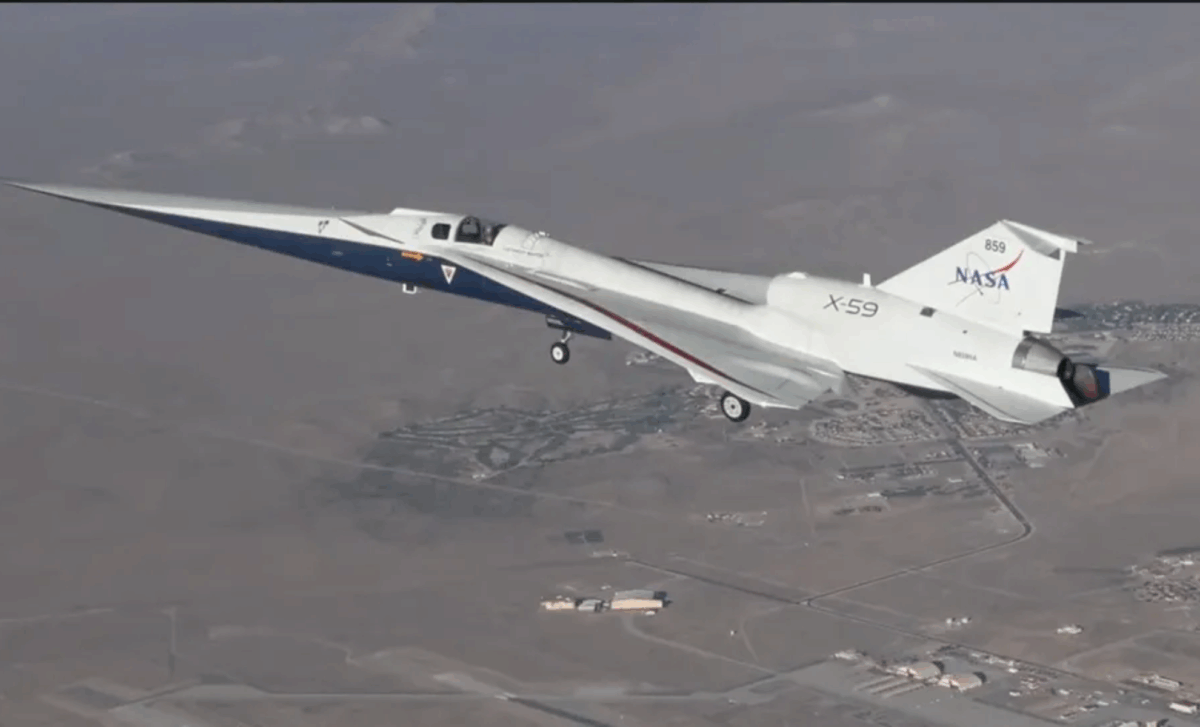
NASA’s innovative X-59 supersonic jet has recently achieved its maiden flight, marking a significant step forward in aviation technology. Created alongside Lockheed Martin, this aircraft strives to transform supersonic travel by drastically reducing the sonic boom typically heard when breaking the sound barrier. The X-59 is poised to usher in a new chapter for commercial air travel.
The Dawn of Quiet Supersonic Flight: X-59’s Inaugural Journey
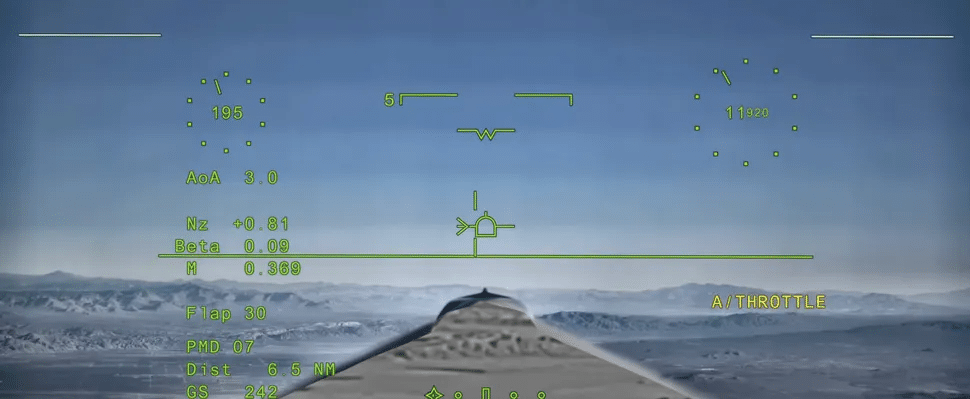
On October 28, 2025, NASA’s X-59 supersonic jet took off for its first test flight, a landmark event for the aerospace sector. Captured from various vantage points—including onboard cockpit footage and chase planes—the flight showcased the jet’s capability to exceed Mach 1 speeds without generating the loud sonic boom traditionally associated with supersonic aircraft. Developed in collaboration with Lockheed Martin, the X-59 is engineered to reach speeds over Mach 1.4 while producing a noise level nearly imperceptible on the ground—a technological breakthrough previously thought unattainable. The captivating video, highlighted by Space.com, also captures the jet’s futuristic silhouette as it prepares for takeoff at Palmdale Regional Airport in California, set against the backdrop of the Mojave Desert.
This flight marks more than a technical accomplishment; it signifies a leap toward reinventing air travel. Should the X-59 demonstrate consistent success in upcoming trials, it could allow commercial flights to break the sound barrier over land without the disruptive sonic booms that have been prohibited since 1973. Quiet supersonic technology like this stands to reshape air travel with faster journeys that remain respectful to those below.

The Purpose Behind the X-59 Project
The core mission of the X-59 extends beyond simply achieving supersonic speeds. It aims to showcase that sound barriers can be surpassed while minimizing noise impact on communities beneath. Featuring advanced technology, the jet significantly reduces the loud sonic boom to a subtle “thump,” nearly imperceptible to human ears, allowing for quieter supersonic flights over populated areas.
The partnership between NASA and Lockheed Martin reflects their shared commitment to innovation. As Sean Duffy, Acting NASA Administrator, remarked,
“X-59 is a symbol of American ingenuity. The American spirit knows no bounds. It’s part of our DNA—the desire to go farther, faster, and even quieter than anyone has ever gone before.”
This ambitious initiative aims to uphold the United States' leadership in aerospace while paving the way for supersonic travel to become a routine method of transportation. Further testing and environmental assessments will determine whether the X-59 can achieve rapid flight without compromising noise levels or ecological factors.
Upcoming Steps in the X-59 Program
The Armstrong Flight Research Center in Palmdale, California, will carry on with comprehensive flight testing for the X-59, employing an array of microphones and sensors throughout the Mojave Desert. These instruments will capture data on vibrations and shockwaves, which will inform refinements needed for the jet’s design. The objective is to confirm the aircraft’s compliance with safety, noise, and environmental standards for viable supersonic travel.
Future flights will assess the X-59’s behavior across varied speeds and altitudes. The ultimate ambition is to validate that the jet can sustain supersonic velocity without disturbing populations below, potentially lifting the longstanding ban on supersonic flights over U.S. territories since 1973. If the project succeeds, it could enable commercial aircraft to deliver rapid supersonic service that is also remarkably quiet, revolutionizing air travel.
Advancing Toward Commercial Quiet Supersonic Flights
More than just an experimental aircraft, the X-59 symbolizes the first major step toward reintroducing supersonic travel into commercial aviation. Supported by both the White House and the Federal Aviation Administration, NASA and Lockheed Martin are championing a future where supersonic flights are practical, efficient, and environmentally considerate for daily travelers.
As demand grows for faster air connectivity, especially on long-distance routes, the X-59 distinguishes itself by merging speed with reduced sonic impact. Amid advancements by companies like Boom Supersonic, NASA’s success with the X-59 could inspire a new wave of aerospace innovation, transforming the future landscape of flight.
- Categories:
- Aircraft







0 comments
Sign in to Comment