
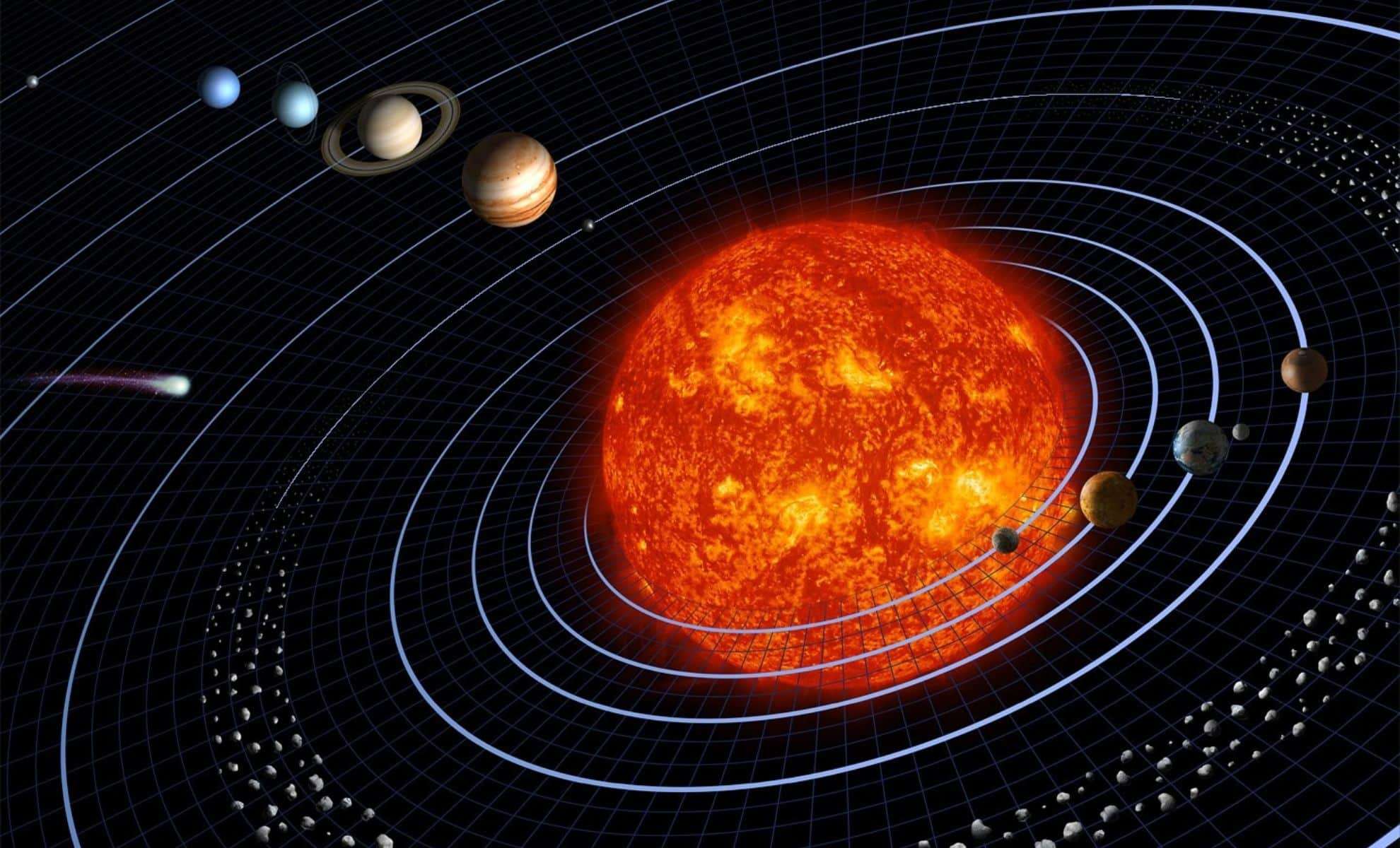
Scientists might have pinpointed a promising candidate for the elusive Planet Nine, an undiscovered world hypothesized to lurk far beyond Neptune’s orbit.
This potential breakthrough originates from a fresh analysis of astronomical data collected over 40 years ago, offering exciting new avenues in uncovering this enigmatic planet that has intrigued researchers for nearly a decade.
Tracing the Origins of Planet Nine
The notion of Planet Nine took shape in 2016 when Caltech researchers Konstantin Batygin and Mike Brown suggested the presence of a hidden planet.

Their hypothesis arose from noticing that six remote objects in the outer solar system seemed to be gravitationally aligned, implying the gravitational pull of a massive, unseen entity.
They proposed that Planet Nine could be orbiting the Sun at a distance far beyond Neptune, influencing the orbits of these distant bodies.
Rediscovering Clues in Historical Data
After extensive searches yielded no direct sightings, astronomers revisited archival infrared datasets to seek Planet Nine.
The research team examined two infrared sky surveys spanning over 20 years, targeting objects located between 500 and 700 astronomical units (AU) from the Sun—the predicted realm for the planet.
They concentrated on detecting slow-moving objects, characteristic of a body so distant from the Sun.
“Our search prioritized Planet Nine candidates within the 500–700 AU range and masses between 7 and 17 Earth masses, employing two far-infrared all-sky surveys separated by 23 years,” the researchers detailed in their preliminary report.
Pinpointing the Best Candidate
From an initial list of 13 promising objects, the investigators refined their search, ultimately isolating a single candidate.
This object appeared at distinct sky positions in two separate infrared datasets, consistent with expectations for a distant, slowly moving planet.
“Following comprehensive visual and technical screening, we identified one suitable candidate pair where the IRAS detection did not coincide with the AKARI image location and vice versa, displaying an angular separation between 42′ and 69.6′,” the team reported.
Further Steps to Validate the Discovery
Although this finding is encouraging, the nature of the candidate remains unresolved.
Current data cannot definitively prove that this object is Planet Nine.
As noted by the researchers, additional monitoring is essential to chart its orbit and verify if it aligns with theoretical predictions.
“The AKARI detection probability map confirmed the source corresponded to a slow-moving object with dual detections on one date, and none recorded six months prior,” the scientists remarked.
The Significance of Confirming Planet Nine
Substantiating Planet Nine’s existence would clarify several oddities in our solar system, like the unusual tilt of certain Kuiper Belt objects’ orbits.
NASA notes that discovering Planet Nine would help align our solar system’s profile with the diverse planetary systems found elsewhere in the Milky Way.
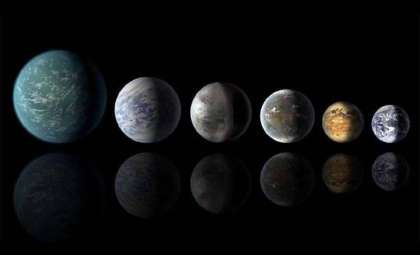
Many exoplanets detected orbiting other stars are categorized as “super-Earths”—planets larger than Earth but smaller than Neptune—a planet type absent in our system. Planet Nine could fill this missing planetary category.
- Categories:
- Space








0 comments
Sign in to Comment