
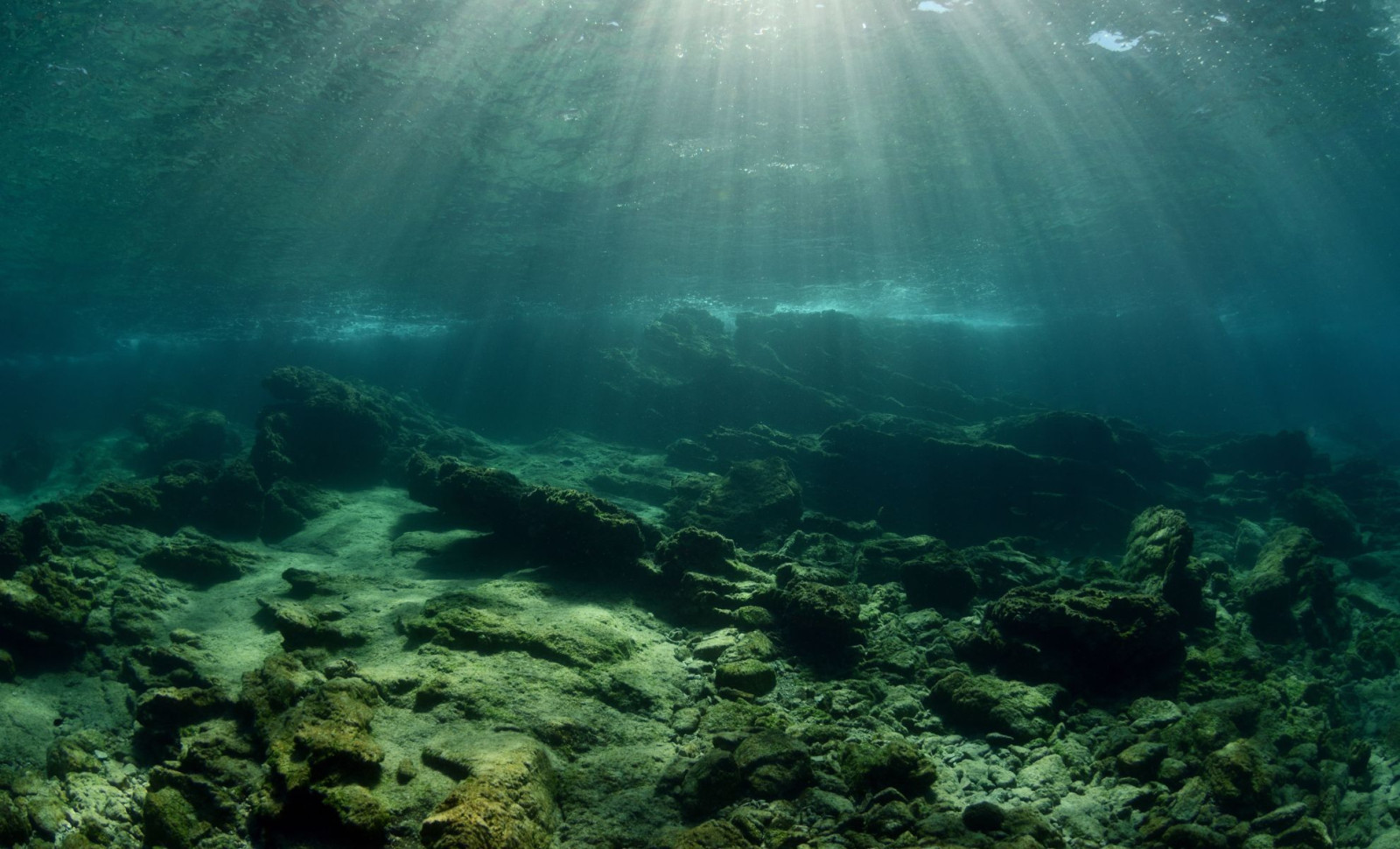
In the secluded Rock Islands of Palau, an extraordinary marine lake shelters a distinct wildlife community. Jellyfish Lake, situated on the island of Eil Malk, contains millions of jellyfish that have evolved independently for approximately 12,000 years, resulting in a subspecies exclusive to this location.
Separated from the ocean since the last ice age, this lake became a self-contained ecosystem with a unique evolutionary path. It now hosts vast swarms of jellyfish that move in unison, thriving within a delicate environmental balance. This remote lake remains one of the Pacific’s rarest natural wonders.
A Lake Crafted by Millennia of Seclusion
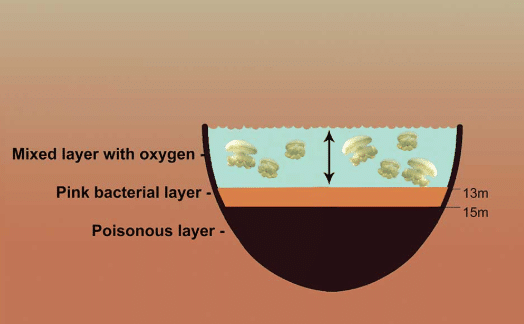
Locally known as “Fifth Lake,” this enclosed body of water measures roughly 400 meters in length and reaches depths of 30 meters. It was formed when post-glacial sea level changes cut it off from adjacent lagoons and the open sea.

This isolation produced a contained environment where species adapted under stable, secluded circumstances. The lake’s perimeter is fringed by mangroves that support diverse marine invertebrates. Over time, jellyfish emerged as the dominant and most iconic residents.
A Distinctive Jellyfish Found Only Here
As detailed by the Coral Reef Research Foundation, Jellyfish Lake’s signature species is the golden jellyfish (Mastigias papua etpisoni), a special subspecies named after Palau’s former president Ngiratkel Etpison. Isolated for millennia from ocean populations, these jellyfish evolved unique traits that set them apart.
Their behavior is particularly notable. The jellyfish follow the sun’s movement daily, migrating across the lake. They start the day by swimming east at sunrise, halting at shadowed areas.
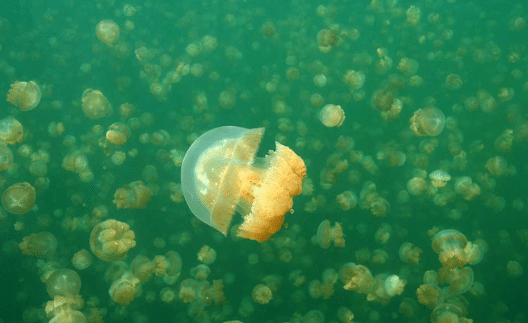
As sunlight shifts, the jellyfish then move west, generating dense formations that resemble a floating wall beneath the water’s surface.
Mutualism Driven by Sunlight
Their daily migration correlates with a mutualistic bond with dinoflagellates, tiny algae living inside their bodies. These algae depend on sunlight to photosynthesize and generate energy.
“The jellyfish and algae have a special and beneficial relationship. The jellyfish rotates and swims around the lake to ensure that the algae get enough sunlight for photosynthesis, and the algae gives the jellyfish some energy and nutrients in return.”
By constantly moving through illuminated waters, the jellyfish enable their algal partners to absorb sunlight. In exchange, the algae nourish the jellyfish, helping sustain this isolated ecosystem.
A Population Affected by Environmental Changes
Research indicates that while the lake usually contains about 5 million golden jellyfish, the numbers have varied greatly. Around 2005, the jellyfish population peaked near 30 million, but by 2016 it had fallen drastically, prompting a two-year closure to visitors.
This decline is attributed to El Niño, which raised water temperatures and disrupted the growth of symbiotic algae. With fewer algae to sustain them, jellyfish numbers dropped. When conditions improved, the ecosystem slowly rebounded.
By 2019, jellyfish counts returned to previous levels, allowing safe public access again. The lake is also inhabited by moon jellyfish, though they are significantly less abundant.
- Categories:
- News







0 comments
Sign in to Comment