
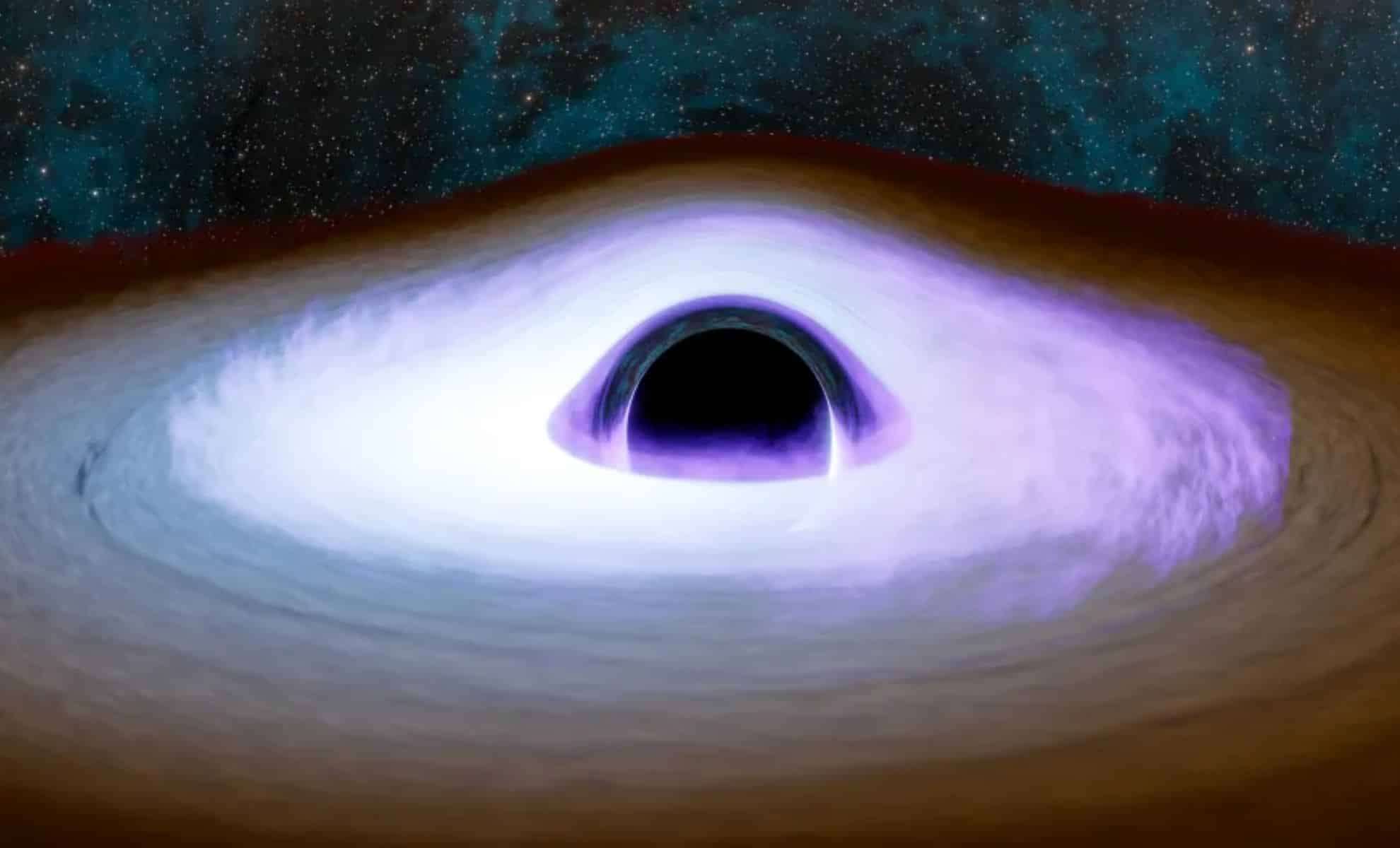
In a groundbreaking investigation, NASA’s Imaging X-ray Polarimetry Explorer (IXPE) has uncovered novel details about the enigmatic matter orbiting black holes, overturning previous scientific assumptions. This study focuses on the black hole IGR J17091-3624, famed for its distinctive “heartbeat” variation in brightness, which had eluded comprehensive understanding until now. By leveraging IXPE’s cutting-edge capability to track X-ray polarization, scientists from an international consortium have opened new frontiers in comprehending black hole dynamics.
The NASA-published findings prompt a fresh perspective on how accretion disks and surrounding coronas behave. Earlier hypotheses predicted that the observed levels of polarization would only manifest under highly specific conditions, but IXPE’s detections contradict that, urging a reevaluation of established theoretical frameworks. These insights are poised to deepen our grasp of black hole formation, activity, and expansion—long-standing mysteries in astrophysics.
Decoding the Rhythmic Pulses of a Black Hole
“IGR J17091-3624 exhibits a remarkable pulsing behavior akin to a heartbeat, and IXPE has provided a completely novel method to analyze this phenomenon,” explains Melissa Ewing, the chief investigator. Situated about 28,000 light-years from Earth, this stellar-mass black hole stands out because of its erratic luminosity fluctuations resembling a rhythmic pulse. These cycles provide critical clues about interactions unfolding at the event horizon. IXPE’s polarization measurements allow researchers to scrutinize these brightening and dimming sequences in an unprecedented way, setting the stage for new astrophysical explorations.

Observing this pulsation offers a unique window into how matter spirals inward toward black holes. IXPE’s polarization sensitivity enhances astronomers’ ability to comprehend how extreme gravitational forces influence light emission near these cosmic giants. The formation of an accretion disk from material drawn from a nearby star, and its effects on emitted radiation, now seems more accessible thanks to this innovative research.
Why X-ray Polarization Matters in Black Hole Astronomy
X-ray polarization acts as a vital diagnostic tool to reveal the geometry and behavior of black hole coronas. “Usually, elevated polarization levels suggest an almost edge-on observation of the corona,” says Giorgio Matt, a professor at the University of Roma Tre and a co-author of the paper. This hot, magnetized plasma zone orbiting the black hole strongly influences the characteristics of emitted X-rays. Tracking how these X-rays scatter provides telling information about the corona’s structure and orientation.
IXPE findings challenge previous expectations about polarization conditions. “Achieving such high polarization would typically require a near-perfectly oriented corona viewed precisely edge-on,” Matt adds. Prior models assumed this geometry was essential, but new data indicate more complex configurations are possible, prompting scientists to rethink black hole corona mechanics.
The Mysterious Brightness Oscillations May Unlock Black Hole Mysteries
Another compelling aspect revealed by this research is the puzzling alternating light intensity of the black hole. “Scientists have yet to unravel the cause of these fluctuations, which could be crucial for understanding this class of black holes,” notes Matt. This rhythmic dimming and brightening likely reflect intricate physical phenomena near the event horizon. While the exact drivers remain elusive, IXPE’s detailed observations offer a pathway to uncovering previously hidden dynamics.
Researchers hypothesize these luminosity shifts might result from multifaceted interactions among the accretion disk, corona, and possibly relativistic outflows emanating from the black hole. Elucidating these mechanisms could greatly enhance our knowledge of matter behavior in these intense gravitational fields. Ongoing studies aim to pinpoint the factors behind this oscillation, potentially transforming black hole science.
Relativistic Winds: A Key to Black Hole Evolution
This investigation highlights the importance of relativistic winds generated by the black hole’s accretion disk in influencing its growth. “Such winds represent a major missing element in comprehending black hole development across the board,” explains Maxime Parra, who oversaw the observations. These plasma winds, moving at nearly 20% the speed of light, may explain elevated polarization and other observed features tied to black hole environments.
Parra emphasizes how this breakthrough enriches understanding not only of IGR J17091-3624 but also of black holes generally. Detecting these winds is notoriously challenging, yet IXPE’s advanced sensors have made notable strides in evaluating their properties. Future improvements and more extensive observations are expected to further illuminate these winds’ roles, paving the way to solving longstanding astrophysical puzzles.
Charting the Path Forward in Black Hole Exploration
Astronomers anticipate that IXPE will continue to revolutionize black hole research by providing novel and unexpected polarization data. “Upcoming observations promise to reveal even more surprising details,” says Parra. The expanding dataset from diverse black hole systems will help resolve persistent mysteries and enable refined cosmic models of these extraordinary objects.
IXPE’s unprecedented ability to measure X-ray polarization promises a wealth of discoveries about black holes’ complex behaviors. The emerging evidence suggests that these cosmic entities may operate in ways we have yet to imagine, potentially transforming our broader understanding of the universe’s most extreme phenomena.
- Categories:
- News











0 comments
Sign in to Comment