
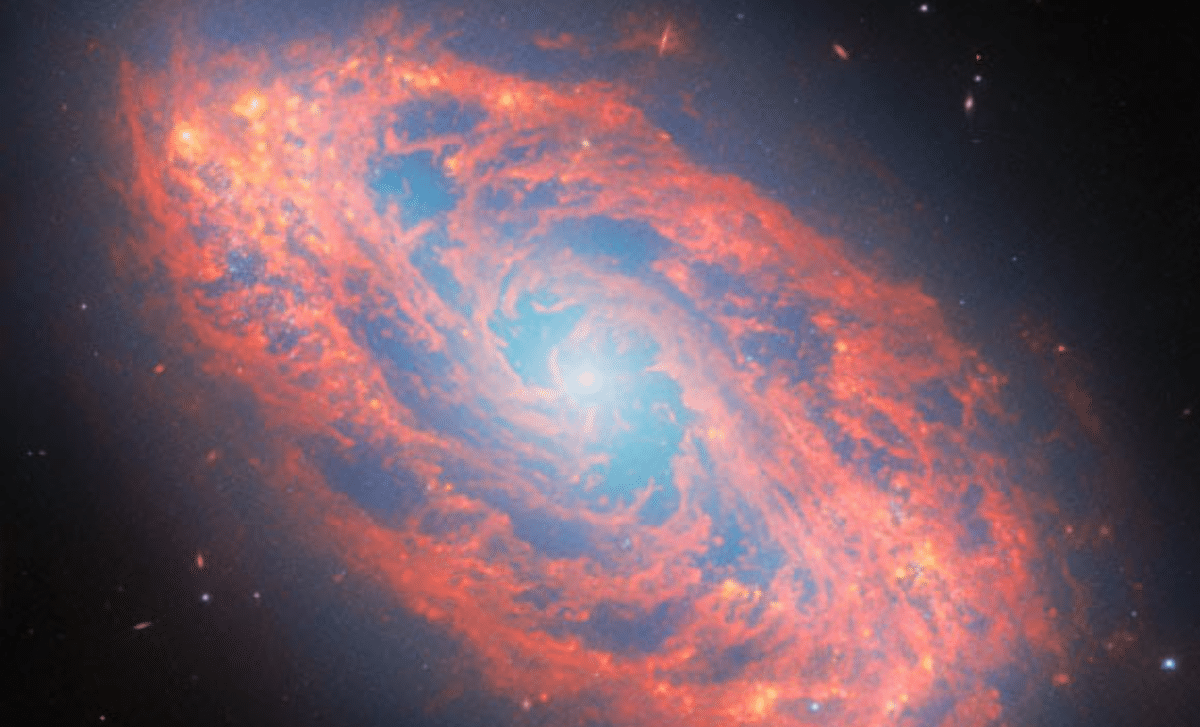
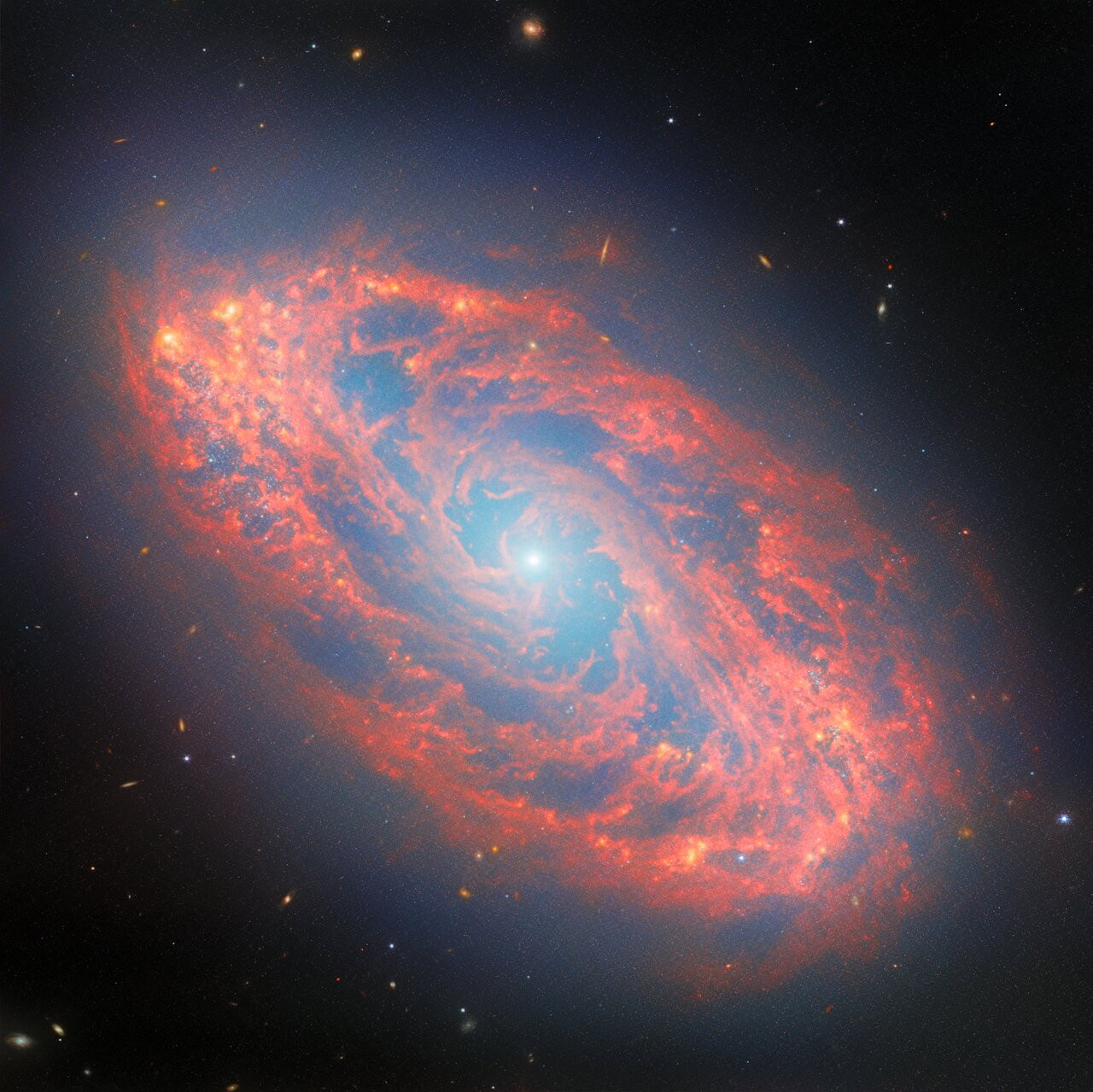
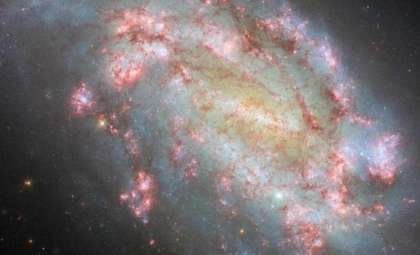
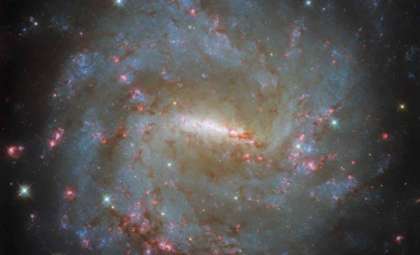
The James Webb Space Telescope has delivered an incredible infrared snapshot of NGC 5134, a spiral galaxy approximately 65 million light-years distant. This imaging showcases Webb’s remarkable capability to expose intricate features within far-off galaxies, including the tightly spiraled arms teeming with active star formation. Utilizing data from the Mid-Infrared Instrument (MIRI) and the Near-Infrared Camera (NIRCam), scientists have constructed a detailed representation of the galaxy, shedding light on the interplay between star birth and gas renewal.
Detailed Insights into NGC 5134 from Webb
Equipped with state-of-the-art technology, the James Webb Space Telescope allows astronomers to study remote galaxies with unparalleled precision. NGC 5134 stands out as a prime example for close observation. Webb researchers remarked that the close proximity of this galaxy enables the telescope to detect fine structures in its compact spiral arms. These regions are abundant in dust and gas, essential ingredients fueling ongoing star formation. Webb’s infrared imaging delivers fresh insights into the lifecycle of stars and the intricate gas flows within the galaxy.
The spiral arms of NGC 5134 are vibrant, constantly evolving areas where stars are born, develop, and ultimately expire. Webb’s released image captures this complexity beautifully, highlighting zones of intense star creation scattered throughout the galaxy. Emerging stars influence their natal gas clouds, sometimes consuming the gas needed to sustain further star formation.

The Interplay of Dust and Stars Within NGC 5134
Observations combining MIRI and NIRCam instruments reveal diverse facets of NGC 5134. MIRI detects emissions from warm dust particles distributed through the galaxy, outlining detailed networks of gas and dust and revealing underlying chemical activities inside the galaxy's clouds.
“Together, the MIRI and NIRCam data paint a portrait of a galaxy in constant ebb and flow,” the researchers noted.
This dynamic describes the ongoing cycle of star formation and destruction, which influences the movement of gas and dust within NGC 5134.
Detecting complex molecules such as polycyclic aromatic hydrocarbons—ringed carbon-based compounds—adds richness to these findings, offering essential clues about the chemistry in star-forming zones.
How Star Formation Shapes NGC 5134
The gas clouds nestled in NGC 5134’s spiral arms do more than create captivating visuals—they are active stellar nurseries where interstellar gas and dust combine to ignite new stars.
“The gas clouds that billow along NGC 5134’s spiral arms are the sites of star formation, and each star that forms chips away at the galaxy’s supply of star-forming gas,” the astronomers explained.
As star-forming gas is gradually consumed, star birth continues but will slow over time as gas supplies dwindle.
Yet star deaths replenish these raw materials. When massive stars reach the end of their life cycles, their explosive ends return valuable elements to the galaxy. “When stars die, they recycle some of that gas back into the galaxy,” researchers pointed out.
The Dramatic End of Massive Stars
Massive stars, those exceeding eight solar masses, conclude their lives with spectacular explosions. They erupt as supernovae, cataclysmic events dispersing stellar debris across vast distances. As detailed in the study, “Massive stars more than about eight times the mass of the Sun do so spectacularly, in cataclysmic supernova explosions that spread stellar material across hundreds of light-years.” These explosions are key to distributing critical elements that will forge future stars and planetary systems.
Stars of solar mass, by comparison, end lives more gently by swelling into red giants and gradually releasing their outer layers. “Stars like the Sun give back some of their material as well, though more gently,” the scientists noted. This slow enrichment of the interstellar medium supports the galaxy’s continuous cycle of star creation, life, and stellar death, influencing its long-term evolution.
- Categories:
- Astronomy


0 comments
Sign in to Comment