
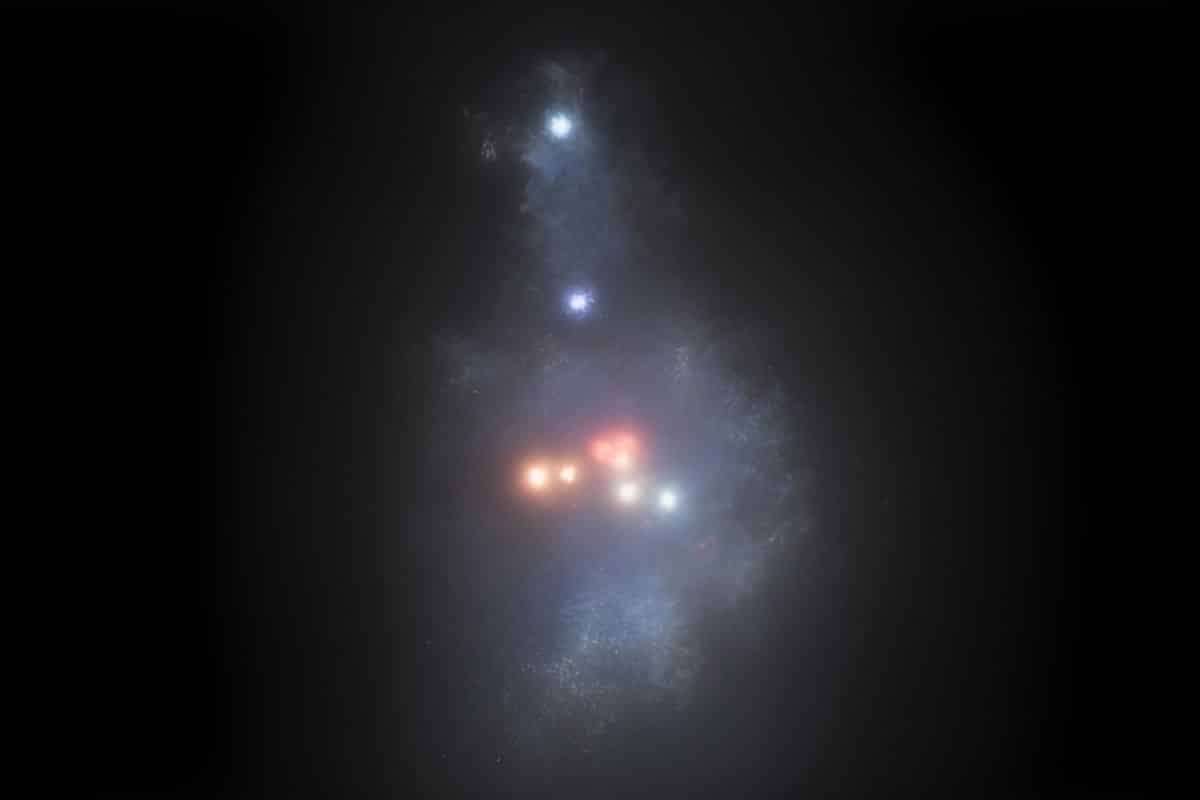
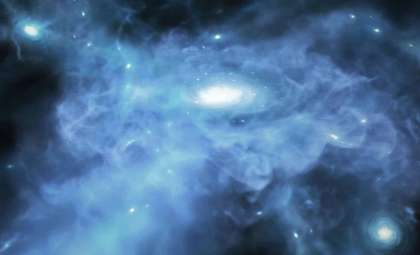
The James Webb Space Telescope (JWST) has uncovered a remarkably developed galaxy that closely resembles our own Milky Way, yet it existed when the universe was only a small fraction of its current age.
Unveiling a Galactic Prototype
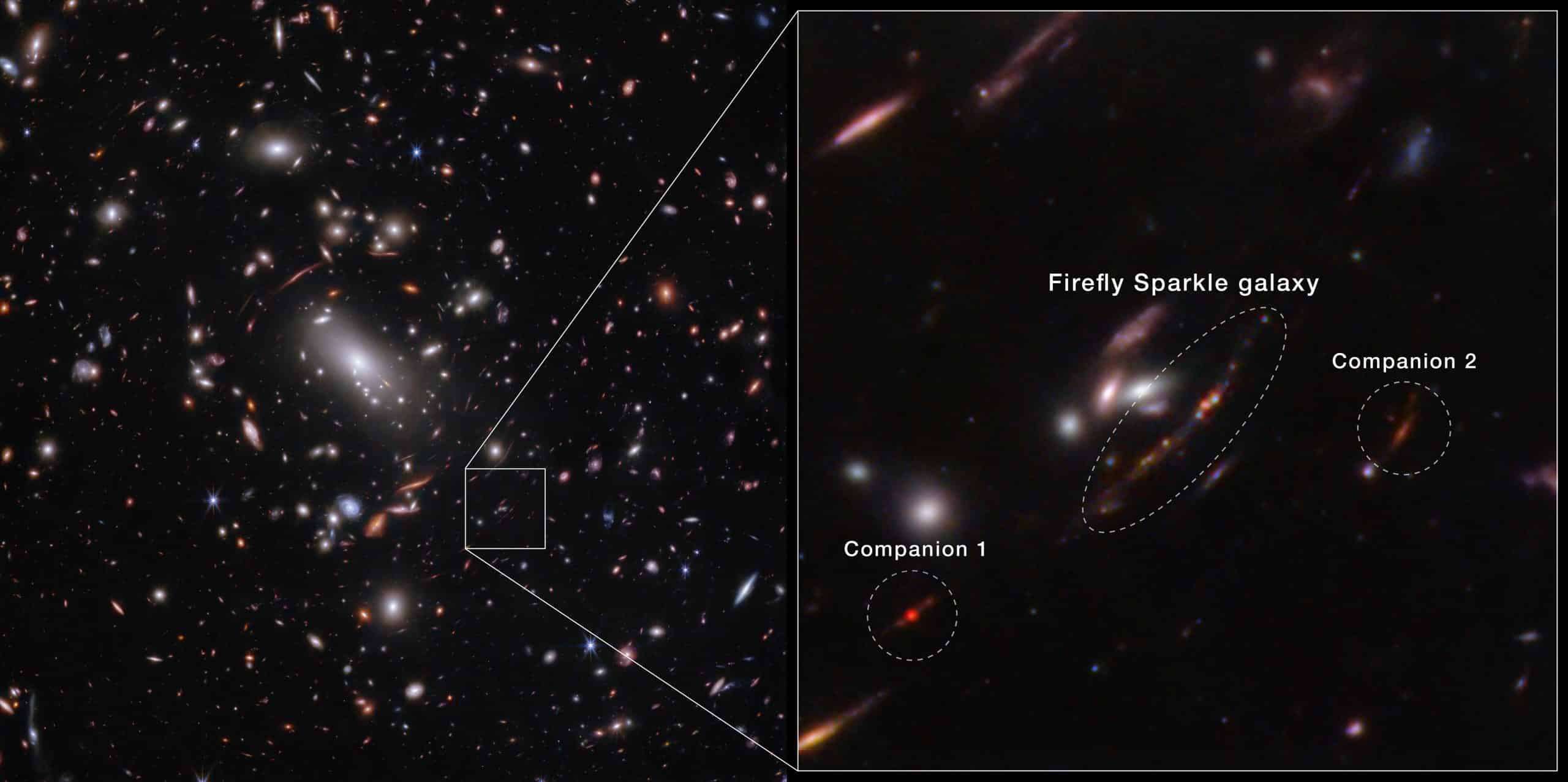
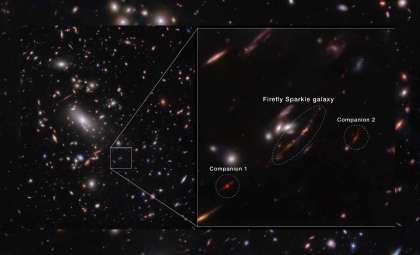
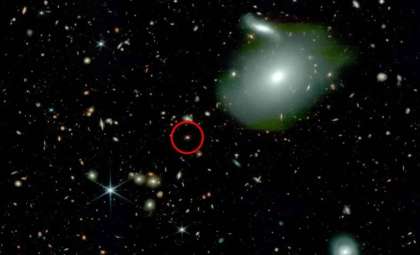
The Firefly Sparkle galaxy was identified by combining Webb’s sharp imaging and the natural amplification of gravitational lensing.
Situated behind a foreground galaxy cluster, its light was amplified by over 40-fold, enabling the detailed observation of an object that would normally appear as a faint smudge.
Within Firefly Sparkle’s distorted image, astronomers pinpointed ten dense star clusters—bright, active regions where stars are forming that could eventually develop into the globular clusters observed in galaxies like the Milky Way today.

The early presence of these star clusters implies that galaxies likely start out as scattered star-forming regions, which later merge and shape the grand spiral structures we observe in the modern universe.
A Glimpse Into the Past
The standout feature of this find is Firefly Sparkle’s estimated mass, believed to match the primordial Milky Way during its early developmental stages.
For scientists, this is akin to opening a cosmic time capsule that allows for a deeper understanding of how galaxies accumulate mass—whether through internal star formation or by merging with other galaxies.
Scitechdaily reports that while both mechanisms likely influence growth, evidence leans heavily toward merger-driven evolution. This supports the idea that today’s large galaxies grew from the gradual fusion of smaller systems over billions of years.
Connecting to Earlier Findings
Firefly Sparkle is not the first ancient galaxy to captivate researchers with its shimmering star clusters. In 2022, Webb revealed the Sparkler Galaxy, another gravitationally lensed object exhibiting numerous star-like spots believed to be ancient globular clusters.
Whereas the Sparkler displays these clusters after several billion years of development, Firefly Sparkle captures them at a much earlier phase, nearer to when the universe first began.
Observing these two galaxies offers a rare peek at different stages of galactic evolution. The Sparkler is akin to a toddler forming its features, while Firefly Sparkle remains an embryo, brimming with untapped potential and an uncertain fate.
Advancing Our Understanding of Galaxy Formation
This milestone results from the efforts of astronomers including Lamiya Mowla from Wellesley College, Kartheik Iyer of Columbia University, both formerly associated with the Dunlap Institute, and Roberto Abraham from the University of Toronto. Their research supports the CANUCS initiative, focused on exploring distant galaxies through gravitational lensing.
By continuing observations with Webb, the team aims to uncover more galaxies like Firefly Sparkle, which will help determine whether these luminous star clusters are indeed the fundamental units of galaxy assembly or if they represent a different and less explored stage of cosmic evolution. Regardless, this discovery shines a light on the volatile early epochs of the universe.
- Categories:
- Astronomy




0 comments
Sign in to Comment