
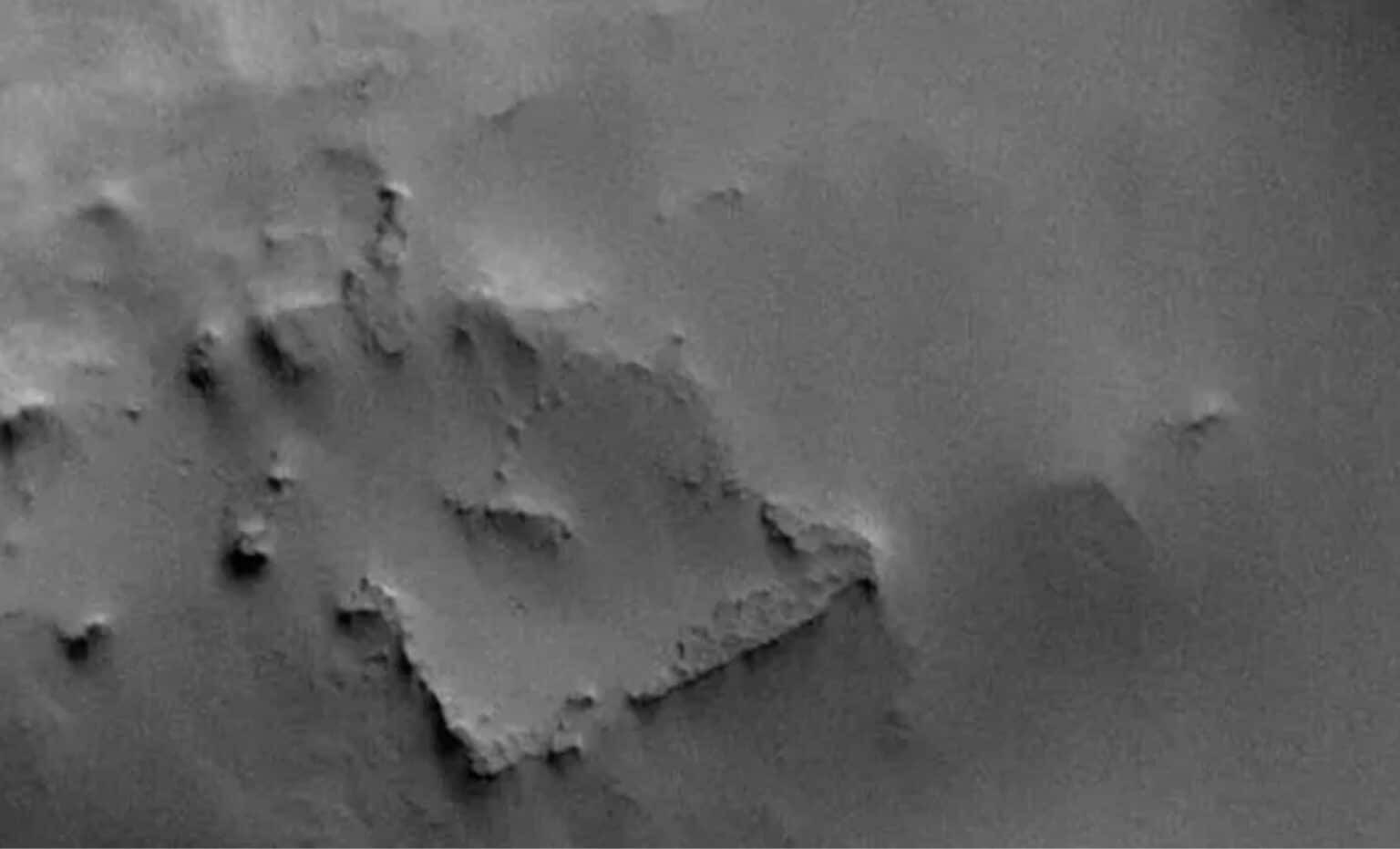
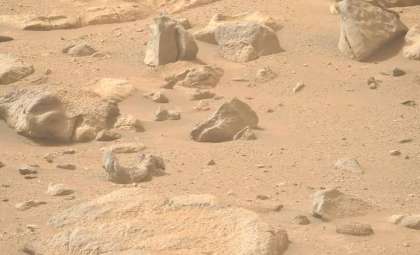
An intriguing perfectly square formation on Mars captured widespread attention online, sparking theories that it might be artificial in origin. This geometric feature went viral across social media for its strikingly sharp edges.
The source of the image dates back to 2001 from NASA’s Mars Global Surveyor, a mission vital for detailed mapping of Mars’ terrain. A zoomed-in and enhanced crop of the photo highlighted a section that stood out for its angularity.
As the image made rounds on communities like Reddit and X, it captivated a diverse audience beyond space fans, sparking speculation reminiscent of past planetary image mysteries unveiled without full context.

How a Snapshot Became an Internet Sensation
The sudden popularity of the image wasn’t completely without influence. Its fast spread was boosted by endorsements from prominent figures. Joe Rogan, noted American podcaster, retweeted the image calling it “wild,” propelling it into wider public awareness. Shortly thereafter, Elon Musk added fuel to the discussion with the comment:“We should send astronauts to Mars to investigate!”
The most widespread version shared was actually an edited crop. This altered image emphasized sharp angles and edges, giving the impression of a manmade construction far more than the original full frame showed.
Sharper Images Bring Full Context to Light
Further insights came with newer observations. In 2018, NASA’s Mars Reconnaissance Orbiter snapped the same area using its detailed HiRISE camera.
“Look at the ‘corner’ that is really a cliffside unrelated to the rest of the ‘square,” according Andrew Good of NASA’s Jet Propulsion Laboratory.
Forbes detailed how these recent high-res images reveal the terrain to be rugged and irregular, with the so-called square shaped by lighting and viewpoint distortions. The illusion of sharp straight edges fades when looking at the wider scene.
Comparing pictures from 2001 and 2018 illustrates how differences in resolution and viewing angle significantly shape perceptions. With this broader perspective, the area no longer hints at any artificial design.
Redefining Our Expectations of Martian Landscapes
Such misreadings of Martian surfaces are not unique. The 1976 NASA Viking 1 mission famously captured an image of the so-called “Face on Mars”, which at first appeared to show a humanoid face, an effect caused by shadows combined with low image clarity.
“At the time, NASA scientists had already correctly interpreted the image as an optical illusion caused by the illumination angle of the Sun, the formation’s surface morphology and the resulting shadows, giving the impression of eyes, nose and mouth,” explained NASA in a statement.
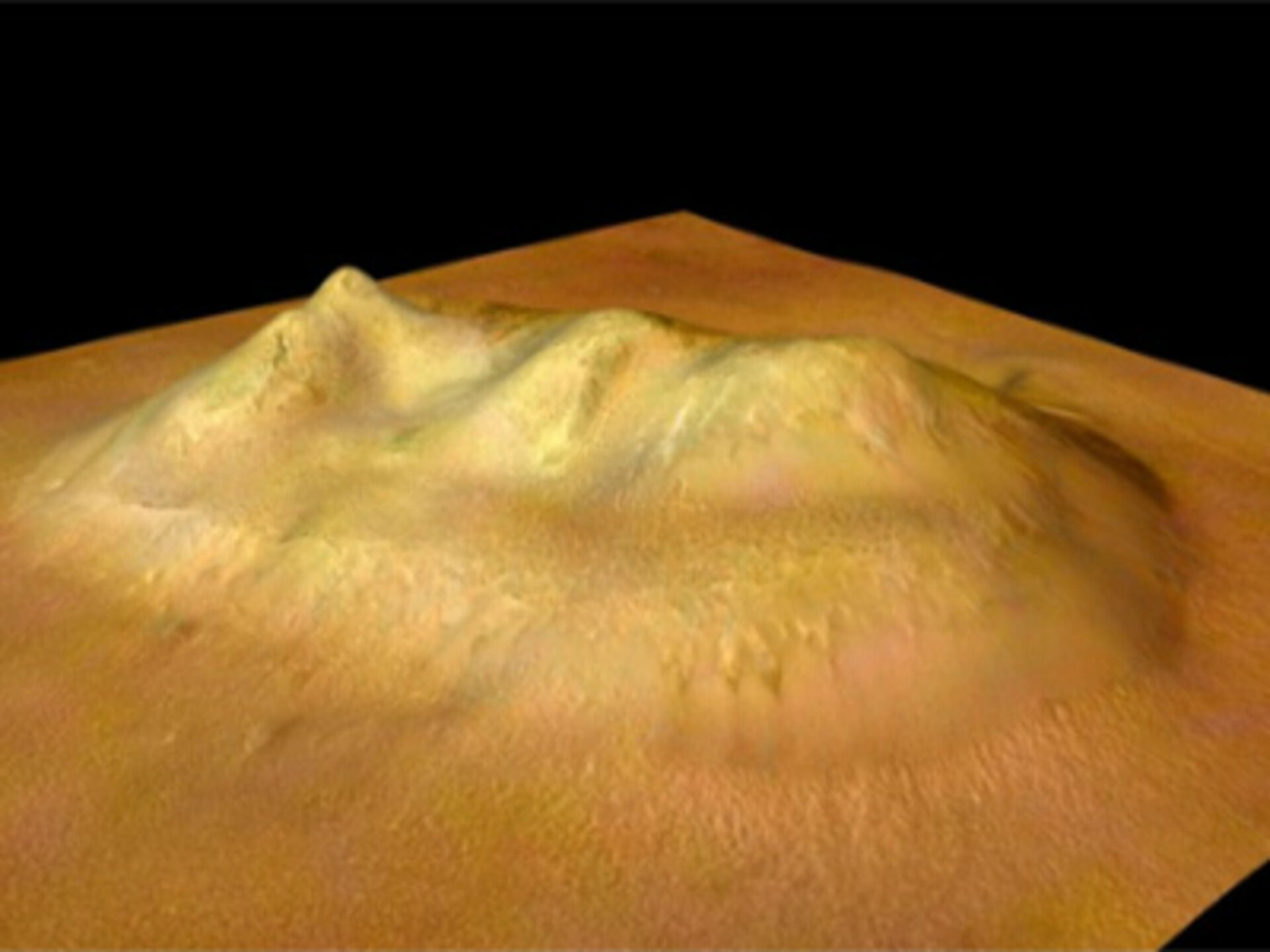
Subsequent higher resolution images from the MRO clarified that the feature is in fact an eroded hill. This effect, known as pareidolia, is the tendency of the human mind to see recognizable forms in ambiguous visuals, as seen in the case of this Martian square.
Mars continues to be a priority for scientific missions, especially in the endeavor to uncover signs of possible ancient life. Investigations focus on understanding whether the planet once harbored conditions supportive of microbial organisms, with ambitions to eventually bring samples back to Earth for study.
- Categories:
- Nasa




0 comments
Sign in to Comment