
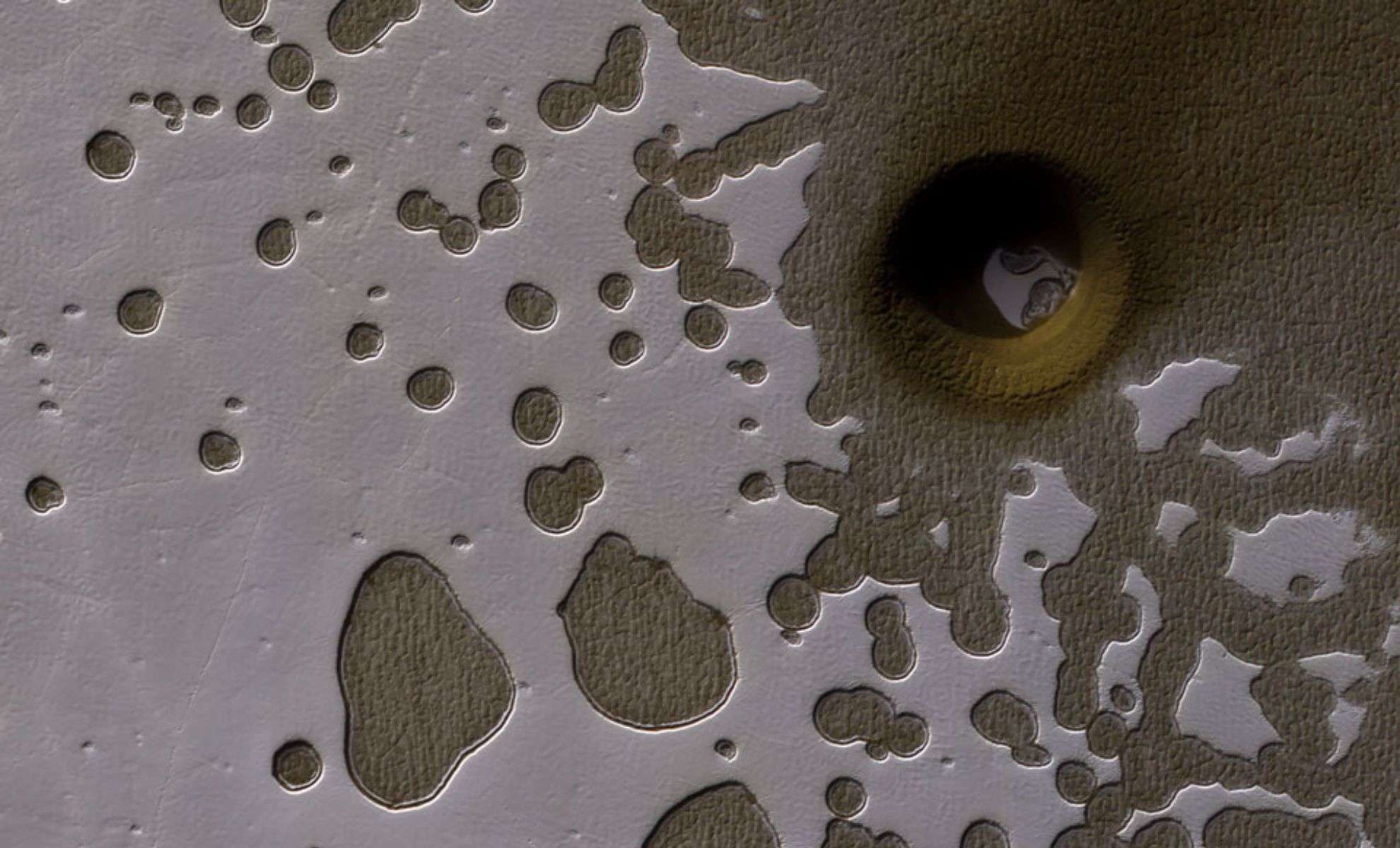
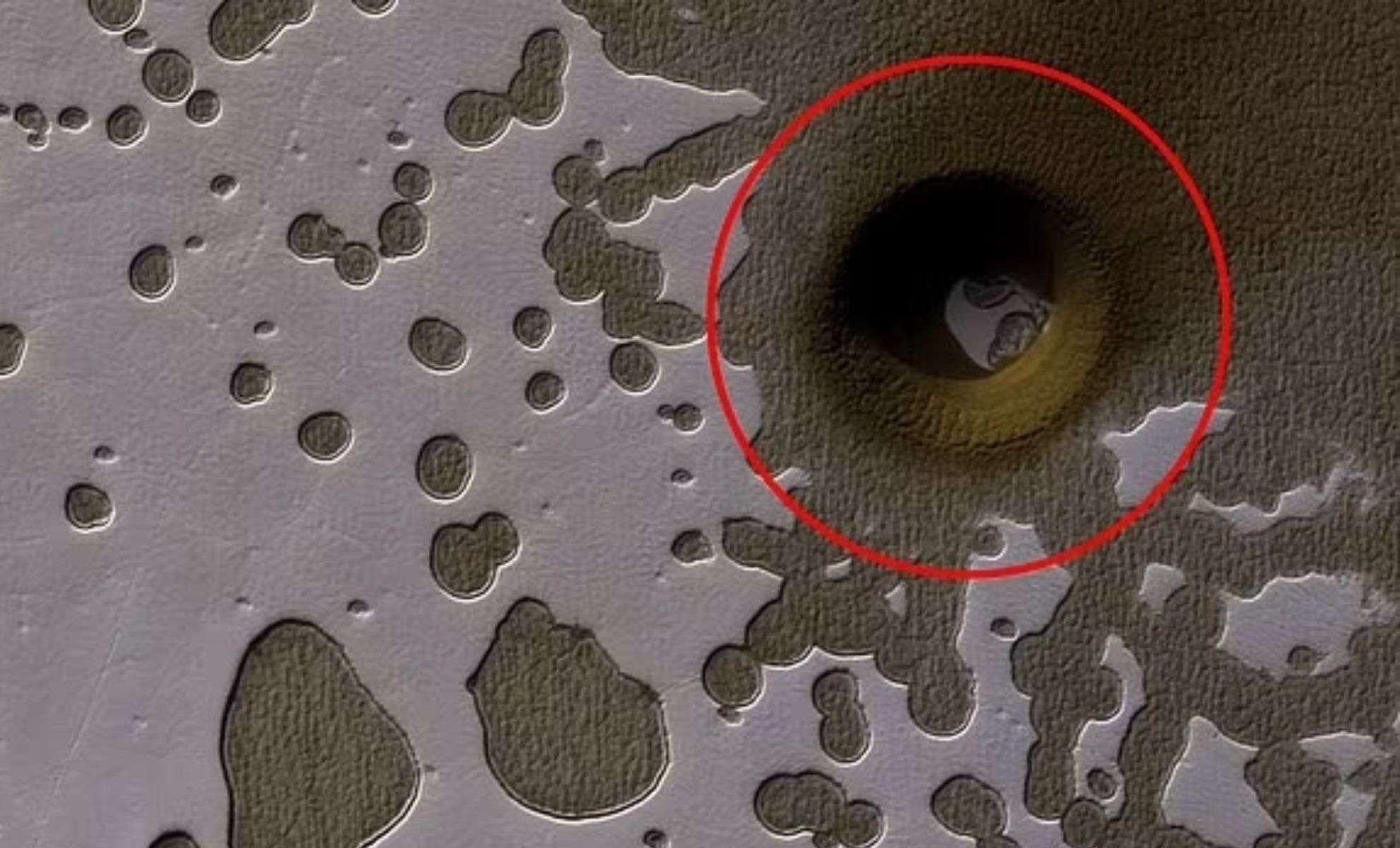
A captivating photograph released by NASA has reignited curiosity about the potential for life beyond Earth. The image reveals a vast, circular depression on Mars that researchers believe could serve as a natural gateway to subsurface caverns possibly harboring signs of extraterrestrial life.
Featured recently in NASA’s Astronomy Picture of the Day, this picture was originally snapped by the Mars Reconnaissance Orbiter back in 2017. While the origins of this large hollow are still uncertain, experts hypothesize that it may have resulted from either a meteor strike or the ground collapsing. Its significance lies in the possibility that it leads into extensive underground cave networks, where primitive life forms might be shielded from Mars’ extreme environmental conditions.
Subsurface Caves: Potential Havens from Mars’ Harsh Surface
The surface of Mars faces relentless radiation, drastic temperature swings, and frequent dusty storms, making it a challenging place for life to survive. However, the official description accompanying the image states,

“Holes such as this are of particular interest because they might be portals to lower levels that extend into expansive underground caves.” These formations could provide a stable environment, relatively protected from Mars’ surface, making them “relatively good candidates to contain Martian life.”
This insightful commentary was penned by Robert Nemiroff, an astrophysicist at Michigan Technological University, alongside Jerry Bonnell, a senior faculty specialist at the University of Maryland. Additionally, Glen Cushing, a planetary scientist at the USGS Astrogeology Science Center, emphasized the uncertainty about these formations, stating, “It is impossible to see how far any of them extend beneath the surface.” in a 2019 NASA briefing.
New Regions on Mars Highlighted as Potential Life Reservoirs
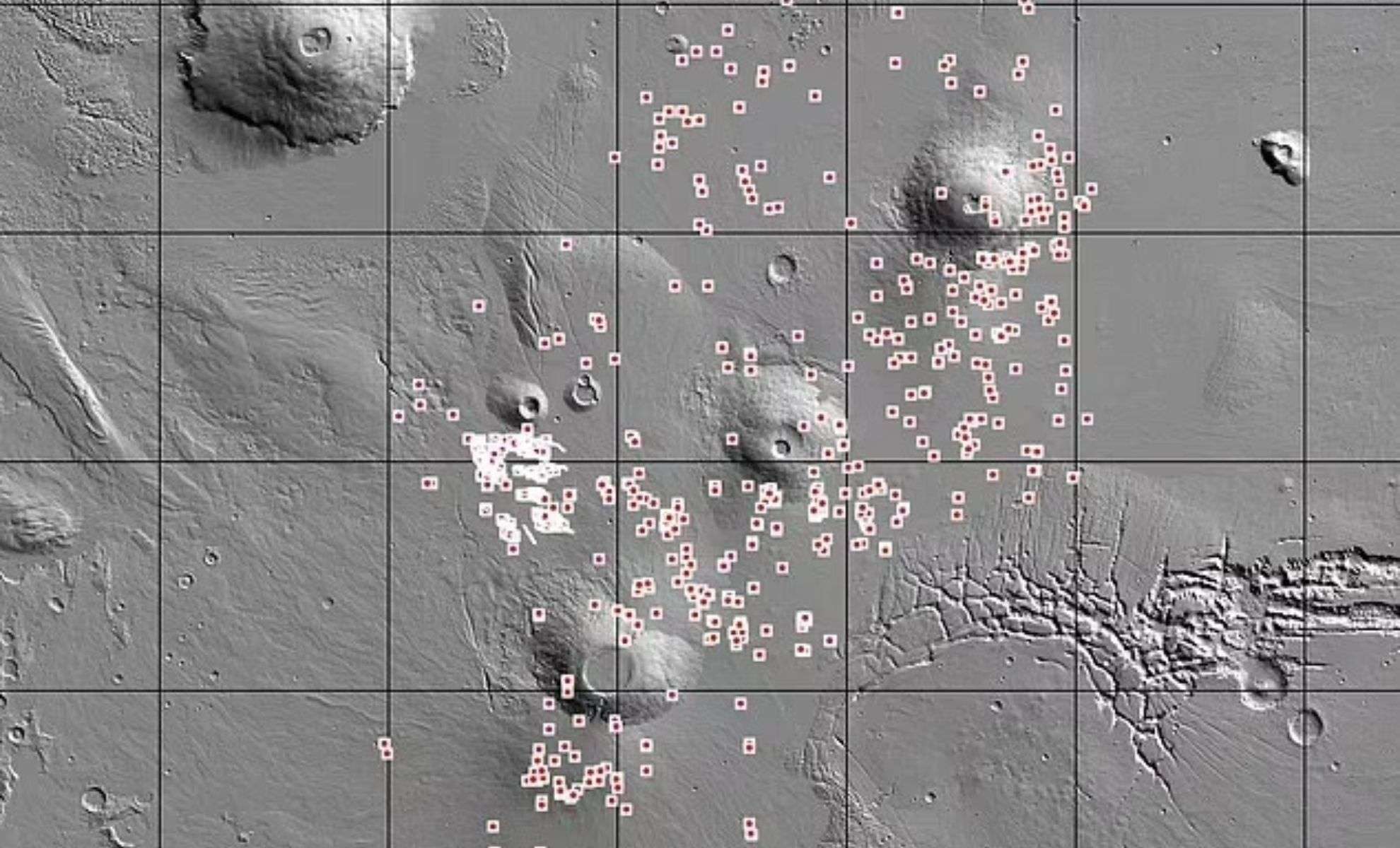
Researchers continue to examine other Martian sites that might conceal life beneath the surface. A recent investigation led by Andrea Butturini and his group from the University of Barcelona targeted a large plain in Mars’ northern hemisphere known as Acidalia Planitia, which stretches approximately 2,000 kilometers and exhibits promising environmental indicators.
Drawing on data gathered from multiple orbiting spacecraft and rovers, the team created models of subsurface niches combining essential factors such as water availability, temperature stability, and energy sources. Their results indicate that within depths ranging from 4.3 to 8.8 kilometers below Acidalia Planitia’s surface, conditions might support microbial life capable of producing methane.
The Challenge of Probing Mars’ Hidden Depths
Accessing several kilometers beneath Mars’ crust will demand cutting-edge drilling technologies and durable missions suited to withstanding the planet’s harsh environment. As a result, much of the mystery still lies hidden far below the surface.
Currently, NASA’s Perseverance rover continues its quest, gathering rock and soil specimens from the Jezero Crater in search of ancient biosignatures. These samples are planned to be returned to Earth in the coming decade. Meanwhile, discoveries like the immense hole spotted in 2017 guide scientists toward exciting new exploration targets that may one day reveal signs of life.








0 comments
Sign in to Comment