
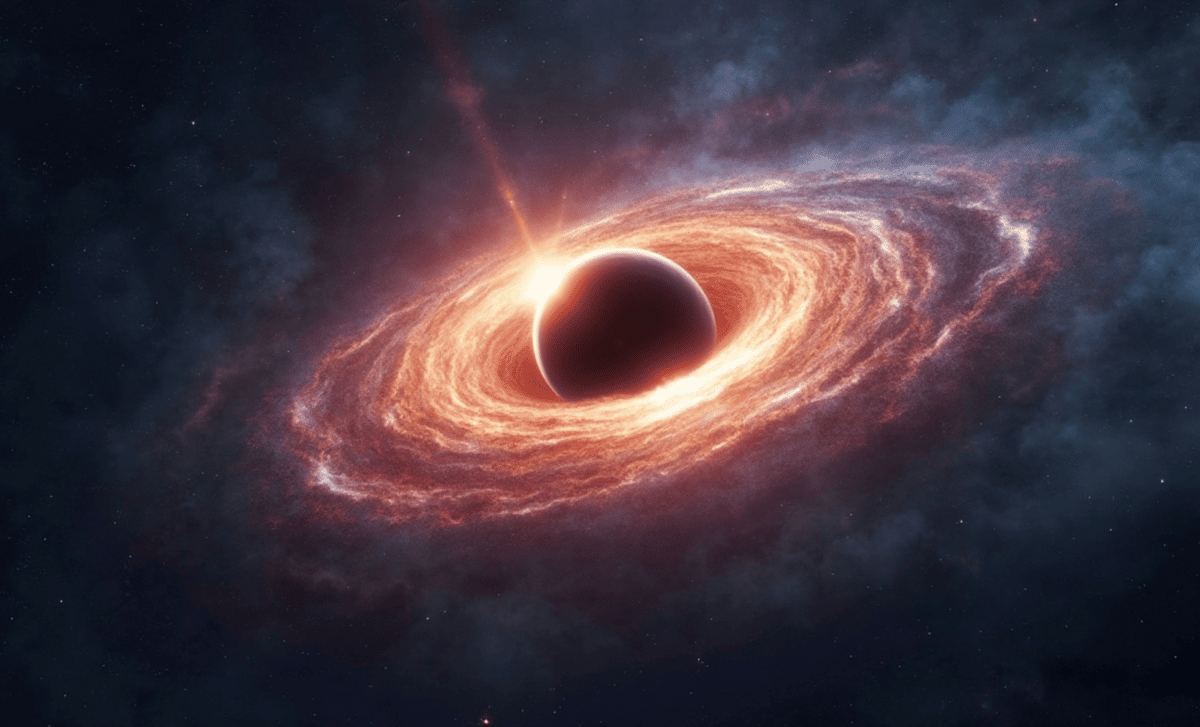
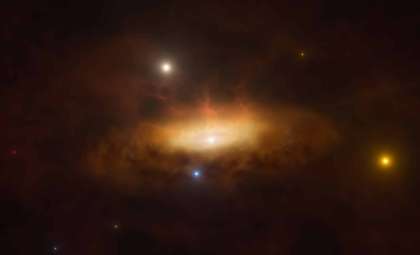
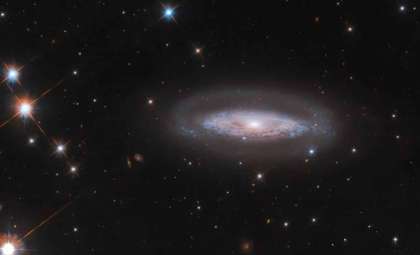
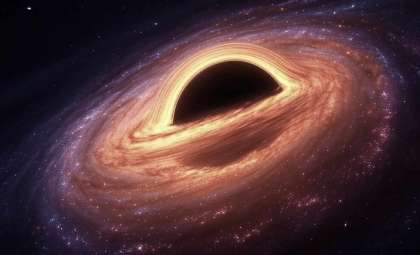
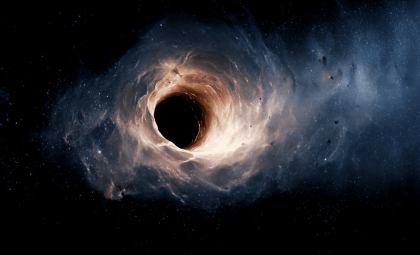
The quasar ULAS J1120+0641, situated over 13 billion light-years away, contains a black hole so enormous that it could be destabilizing its own galaxy, according to research published in The Astrophysical Journal. This distant object provides invaluable insight into the infant universe and questions established theories about the concurrent evolution of black holes and their galaxies.
A Colossal Entity From the Universe’s Earliest Epochs
The central black hole within ULAS J1120+0641 emerged less than a billion years after the Big Bang, yet it already boasts a mass billions of times that of our Sun. Such rapid accumulation challenges prevailing scientific models that struggle to account for how this massive body could have formed so swiftly. Evidence indicates the black hole’s mass may surpass the gravitational capacity of its parent galaxy, suggesting the galactic system could be out of balance. Researchers have found that the typical scaling relationship between the galaxy and its central black hole appears to be at an extreme. This instability implies an epoch in cosmic history when black holes expanded faster than their galaxies, reversing the conventional sequence of growth. This remarkable finding sheds light on the conditions shaping the universe’s earliest large-scale structures.
Insights From Cutting-Edge Observations
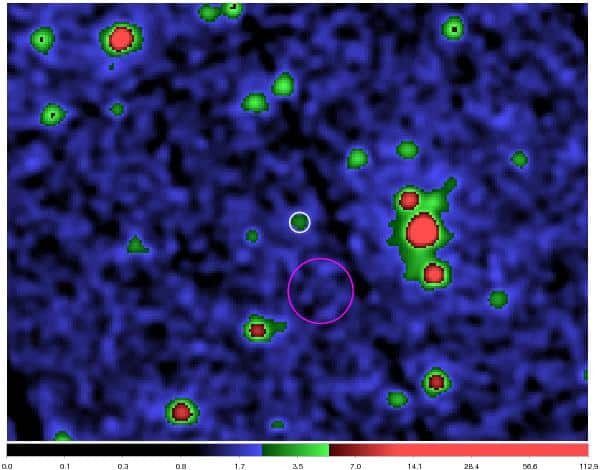
The study, published in The Astrophysical Journal, is based on precise measurements of the quasar’s emitted light and the dynamics of its surrounding gas. These data reveal how matter reacts to the black hole’s immense gravity, offering vital clues about its growth and impact on the host galaxy. Scientists noted that the black hole’s gravitational strength could disrupt star formation by heating or ejecting gas, hindering the galaxy’s normal development. "It appears that black holes’ consumption of material has greatly slowed down as the universe has aged," remarked Niel Brandt, professor of astronomy and physics at Penn State. This contrast highlights how black hole growth rates were far more intense during the early universe than they are today. The findings propose that early black holes experienced brief but intensive feeding phases, allowing them to outstrip their galaxies’ growth significantly.

Reassessing Galactic Evolution Theories
Conventional models suggest a balanced and simultaneous growth between galaxies and their central black holes over billions of years. However, the case of ULAS J1120+0641 disrupts this view by depicting a scenario where the black hole overwhelmingly dominates the system. This phenomenon prompts new questions about feedback processes—where black holes influence star formation and galaxy evolution. When the black hole’s effect is too strong, it might inhibit new star births, effectively halting the galaxy’s progress. Such findings compel scientists to reconsider the mutual evolution of galaxies and black holes and entertain alternatives like the formation of black holes from unusually large seed masses or phases of extreme accretion. This research drives a reexamination of foundational assumptions regarding cosmic structure formation.
Future Prospects for Observations
Confirming and analyzing these delicate imbalances necessitates advanced instruments capable of exploring the distant universe with unprecedented detail. While current telescopes yield valuable insights, upcoming missions will aim to enhance the accuracy of measurements related to mass, motion, and radiation around such extraordinary cosmic features. Progressive improvements in observational tools are critical for testing models inspired by this discovery. A definitive framework could influence the development of new experiments probing gravity and dark energy at vast scales. Ultimately, understanding ULAS J1120+0641 transcends the study of a single quasar, posing profound questions about the flow of cosmic evolution from the universe’s earliest moments to today. This extraordinary black hole presents both challenges and opportunities for advancing our knowledge of the cosmos.
- Categories:
- Astronomy

0 comments
Sign in to Comment