
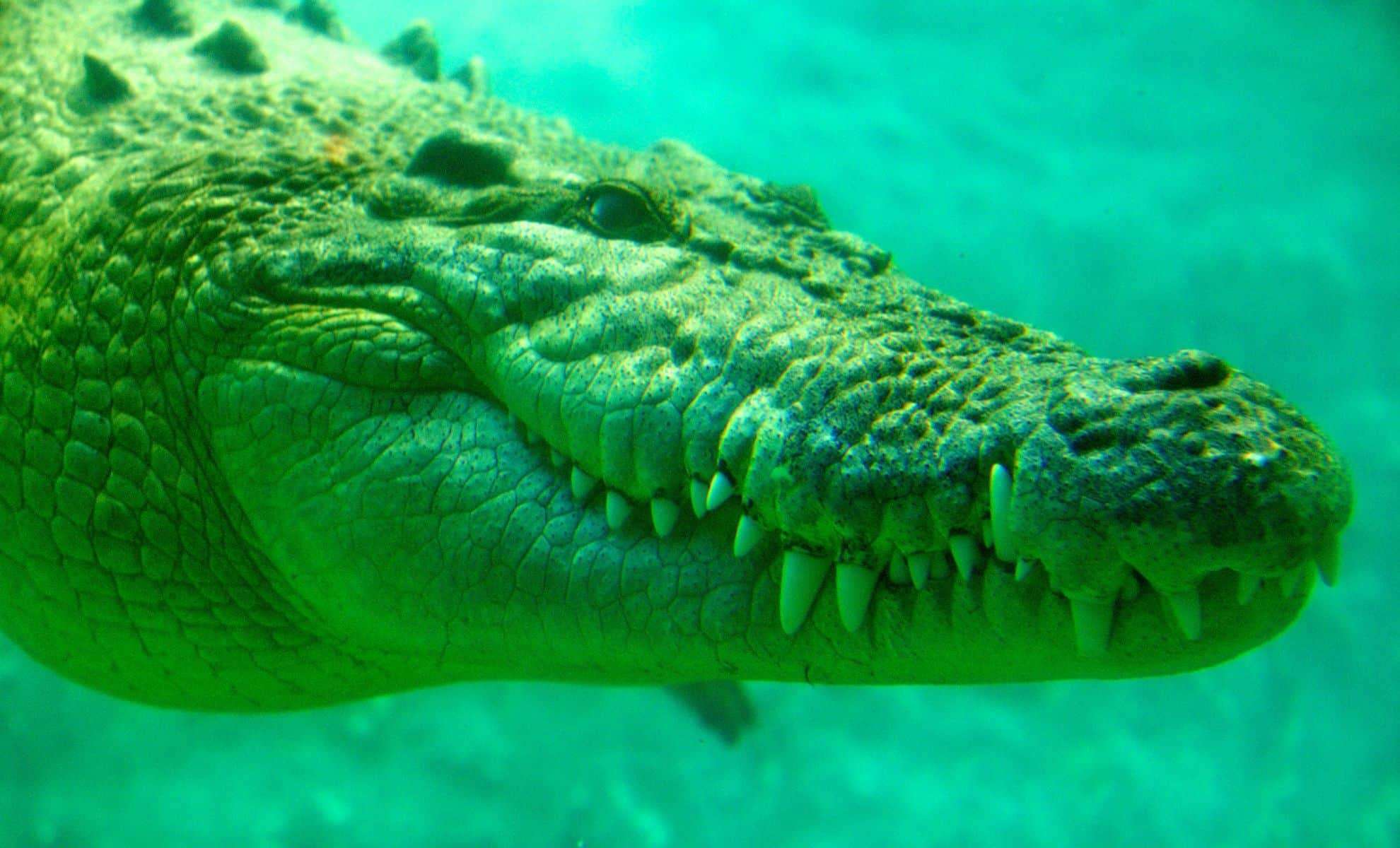
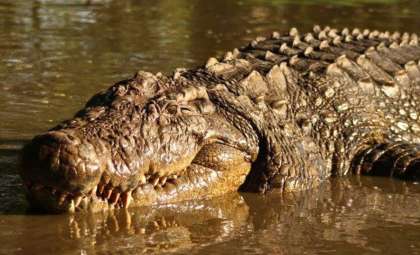
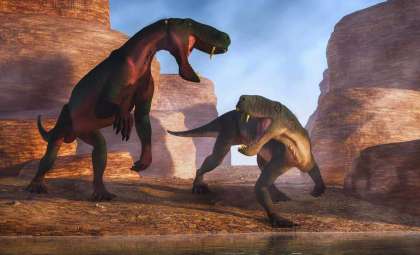
Researchers have uncovered remains belonging to a giant sebecid, a land-dwelling crocodile-like reptile that thrived long after non-avian dinosaurs disappeared.
Unveiling an Important Find
This formidable predator, which could grow as long as 20 feet, has reshaped scientists’ understanding of ancient Caribbean ecosystems and their apex hunters.
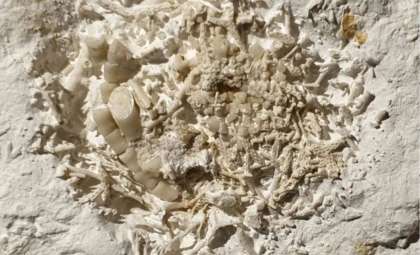
Evidence first emerged over 30 years ago when distinctive fossil teeth, thought to belong to a large carnivorous animal, were stumbled upon in Caribbean deposits.

These fossils, noted for their slender, sharp-edged form, included a 29-million-year-old tooth found in Puerto Rico that initially baffled experts in pinpointing its origin species.
However, early in 2023, paleontologists made a critical breakthrough by unearthing a fossil tooth along with two vertebrae in the Dominican Republic.
This discovery confirmed the remains belonged to a sebecid—a prehistoric crocodilian predator once native to South America’s mainland.
Sebecids: Agile, Terrestrial Crocodilian Giants
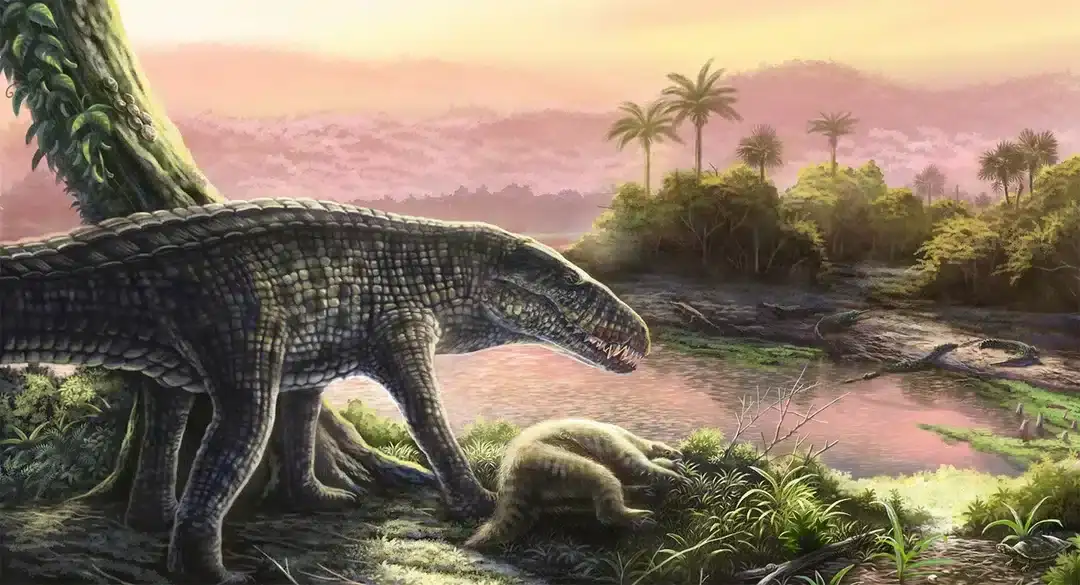
Sebecids were members of Notosuchia, an extinct crocodile group that coexisted with dinosaurs.
Unlike modern crocodilians, these creatures were land-adapted hunters, displaying behaviors similar to carnivorous dinosaurs.
Possessing long, sturdy legs, sebecids could move swiftly across land, while their sizable bodies, reaching lengths up to 20 feet, were protected by embedded armored plates.
They occupied the highest trophic levels within their habitats, exhibiting versatility in both their living environments and prey selection.
Though once abundant throughout South America, sebecids vanished about 66 million years ago, coinciding with the mass extinction event that ended the dinosaur era.
The GAARlandia Connection
A key question arising from this revelation is how sebecids managed to inhabit the Caribbean islands.
“This finding was unexpected when comparing to today’s ecosystems,” said Jonathan Bloch, vertebrate paleontology curator at the Florida Museum of Natural History. “Discovering a top predator of this scale challenges previous assumptions and opens exciting avenues for exploring the region’s fossil history.”
The ocean that separates South America from the Caribbean islands typically acts as a barrier to land species migration.
Scientists have therefore suggested the GAARlandia hypothesis, proposing a temporary land connection or chain of islands that linked the two regions millions of years ago.
If validated, this theory would help explain how sebecids and other fauna traversed the gap to colonize Caribbean ecosystems.
- Categories:
- Science

0 comments
Sign in to Comment