
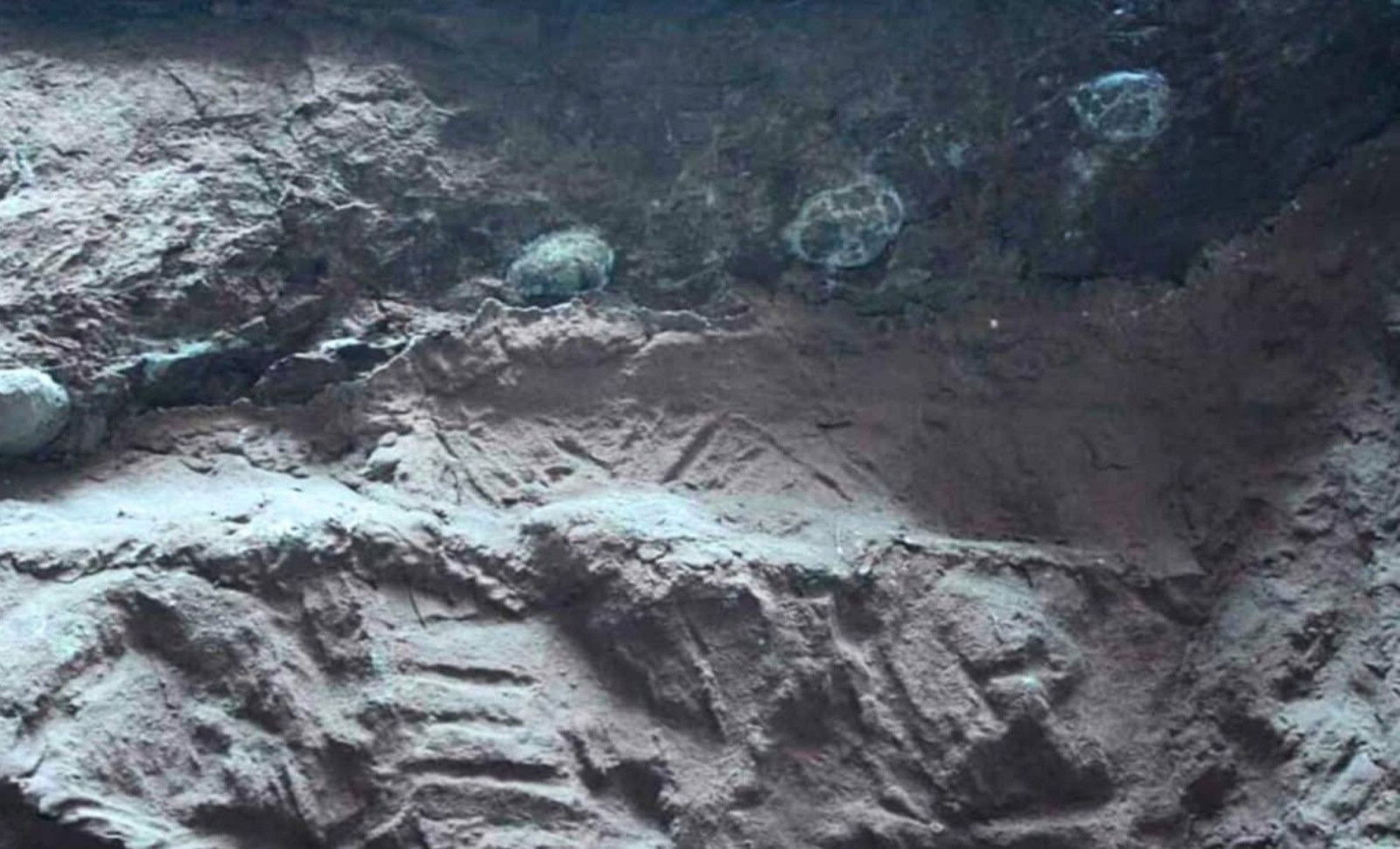
A pair of nearly round dinosaur eggs found in eastern China have captured global curiosity, not for the usual preservation of ancient life, but for their unusual internal composition. Upon cutting open these 13-centimeter eggs from Anhui Province, scientists discovered their interiors were entirely occupied by calcite crystals rather than any fossilized embryo remains.
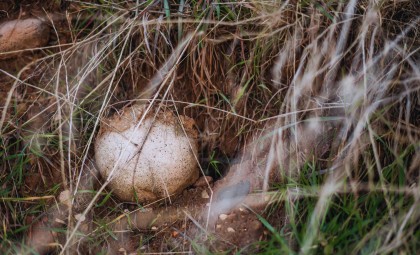
The fossils were unearthed from the Chishan Formation of the Qianshan Basin, an area where no confirmed dinosaur fossils had previously been recorded. Externally, the eggs resembled typical Late Cretaceous dinosaur eggs; however, their inner cavities showcased transparent crystalline growths extending inward from the eggshell.
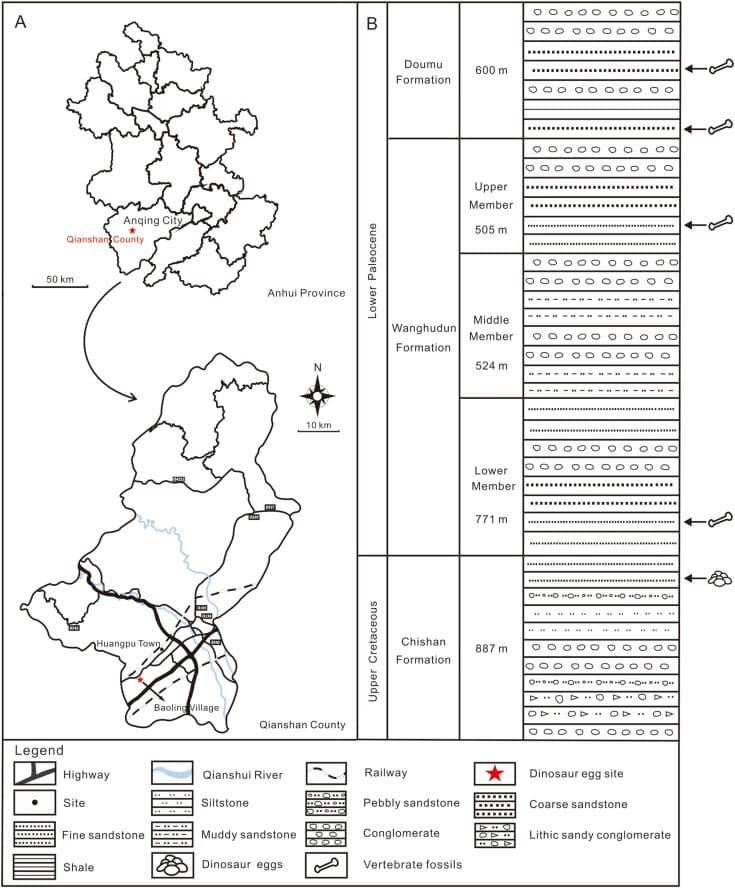
These eggs were formally reported in the Journal of Palaeogeography. This peer-reviewed paper details their microstructural features and introduces a new oospecies named Shixingoolithus qianshanensis.

Peer-Reviewed Evidence of Crystal-Filled Dinosaur Eggs
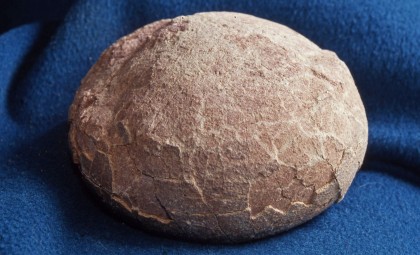
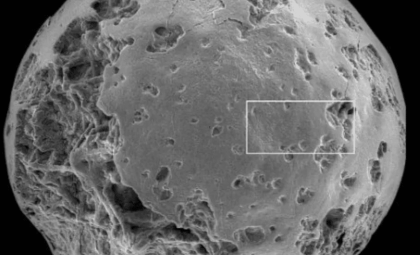
The article describes the eggs as nearly perfect spheres, each around 13 centimeters in diameter. Their shell thickness and microscopic traits place them within the oofamily Stalicoolithidae.
A key excerpt from the study states:
“The inner space of the egg is completely filled with transparent calcite crystals.”
The researchers noted that coarse sparry crystals grew inward from the eggshell lining, but no embryonic bones, organic materials, or soft tissues were observed. The authors did not assert the presence of embryos before mineralization nor speculate if biological matter dissolved prior to crystal formation.
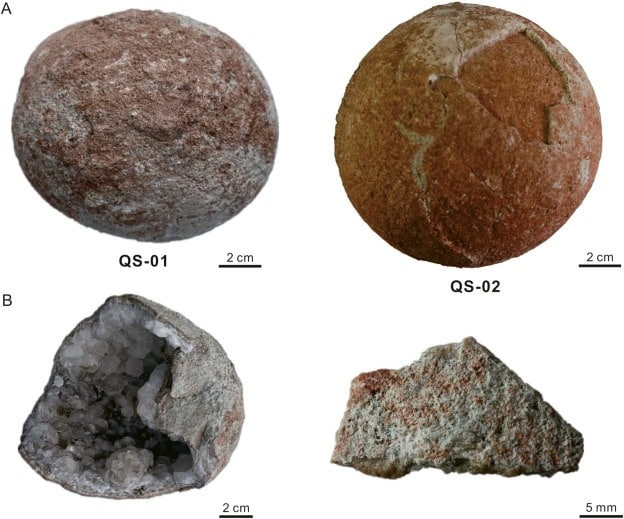
The internal setup aligns with a process called diagenetic mineralization. Post burial, any organic content probably decomposed, leaving voids subsequently filled by mineral-rich water. Over prolonged time spans, calcium carbonate crystallized within the cavities.
These fossils have been officially named Shixingoolithus qianshanensis. Additional details on their nomenclature and classification emerge from the Nanjing Institute of Geology and Palaeontology at the Chinese Academy of Sciences, which also provides insights into the region’s geological background.
Qianshan Basin's First Verified Dinosaur Fossils
The study confirms:
“The discovery of the dinosaur eggs from the Chishan Formation in the Qianshan Basin represents the first report of dinosaur fossils in this basin.”
Additionally, the authors remark:
“This discovery is of great significance for the biostratigraphic division and correlation of the Upper Cretaceous, Paleocene strata in the Qianshan Basin and even in the eastern China.”
These eggs don't just represent biological remnants but also help geological correlation. The eggshell’s microstructure assists scientists in aligning sediment layers throughout eastern China with the Late Cretaceous period.
Though the strata date roughly to 70 million years ago, the study lacks direct radiometric dating, instead relying on lithological and biostratigraphic correlations within local formations.
Geological Context Near the K–Pg Extinction
The fossil layer corresponds to the late Cretaceous Era, preceding the widely known Cretaceous–Paleogene boundary by several million years. This boundary, about 66 million years ago, aligns with the famous Chicxulub asteroid impact in modern-day Mexico.
NASA’s Earth Science Division documents the impact as:
“A sudden and massive environmental disruption, blocking sunlight and halting photosynthesis across the globe.”
No connection between these Chinese eggs and the extinction event is indicated. The observed calcite crystals likely formed through localized chemical changes post burial, not as a result of the global catastrophe. Nonetheless, their timing places them among the last evidence of non-avian dinosaurs reproducing in eastern Asia.
Insights Into Fossilization from Crystal-Occupied Eggs
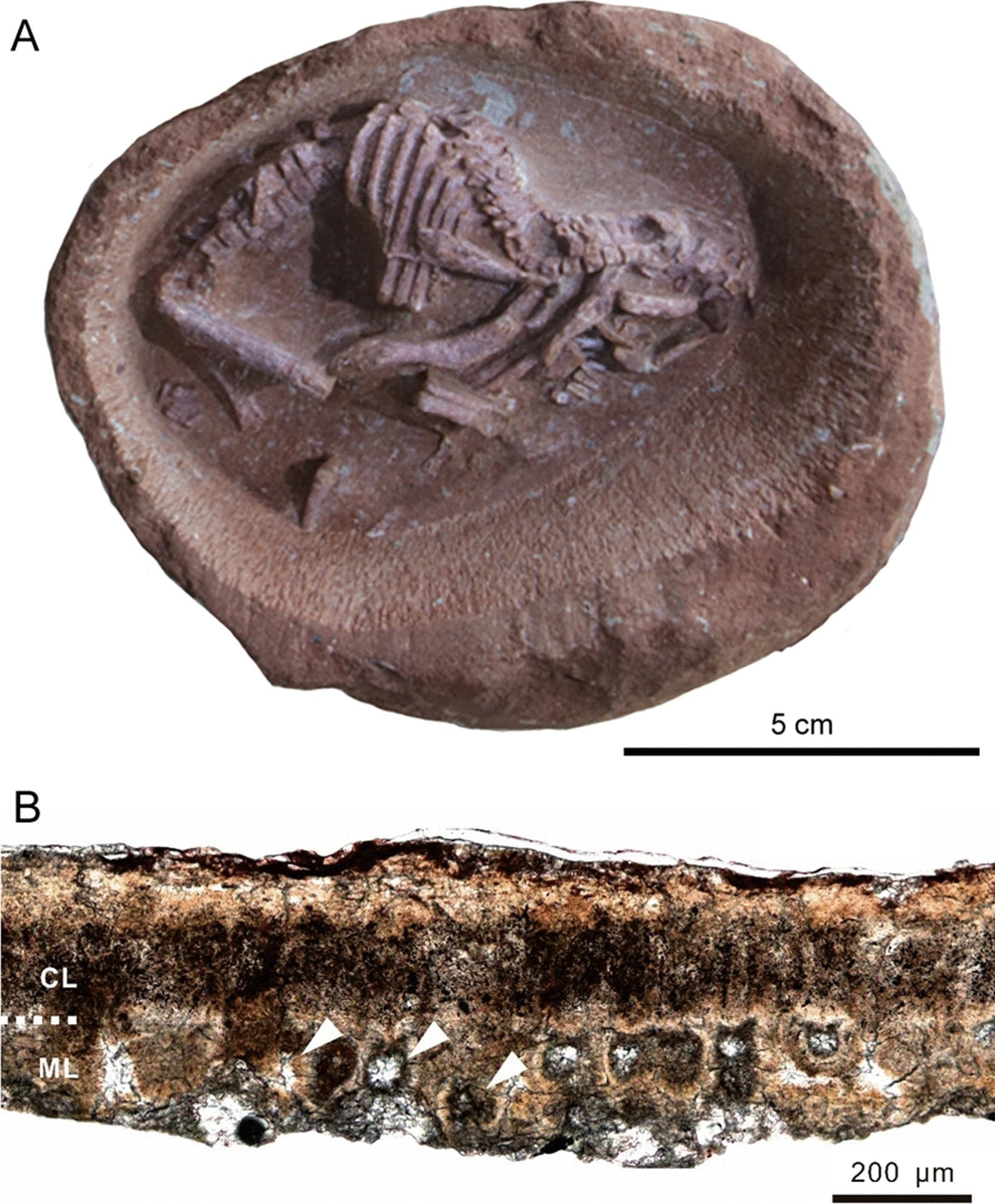
The eggshells display a tripartite structure: an ornamented outer surface, a radial middle layer composed of column-like units, and an inner prismatic layer. These features support their inclusion in Stalicoolithidae.
The study highlights:
“This new oospecies is more similar to Shixingoolithus erbeni… in eggshell microstructure, but differs in having a more spherical shape and larger eggshell units.”
Since no embryos were preserved, classification is solely based on eggshell form. This reveals a preservation bias where fossilization depends not just on the biology but also on chemical and environmental factors after burial.
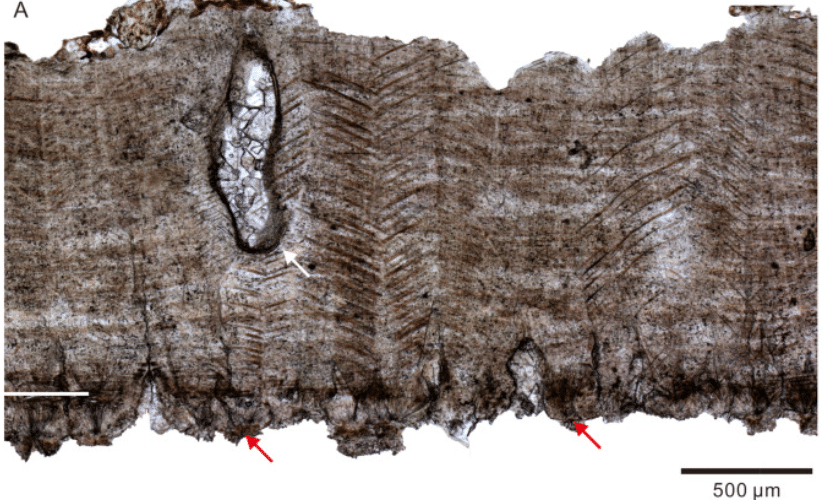
The Qianshan eggs display how groundwater chemistry, mineral concentrations, and sediment porosity can obliterate organic interiors while preserving external forms. Unlike other sites in China where embryos are sometimes retained under rare conditions, here internal biological evidence was completely replaced by mineral growth.
These two specimens, identified as AGM-DU701 and AGM-DU702, are kept at the Anhui Geological Museum and represent the holotype and paratype for Shixingoolithus qianshanensis.
- Categories:
- Science

0 comments
Sign in to Comment