
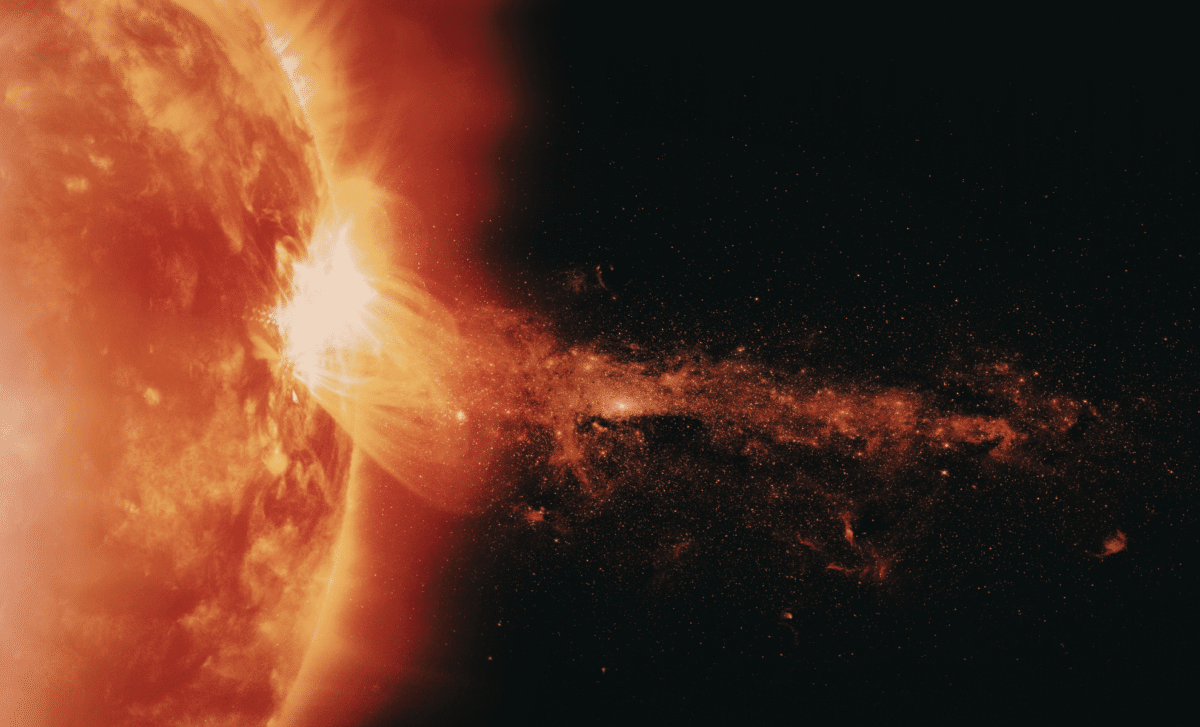
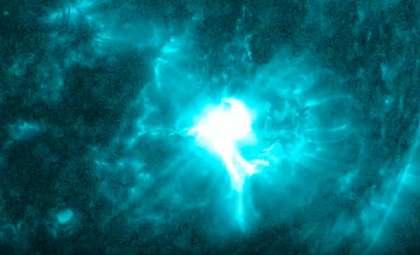
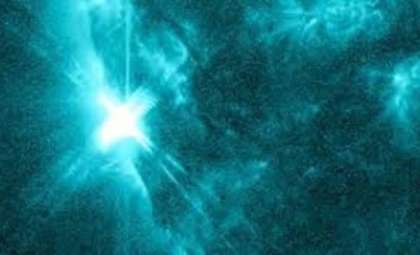
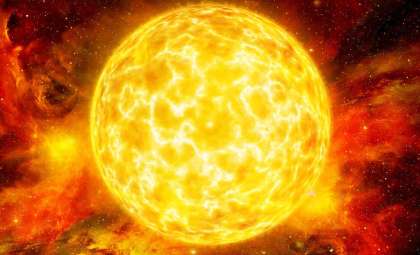
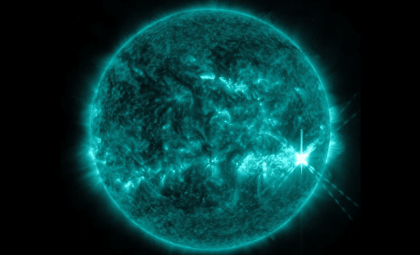
On May 10, 2026, the sun emitted an enormous solar flare, setting the scene for one of this year’s most exciting space weather phenomena. The powerful M5.7-class flare launched a significant coronal mass ejection (CME) toward Earth. This event raises the possibility of vivid aurora displays in northern regions, extending even to areas less commonly associated with such light shows. The intensity of this flare and its interaction with Earth’s atmosphere have made it a focal point for both astronomers and space weather enthusiasts.
Understanding the Effects of Solar Flares and CMEs on Our Planet
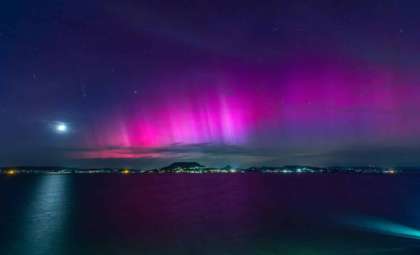
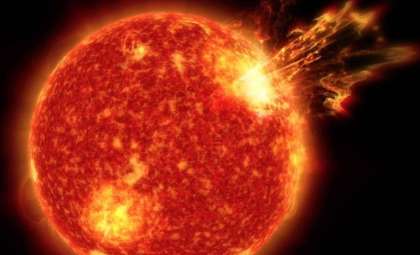
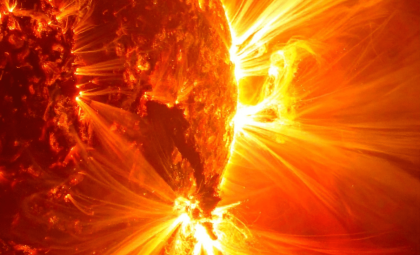
Solar flares and CMEs represent colossal eruptions on the sun’s surface that release bursts of energy and charged particles into space. When these particles collide with Earth’s magnetic field, they can provoke geomagnetic storms. These storms often create stunning auroras near the poles but can also push these lights further south during strong solar activity.
The May 10 flare was rated M5.7, marking it as a moderate yet impactful event capable of influencing Earth’s communication systems. Solar flares are classified alphabetically from A to X, with X-class being the strongest. Though the M-class flare isn’t the most intense, it still caused a brief radio blackout over the Atlantic. This occurs when high levels of radiation ionize the upper atmosphere, interrupting high-frequency radio signals essential for pilots, sailors, and radio hobbyists.

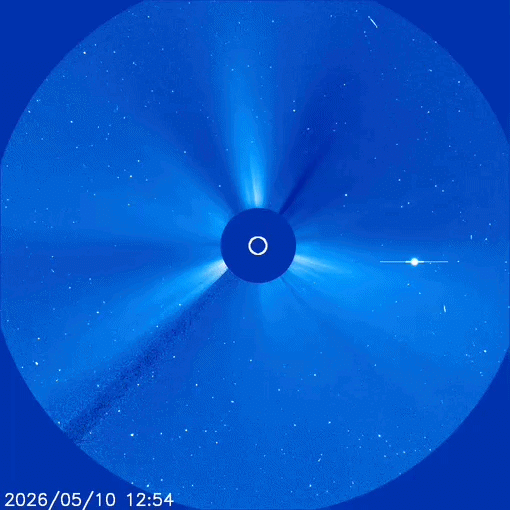
Although the CME primarily veered away from Earth, it may still graze our planet. Space weather experts have cautioned that this peripheral impact could result in mild geomagnetic storming. Even gentle storms can intensify auroras, giving skywatchers a unique chance to see northern lights in places where they’re rarely seen.
Sources like NOAA’s Space Weather Prediction Center and the U.K. Met Office predict a subtle yet notable CME interaction around May 13. While this event won’t rival the dramatic solar storm of May 2024—when auroras dazzled down to Florida and Mexico—the upcoming activity could still light up the skies in northern US regions and the UK. The highest likelihood for aurora sightings remains near the Arctic Circle, where such phenomena most often occur.
NOAA and U.K. Met Office Signal More Solar Disturbances Ahead
The solar event on May 10 may mark the start of increased solar unrest. Both NOAA’s Space Weather Prediction Center and the U.K. Met Office warn that additional solar flares might arise in the coming days, possibly including intense X-class eruptions, as sunspot groups AR4436 and AR4432 continue evolving.
Sunspots, areas of concentrated magnetic activity on the sun’s surface, are the origin points for many powerful flares and CMEs. As these features rotate into a position facing Earth, their chances of influencing our space environment grow. Scientists are monitoring these active regions carefully, knowing any Earth-directed flare or CME can enhance geomagnetic activity and elevate the chances for extraordinary aurora displays.
This heightened solar activity offers a valuable opportunity for researchers and space weather followers to study the sun’s changing behavior. As we inch toward the solar maximum phase, auroras are expected to become more frequent and dazzling in the years ahead.
What Skywatchers Can Expect
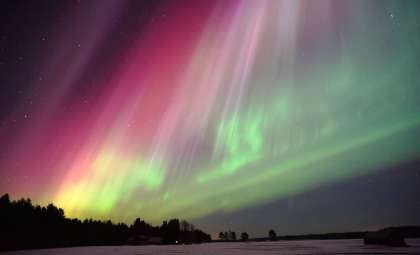
Aurora enthusiasts have good reason to be excited in the days ahead. Though the May 10 flare’s effects won’t match the intensity of the 2024 G5 storm that produced auroras in Mexico, the minor geomagnetic storm forecasted for later this week could still deliver beautiful light shows. Typically visible far north, in places like northern Canada, Alaska, and Scandinavia, these auroras might be bright enough for viewers in somewhat lower latitudes to observe.
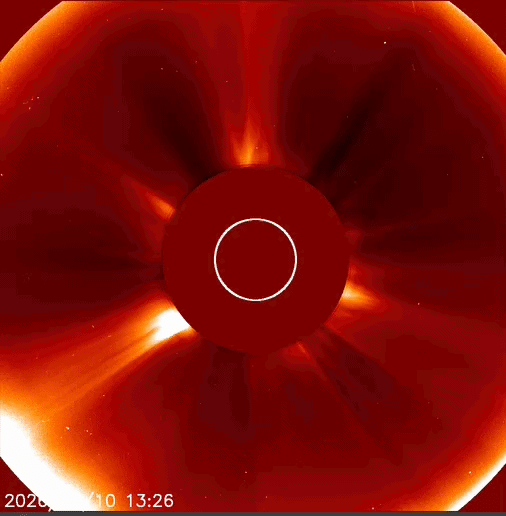
For observers in northern U.S. states, parts of the United Kingdom, and northern Europe, the prime viewing windows will likely be the evenings of May 13 and 14, weather permitting. Although auroras are not guaranteed to appear this far south, optimal geomagnetic conditions combined with clear skies will provide the best chances to witness this natural spectacle.
- Categories:
- Space





0 comments
Sign in to Comment