
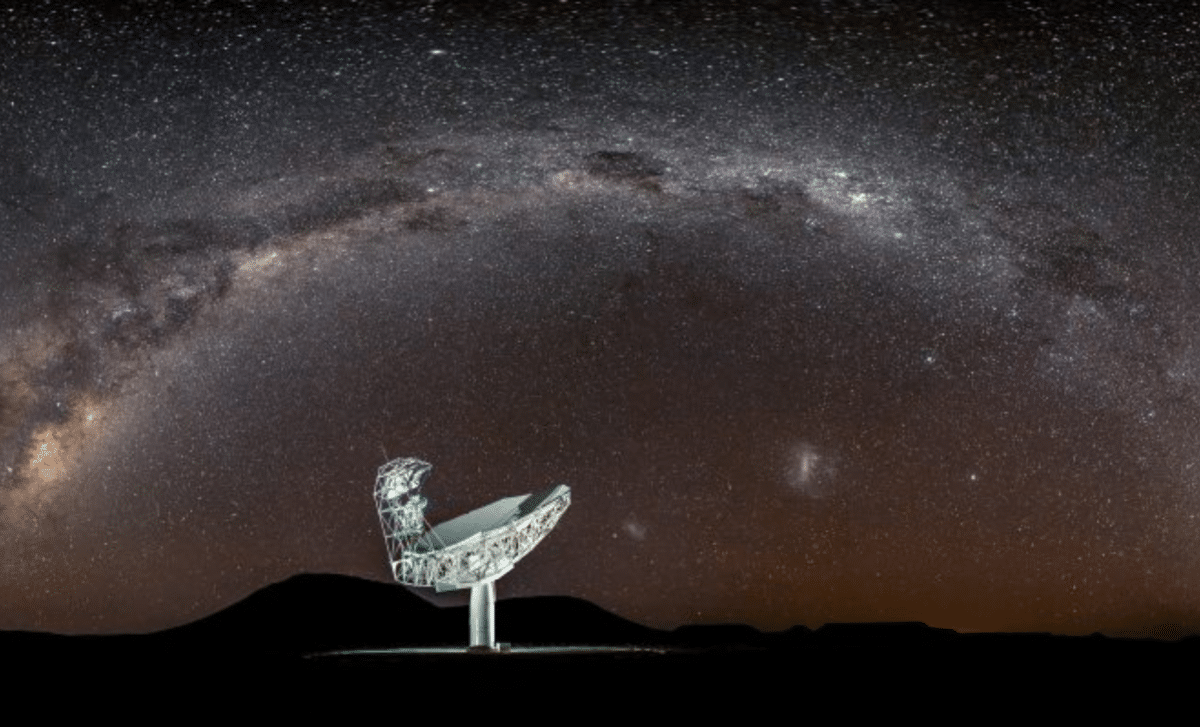
South Africa's MeerKAT radio telescope has identified 60 previously undetected cosmic formations, invisible until now to astronomers. This breakthrough represents a significant advance in space exploration, enabling scientists to investigate the elusive, energetic interactions occurring between galaxies. Detailed in The Conversation, these discoveries open a unique window into the unseen universe and deepen our understanding of the mechanisms driving the grandest cosmic structures.
Exploring the Unseen Universe: A New Era in Astronomy
For centuries, astronomers have been captivated by distant galaxies observed through ever-more-powerful telescopes. Yet, the vast regions between these galaxies largely remained uncharted territory. Utilizing its sensitive instruments, South Africa’s MeerKAT radio telescope has transformed this unknown into an arena of discovery by detecting faint radio signals emitted from these hidden cosmic regions.
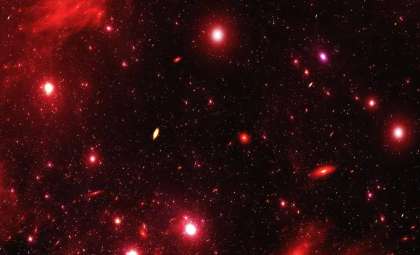
These newfound features are crucial parts of galaxy clusters, some of the largest formations in the cosmos. The detected “diffuse radio emissions” act like subtle cosmic signatures spread across expanses of millions of light-years. They trace the energetic phenomena produced when galaxy clusters interact, collide, or merge, offering essential insights into the universe’s evolving large-scale structure.

Discovering Invisible Structures: Insights Gained from MeerKAT
Imagine a galaxy cluster as a vibrant metropolis, where galaxies are the towering buildings. Historically, telescopic observations prioritized the bright galactic ‘buildings,’ while the in-between ‘city spaces’ were regarded as empty or unimportant. MeerKAT has now revealed that these intergalactic voids are filled with faint but vital radio emissions that only radio astronomy can detect.
These emissions originate from the Intracluster Medium — an extremely hot, sparse gas filling galaxy clusters. While X-ray telescopes have captured the gas itself, its interplay with magnetic fields and high-energy electrons had remained concealed until MeerKAT’s advanced sensors mapped them. When galaxy clusters collide, electrons spiral along magnetic field lines, releasing radio waves. MeerKAT’s sensitive observations have captured and cataloged these waves, providing a novel method to study the turbulent yet captivating events shaping the cosmos.
Led by radio astronomer Konstantinos Kolokythas at Rhodes University and the South African Radio Astronomy Observatory (SARAO), researchers surveyed 115 galaxy clusters with unprecedented detail. Their work identified 103 diffuse radio sources, including 60 never observed before, enriching our comprehension of galaxy cluster dynamics and the cosmic forces molding the universe.
MeerKAT’s Pivotal Role: South Africa’s Contribution to Global Radio Astronomy
More than a cutting-edge instrument, South Africa’s MeerKAT telescope stands as a global frontrunner in radio astronomy. Nestled in the Karoo Desert, it boasts unparalleled sensitivity to faint radio signals elusive to other telescopes. This technological prowess empowers astronomers to probe the universe in innovative ways.
MeerKAT’s achievements are foundational to the forthcoming Square Kilometre Array (SKA), an international initiative aiming to build the largest and most sensitive radio telescope globally. While MeerKAT has already unveiled significant cosmic structures, the SKA, projected to operate fully by 2030, will amplify these discoveries. Its vast scale and sensitivity promise to detect thousands more cosmic features and deepen insights into the universe’s hidden energetic motions.
The groundbreaking research covered in The Conversation highlights South Africa’s leading role in radio astronomy. Hosting MeerKAT and the SKA projects, the country is shaping the future of cosmic discovery and cementing its position within the international scientific community.
The Significance of Cosmic Collisions in Understanding the Universe
The newly uncovered cosmic formations are more than just radio signatures—they are evidence of ancient cosmic impacts. When galaxy clusters collide, they create shockwaves and turbulence resembling a cosmic-scale collision in slow motion. These interactions accelerate particles close to the speed of light, generating radio-emitting bursts of energy.
MeerKAT’s observations reveal that even galaxy clusters appearing undisturbed in X-ray images may conceal a hidden legacy of energetic phenomena. These insights mark a vital advance in comprehending how energy moves through the vast cosmos. By charting these elusive emissions, scientists can better understand the energetic dynamics that sculpt the universe's grand architecture.
- Categories:
- Astronomy





0 comments
Sign in to Comment