
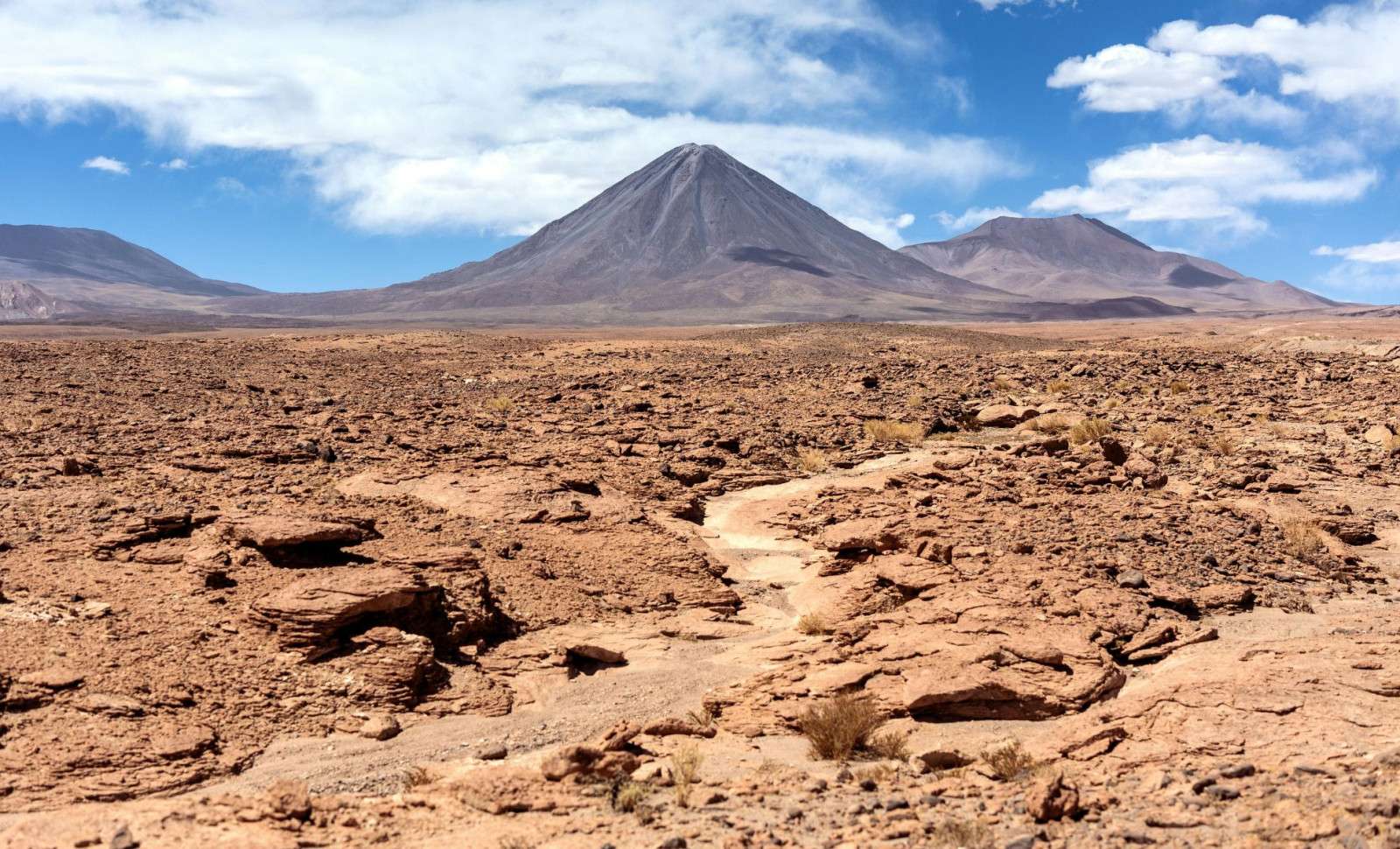
Scientists have uncovered a thriving microbial community located two meters beneath the surface of Chile’s Atacama Desert, providing new insights about how life endures in extreme environments. These microorganisms suggest that if Mars harbors any life, it could be concealed beneath its surface instead of being visible above ground.
Often regarded as the most Earth-like analog to Mars, the Atacama’s arid conditions and salt-rich soil closely resemble those found on the Red Planet, making it a critical location for astrobiology research.
While the majority of prior studies have concentrated on surface exploration, recent discoveries in the Atacama point toward underground habitats where moisture and radiation shielding may enable life to persist.

Subsurface Microbial Life Uncovered in Atacama
Led by Victor Parro from the Centre for Astrobiology in Madrid, researchers collected soil samples from depths of up to five meters. Their investigation found evidence of bacteria, archaea, and intact DNA approximately two meters underground.
The study, published in Astrobiology, describes this zone as a hidden “oasis” amid the otherwise barren desert. Earlier research had only detected microbes within the upper 30 centimeters of soil, making this deeper discovery particularly significant. Although the Atacama receives rainfall scarcely once per century, microorganisms survive by utilizing microscopic water layers that develop on salt crystals.
“For these microbes, the most important thing is to get some water,” Parro said. “If they have some water, they have everything they need to live.”
Instrument Ready for Space Missions
These insights resulted from trials of the SOLID (Signs of Life Detector) tool, designed to detect molecules related to living cells. It employs nearly 300 antibodies that latch onto biological molecules like proteins, sugars, and genetic components.
As the researchers explained, once the antibodies bind their targets, the complexes are identified via a CCD camera, enabling detection of biological markers. This method resembles diagnostic technologies such as pregnancy tests.
Developed for upcoming Mars exploration missions, SOLID successfully identified biosignatures in deep soil samples, highlighting its potential for planetary science. In Parro’s words:
“Our hypothesis is, microbes that have to deal with similar environmental problems [on Earth and on Mars] probably have to deal with similar molecular mechanisms, so they have to produce similar biological polymers or compounds.”
Exploration Strategies on Mars Could Shift Below Surface
Mars presents even harsher conditions than the Atacama desert, with frigid temperatures and powerful ultraviolet radiation blocking most surface life. According to Victor Parro, the prevailing view is that detecting life on Mars’ surface is “very difficult, if not impossible.”
This has prompted scientists to prioritize subsurface investigations. The Atacama’s underground microbes, which survive without sunlight by metabolizing chemical compounds like acetic acid and formic acid, offer a glimpse of what life might be like on Mars.
- Categories:
- Science


0 comments
Sign in to Comment