
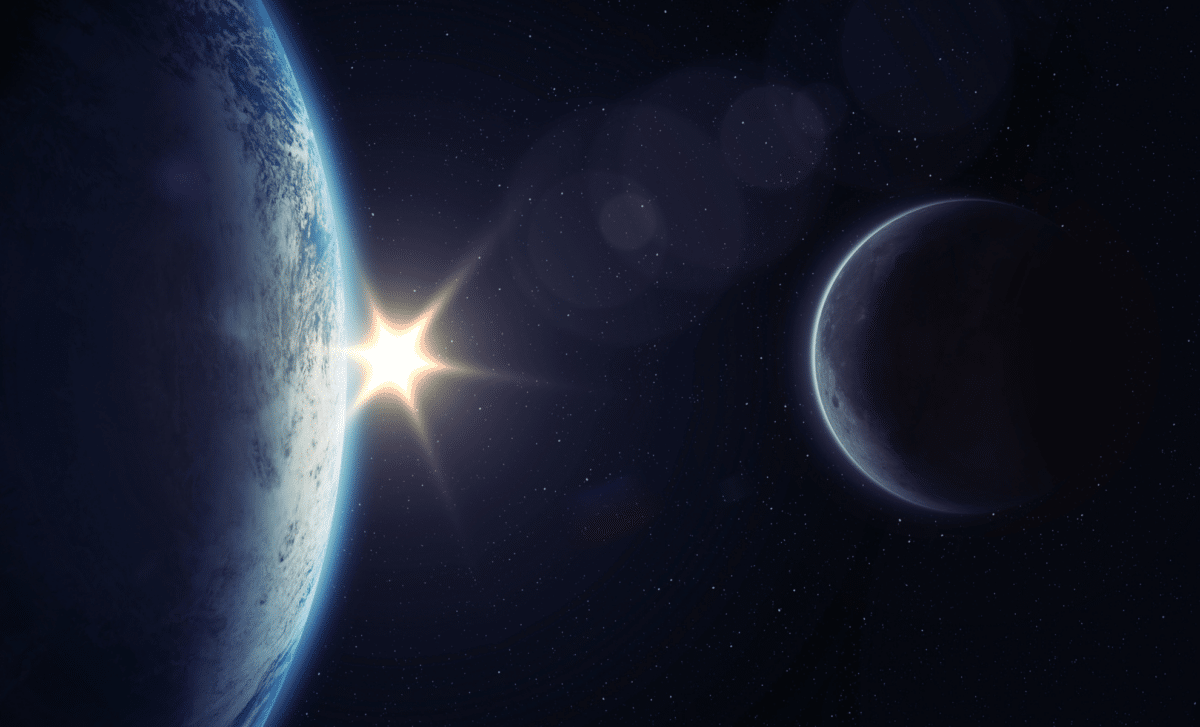
Earth’s Moon is gradually moving away, a phenomenon confirmed through precise laser ranging experiments conducted over many years, and recently discussed in detail by The Conversation. Although this shift occurs at a slow rate of just a few centimeters annually, its effects on the Earth-Moon system, including tidal patterns and even the lengthening of Earth’s day, are significant over long timescales.
A Persistent, Measured Moon Drift
Measured at approximately 3.8 centimeters per year, the Moon’s steady retreat from Earth was determined using reflectors left behind by the Apollo missions. While modest on a human timescale, this gradual distancing holds vast consequences over millions to billions of years. The Conversation explains that tidal forces between Earth and its satellite generate friction that results in energy loss, which in turn pushes the Moon’s orbit farther outward.
This ongoing separation causes Earth’s rotation to slow imperceptibly. In the era of the dinosaurs, days lasted roughly 23 hours, whereas today they average 24 hours. Over immense periods, days may continue to grow longer, potentially leading to a synchronized rotation and orbit—known as tidal locking—between Earth and the Moon, although this state is far from immediate.

Tracing the Origins of the Earth-Moon Dance
To comprehend the cause of the Moon’s current drift, researchers delve into the geological record. Ancient tidal deposits, called rhythmites, reveal that the Moon was once much nearer, about 200,000 kilometers from Earth, in contrast to the current distance of some 384,000 kilometers. At that time, Earth rotated more rapidly and ocean tides were stronger, factors that likely influenced evolutionary processes on our planet.
Recent studies referenced by The Conversation suggest that the shifting configurations of Earth’s oceans and landmasses have changed how tidal energy is distributed and absorbed. This evolving interplay continually influences the Moon’s orbit, illustrating a dynamic mutual relationship that reflects the ongoing evolution of our planet.
Looking Ahead: The Long-Term Cosmic Journey
Billions of years into the future, the consequences of this lunar recession will become more pronounced. Earth’s rotation will continue to slow, lengthening days to 25, then 26, and eventually up to 30 hours. Ultimately, the system may reach a state where one hemisphere of Earth always faces the Moon, just as one side of the Moon always faces Earth now.
During this distant future, the Sun will be transitioning into a red giant phase, potentially engulfing the inner planets including Mercury, Venus, and possibly Earth. Before these dramatic solar changes, the Moon’s orbit may become unstable, which could significantly disrupt the balance of the entire solar system.
- Categories:
- Physics




0 comments
Sign in to Comment