
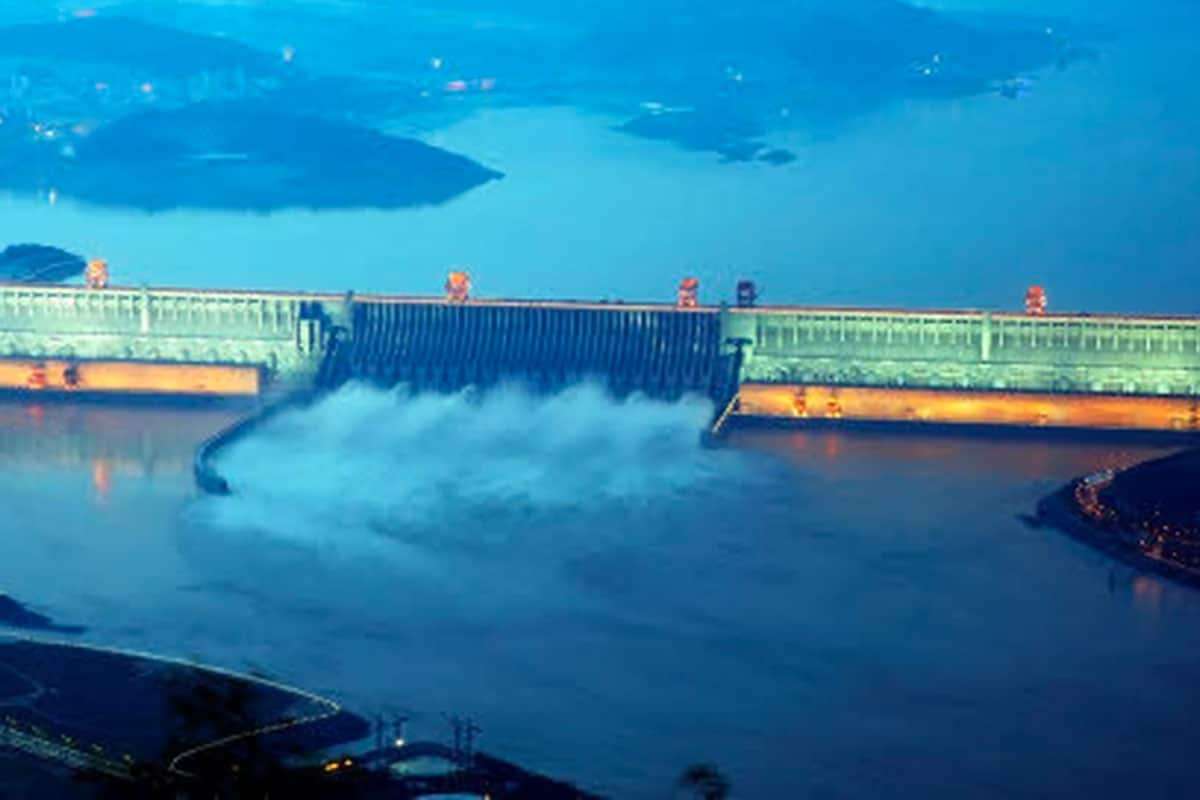
The Three Gorges Dam in China, renowned for its vast hydroelectric capabilities, might also be causing a subtle shift in our planet's rotation. NASA notes that the immense volume of water stored behind this dam could marginally affect Earth's rotational dynamics. Although the impact is extremely small, it underscores humanity's potential to alter natural planetary processes.
Inside the Operations of the Three Gorges Dam
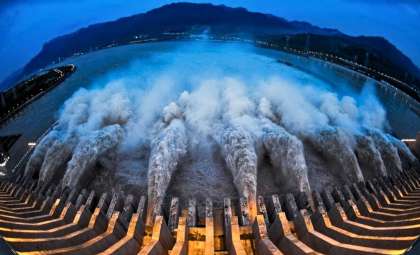
Located along the Yangtze River in China's Hubei province, the Three Gorges Dam holds the distinction of being the largest hydroelectric power facility worldwide. Completed after almost 18 years of construction in 2012, the dam stretches 2,335 meters long and towers 185 meters tall, with a reservoir capacity reaching 40 cubic kilometers, equivalent to 40 trillion liters of water.
Its primary functions include power generation and flood control, yet the accumulation of such vast water masses also shifts the distribution of Earth's mass, potentially impacting the planet’s rotation.

Is It Possible for Human Structures to Alter Earth's Spin?
This concept builds on physics concepts related to the distribution of mass and moment of inertia. NASA brought attention to this idea following their 2005 study on the 2004 Indian Ocean earthquake and tsunami, which changed Earth's mass distribution and shortened the length of day by approximately 2.68 microseconds.
According to Dr. Benjamin Fong Chao from NASA’s Goddard Space Flight Center, human-made modifications like filling enormous dams can have analogous effects. These actions might shift Earth's rotational axis by near 2 centimeters and elongate the day by around 0.06 microseconds.
Implications for Earth’s Natural Systems
Beyond dams, global phenomena such as climate change, including polar ice melt, contribute to changes in Earth's rotation. Moreover, natural gravitational influences, like the Moon’s pull, have been gradually decelerating Earth's spin over millennia.
Adding large dams like the Three Gorges Dam into this array of influences adds complexity, demonstrating how human activities can magnify existing planetary dynamics.
Addressing the Minuscule Rotational Shifts
Experts have proposed solutions such as implementing a “negative leap second,” which would sometimes omit a second from atomic timekeeping to maintain synchronization with Earth's changing rotation rate.
While these adjustments are subtle, they highlight the importance of monitoring and adapting to ongoing changes resulting from human impacts.
Are Global Hydroelectric Projects Affecting Earth’s Movement?
China is not alone in harnessing massive hydroelectric power through dams. Nations including the United States, Brazil, and India operate similarly large installations that also redistribute substantial amounts of Earth’s mass.
When considered collectively, these structures could produce a more pronounced effect on Earth’s rotation than previously recognized, raising critical discussions about sustainable development and its planetary consequences.
NASA’s research into the Three Gorges Dam illustrates the intricate relationship between human endeavors and Earth's natural systems. Even slight shifts remind us of the responsibility to protect our environment. As monumental projects continue and climate challenges intensify, sustainable practices remain essential for preserving both ecosystems and the fundamental functions that support life on Earth.
- Categories:
- Physics











0 comments
Sign in to Comment