
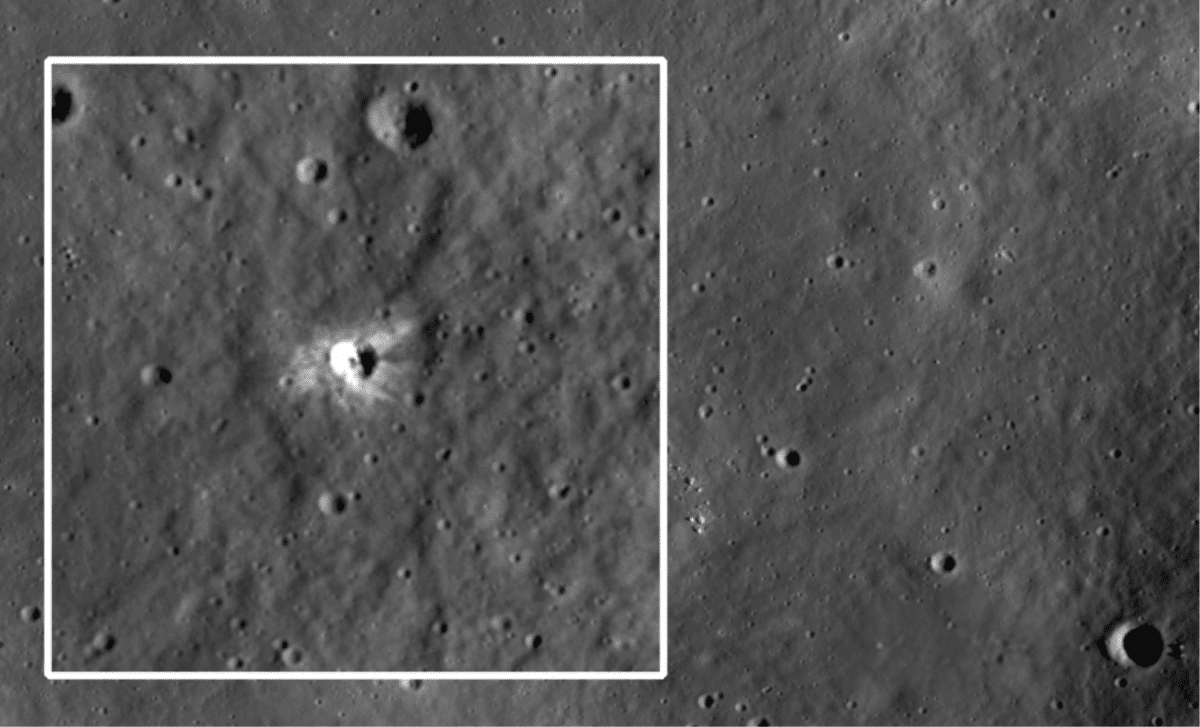
Scientists are buzzing over a fresh find on the lunar surface. NASA’s Lunar Reconnaissance Orbiter (LRO) has detected a small yet noteworthy crater, providing a valuable opportunity to better understand the Moon’s geological past and present. This newly identified “freckle” offers intriguing insights beyond its modest size.
A Small But Significant Lunar Feature: The Latest Crater Discovery
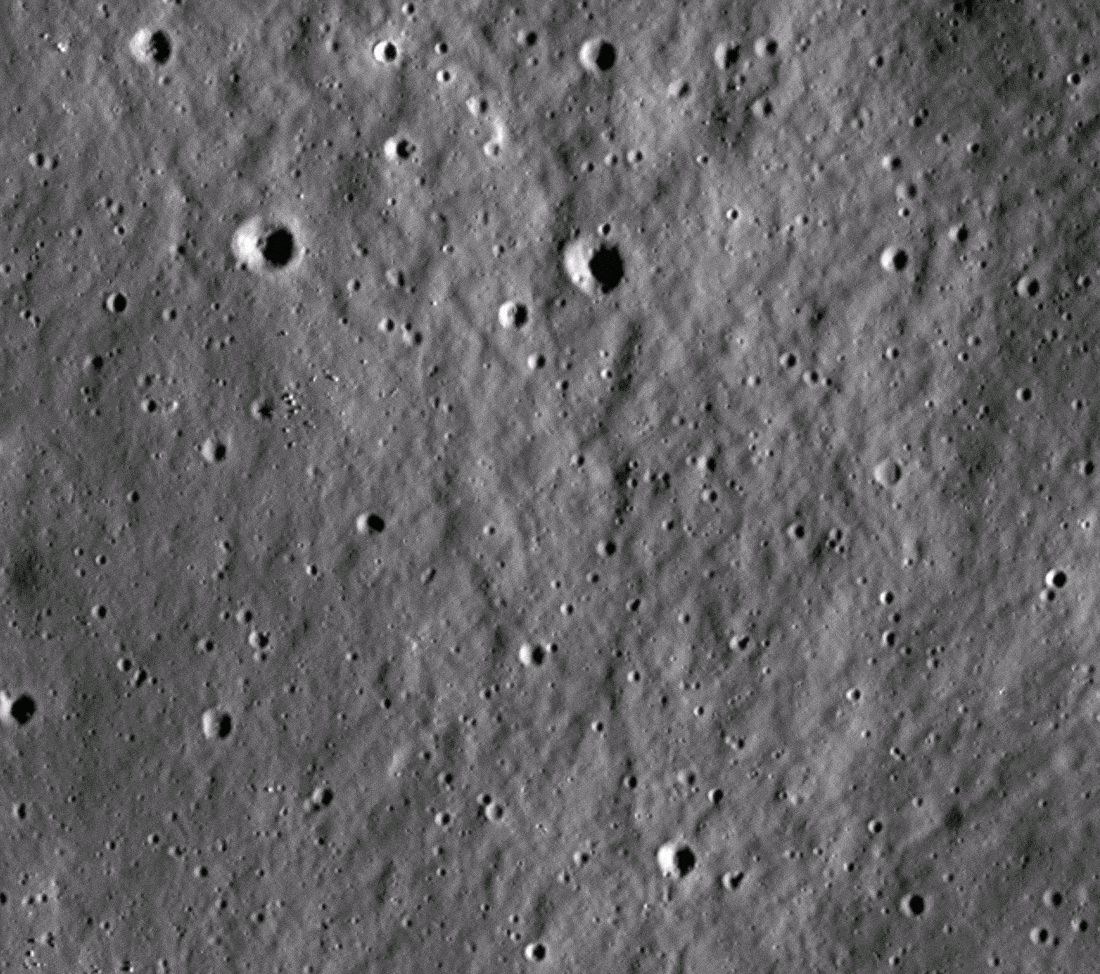
NASA’s Lunar Reconnaissance Orbiter (LRO) recently recorded the appearance of a newly-formed crater on the Moon. Measuring roughly 72 feet across, this diminutive crater has been dubbed a “freckle” due to its compact size. Detected by the LROC team on November 13, this impact site adds a fresh chapter to the ever-expanding catalog of lunar impact events and offers scientists an opportunity to analyze the Moon’s surface evolution.
Evidence suggests this crater formed sometime between December 2009 and December 2012, marking it as a relatively recent occurrence on the Moon’s surface. Positioned just north of the Römer crater, its location and formation shed light on the steady stream of meteoroid collisions shaping the lunar terrain.

This crater stands out due to the bright ejecta it scattered during impact. The radiant streaks extending outward resemble the distinctive rays commonly associated with young craters elsewhere on the Moon’s surface.
“Over time, the rays will darken to the shade of the surrounding regolith as the material is exposed to space weathering,” the LROC statement reads.
These luminous rays gradually fade, offering a glimpse into the processes altering the Moon’s surface over time.
Why Finding Craters Matters for Lunar Science
Identifying new craters involves much more than mapping features; it plays a critical role in unraveling the Moon’s history. Crater analysis helps scientists estimate impact rates and examine how surface features degrade with time. With NASA’s Artemis mission targeting crewed lunar missions within the next decade, having detailed knowledge of crater distributions is key to mission safety and planning.
Craters can introduce hazards that influence site selection for astronaut landings. Discovering fresh impact zones like this one alerts researchers to potential challenges posed by recent terrain changes. When choosing landing sites, factors such as surface ruggedness, lighting exposure, and lunar seismic activity (moonquakes) all warrant thorough consideration. A comprehensive mapping of the lunar surface ensures these risks are minimized for future explorers.
The Ever-Changing Moon: Craters and Seismic Activity
The Moon may appear inert, but such recent crater findings highlight its dynamic nature. Even minor impacts reveal ongoing surface transformations tied to lunar tectonics. Much like Earth’s earthquakes, moonquakes cause shifts that reshape the landscape. Understanding crater formation and evolution helps decode these seismic behaviors, which are essential for predicting conditions encountered during human exploration.
The efforts of the LROC team in monitoring and documenting new craters are vital for building mission readiness. The Artemis program’s goal of sending astronauts to the lunar south pole depends heavily on detailed surface knowledge. Identifying even tiny features like this “freckle” is crucial to safeguarding landings and enabling scientific breakthroughs, underscoring how small discoveries can carry significant impacts for the future of lunar exploration.
- Categories:
- Space









0 comments
Sign in to Comment