

Venus, often labeled as the most extreme planet in our Solar System, is now gaining attention due to emerging evidence that challenges its lifeless reputation. Despite harsh surface conditions characterized by extreme heat and crushing atmospheric pressure, ongoing studies point to the planet’s upper atmosphere as a potential niche where life might exist.
In 2020, scientists identified phosphine gas within Venus’s cloud cover—an intriguing molecule linked to biological activity on Earth. This landmark detection ignited hypotheses about microbial life inhabiting these alien clouds.
Additional investigations, including those led by researchers at MIT, have bolstered the possibility that the fundamental components necessary for life could persist in Venus’s highly acidic atmosphere, encouraging a renewed exploration into the habitability of its cloud decks.

Exploring Venus’s Hostile Terrain and Its Cloudy Haven
Known as Earth’s twin because of its size and composition, Venus’s surface is anything but welcoming. Its dense atmosphere, overwhelmingly composed of carbon dioxide (95%), acts like a massive greenhouse, raising temperatures to about 464°C (867°F). Meanwhile, surface pressure is nearly 92 times greater than Earth’s, creating an environment inhospitable to familiar life. However, higher altitudes within the planet’s atmosphere tell a different story.
Recent findings published in Molecules reveal that the temperate zones of Venus’s upper atmosphere—where temperatures can range from 0 to 50°C—offer conditions where organic molecules like amino acids and dipeptides can remain intact, even amidst corrosive sulfuric acid clouds.
Phosphine as a Possible Indicator of Life
The 2020 phosphine detection raised significant excitement among scientists. Phosphine typically arises from anaerobic organisms, those that thrive without oxygen, suggesting biological processes may be at play in Venus’s atmosphere. Though the presence of phosphine is not definitive proof of life, it indicates that the conditions in the planet’s cloud layers might be capable of sustaining living organisms.
MIT’s follow-up research demonstrated that vital components for life, such as the bases of nucleic acids, remain stable even in the highly acidic cloud environment of Venus, offering new insights into the planet’s potential to support life.
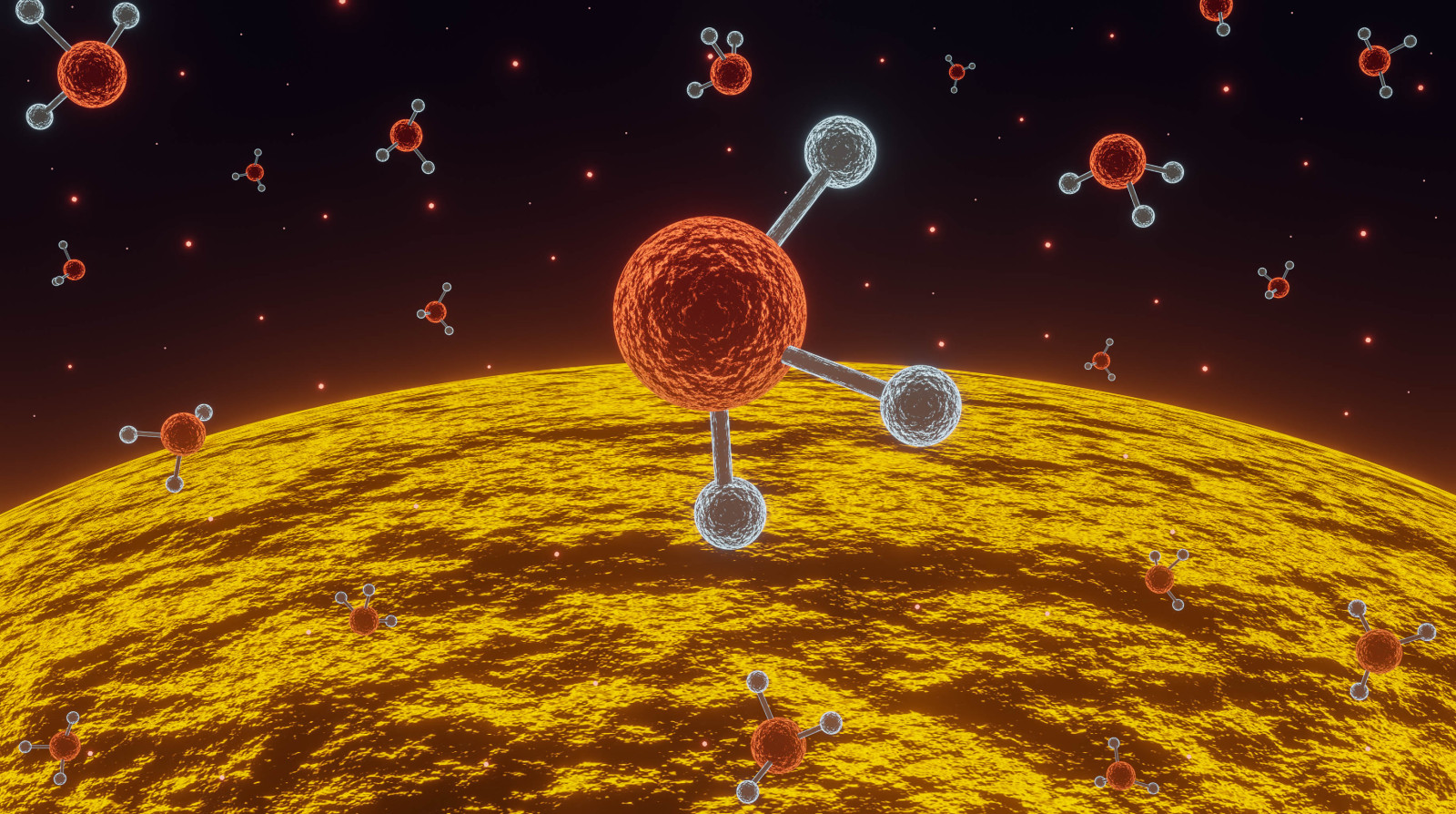
Key Molecular Structures in Venusian Clouds
An intriguing focus of the research is cyclopentanes—ring-shaped molecules with five members. Resembling the sugar backbone found in DNA, these compounds have been proposed as possible genetic building blocks capable of existing in Venus’s atmosphere. MIT scientists explored the possibility that cyclopentanes might substitute for the sugar components in DNA, which are crucial for genetic material.
“Life requires far more sophisticated molecular structures—particularly complex polymers—to perform biological functions. In particular, the need for genetic polymers with functional and structural properties similar to RNA and DNA seems to be the universal requirement for life, regardless of life’s underlying chemistry,” the research team explained.
Findings suggested that cyclopentanes could effectively replace the sugar molecules in DNA, highlighting the possibility that biochemistry compatible with life may exist within Venus’s cloud zones. As the scientists noted:
“Identifying genetic polymers that resist degradation in concentrated sulfuric acid becomes a critical step to study the possibility of life in environments where sulfuric acid is a dominant liquid.”
Historically regarded as a barren globe, Venus is now under renewed scrutiny. The discovery of essential organic molecules combined with structural analogs to terrestrial DNA suggests its cloud layers might be a more promising habitat for life than once thought, making it a compelling target for future exploratory missions.
- Categories:
- Astronomy









0 comments
Sign in to Comment