
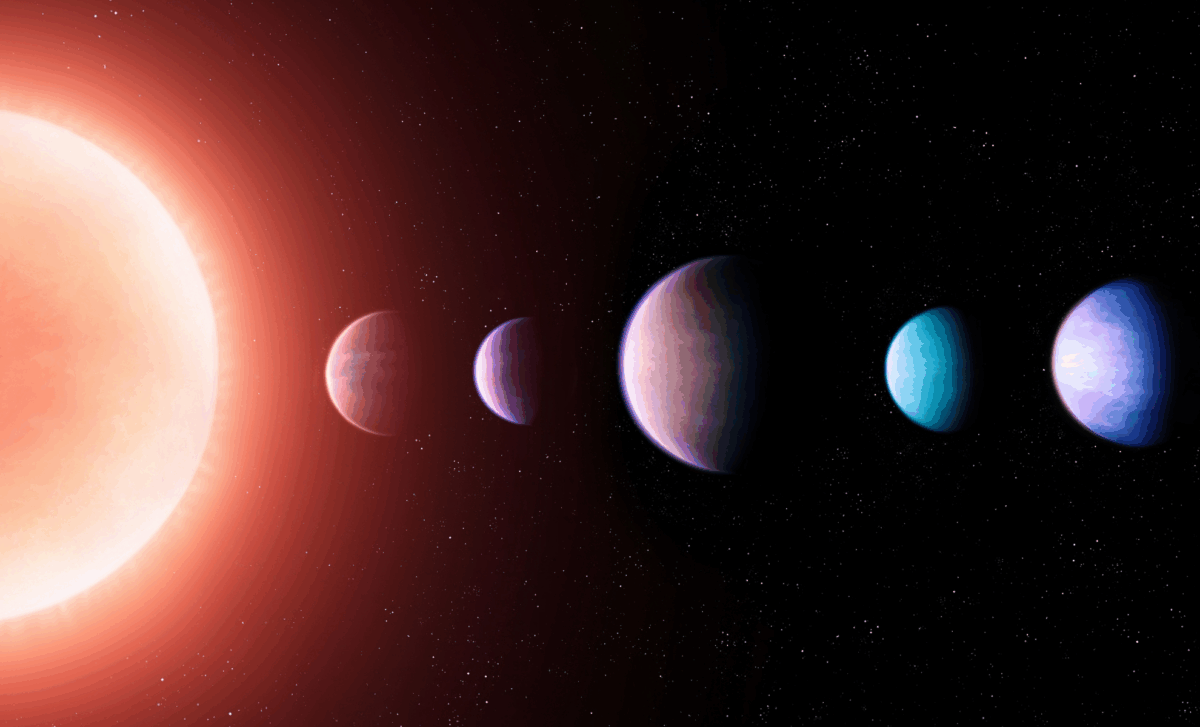
To date, astronomers have identified over 6,000 planets orbiting stars beyond our solar system, marking a pivotal step in exploring far-off planetary neighborhoods. According to Space.com, this achievement represents just the forefront of a much larger journey, with upcoming space missions set to uncover thousands more exoplanets. The emphasis is moving from merely locating these worlds toward detailed study, especially in the hunt for a true Earth twin circling a sun-like star.
New Missions Set to Transform Our Understanding of Alien Worlds
Over the next ten years, a host of advanced planet-hunting projects will dramatically deepen our knowledge of other solar systems. Launching in December 2026, the European Space Agency's PLATO mission aims to find rocky planets within the habitable zones of stars similar to the Sun. Soon after, NASA’s Nancy Grace Roman Space Telescope will utilize gravitational microlensing to detect distant planets invisible to conventional techniques. In addition, China’s Earth 2.0 mission, planned for 2028, will scan for planetary transits to identify potential Earth-like worlds.
“We’ve found 6,000 planets, but none of them are like Earth,” said Aurora Kesseli, an astronomer at Caltech who manages NASA’s Exoplanet Archive. “So when people ask why we are still looking for exoplanets when we have found 6,000 of them, it’s because we haven’t found an Earth-like planet yet. But there are a lot of the upcoming missions that are really tuned-in to try and find something that actually looks like Earth.”
Add Cosmo Herald as a Preferred Source

Alongside NASA’s ongoing TESS mission surveying the skies, these projects are expected to produce an unprecedented influx of exoplanet discoveries. Kesseli pointed out the upcoming data management challenge: “The challenge for the Archive is definitely going to be handling the sheer numbers of exoplanets still to come, from PLATO, from Earth 2.0, from NASA’s Roman Space Telescope. We’re expecting on the order of 100,000 transiting planet candidates from those missions.”
Gaia’s Precision Astrometry Unlocks New Exoplanets
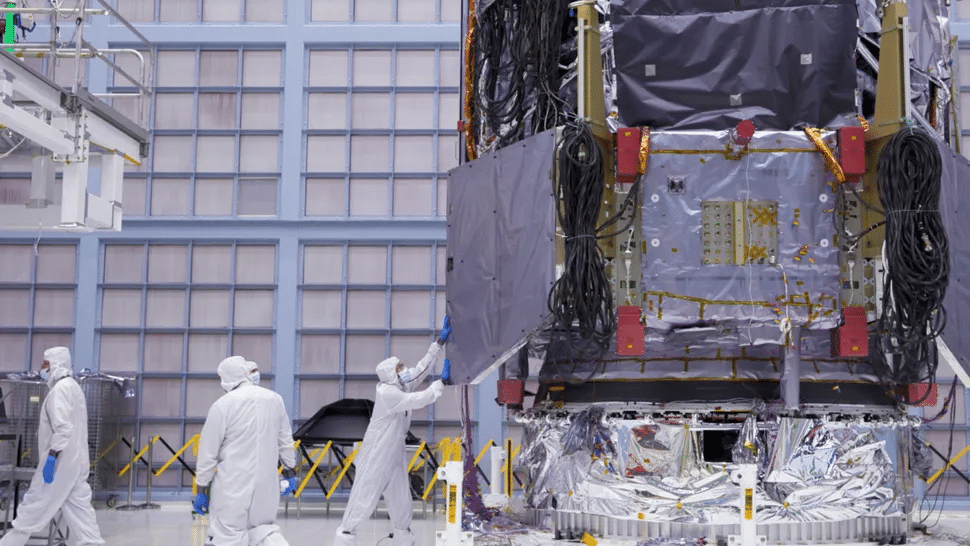
The Gaia spacecraft will significantly advance exoplanet research by measuring the tiny sideways movements of stars caused by orbiting planets. Its first catalog of candidate exoplanets is expected in December 2026. “Their first delivery of exoplanets is going to be in December 2026, and they are expecting a few thousand candidates,” said Kesseli.
Although astrometry has historically been a difficult technique—with fewer than ten exoplanets found using it so far—Gaia’s unmatched accuracy is set to change that landscape, primarily discovering massive gas giants, while smaller, Earth-sized planets will remain more challenging to detect.
Exploring Exoplanet Atmospheres: From JWST to Future Observatories
Beyond detecting new worlds, the frontier now involves understanding their atmospheres. The James Webb Space Telescope (JWST) is already examining the atmospheres of nearby rocky planets around cool red dwarf stars. “So far with JWST it is inconclusive,” Kesseli said. “With more data, better techniques, more hours on targets like this, I think that we will start to have an idea about which planets likely host atmospheres and which ones don’t. But JWST is not going to be able to look at the atmosphere of an exoplanet around a sun-like star, it just doesn’t have the sensitivity for that.”
Upcoming missions like ARIEL will carry out comprehensive surveys of the atmospheres of Neptune- and Jupiter-sized exoplanets. For identifying and analyzing true Earth replicas, astronomers have their eyes on the Habitable Worlds Observatory (HabEx), planned for launch in the 2040s. “If we want to see an actual Earth-like planet around a sun-like star, the best thing is going to be the Habitable Worlds Observatory, which will be launched in the 2040s,” Kesseli stressed. HabEx will use a large primary mirror combined with a coronagraph starshade to capture direct images of planets, enabling detailed characterization of their surfaces and atmosphere, searching for possible signs of habitability and life.
- Categories:
- News






0 comments
Sign in to Comment