
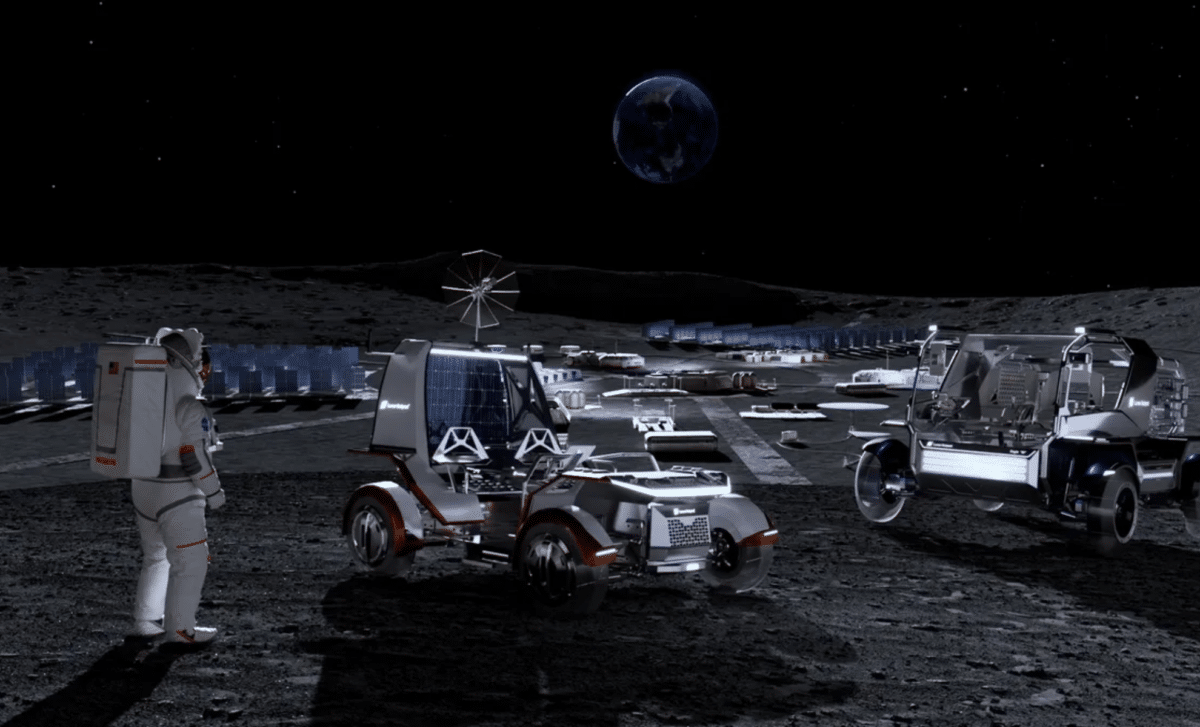
Colorado-based space innovator Lunar Outpost is advancing lunar exploration with its cutting-edge Pegasus rover, marking a vital milestone in creating a sustainable human foothold on the moon, as reported by Space.com.
Revolutionizing Robotics for Lunar Missions
As a pioneer in commercial lunar solutions, Lunar Outpost has previously developed the robust Eagle rover and a compact robotic rover deployed on a commercial lunar lander. Now, fueled by $30 million in fresh investment, the firm is crafting Pegasus—an agile, compact rover inspired by NASA's Apollo moon buggies. Unlike the larger, SUV-style Eagle, Pegasus emphasizes nimbleness and multifunctional capabilities. Their target is to deliver Pegasus by 2027, aiming for a lunar deployment in 2028 aligned with NASA’s Artemis 4 mission.
“We’re a lunar infrastructure company, and the infrastructure of the moon base won’t be built by astronauts alone,” Vice President of Strategy Michael Moreno told Space.com. “It’ll be an autonomous robotic workforce, and that’s our expertise.”
Add Cosmo Herald as a Preferred Source

More than rover deployment, Lunar Outpost envisions a full-fledged lunar infrastructure, encompassing energy solutions, habitat modules, and landing facilities.
Self-Governing Robots Paving the Way
The mission behind Pegasus and other robotic systems is not limited to exploration but extends to autonomous construction and maintenance of crucial lunar infrastructure. Moreno detailed how their rovers will handle automated construction of surface structures such as launch and landing pads, energy storage units, and living habitats. “Lunar Outpost’s rovers are designed to build, sustain, and operate the essentials for a continuous human presence,” he explained.
This strategy reduces astronaut burden while enabling more ambitious objectives. The integration of autonomous machines alongside human teams promises to enhance the safety and effectiveness of lunar operations. Central to this is the company’s Mobile Autonomous Prospecting Platform (MAPP) mini-rovers, which analyze lunar soil and facilitate scientific research and site preparation.
Collaborating on Artemis 4: Humans and Robots in Tandem
Looking ahead, Lunar Outpost is gearing up for a landmark partnership with NASA’s Artemis initiative. Moreno revealed that a MAPP rover will deploy with an astronaut during Artemis 4, marking the debut of coactive robotic assistance during a crewed lunar expedition. “The Artemis 4 mission will be the first in history pairing a MAPP rover directly with an astronaut on the moon,” he said.
This collaboration signifies a major leap in human-robot cooperation, enabling joint lunar regolith studies and infrastructure development. The synergy between astronauts and robotic systems is crucial not only for immediate mission success but also for enduring lunar habitation and future space exploration milestones.
Building a Multi-World Future
The company’s plans transcend the moon. Moreno emphasized the enduring human drive to return to and settle the lunar surface. “The goal to revisit the moon has persisted for five decades, and it remains a key human mission,” he stated. “Moreover, the moon serves as a gateway for broader deep space exploration and for transforming humanity into a multi-planetary civilization.”
Leveraging self-sufficient robotics, commercial ingenuity, and strategic alliances with NASA, Lunar Outpost aims to lay the groundwork for permanent lunar living. Their innovative approach heralds a new era where humans and robots jointly expand humanity’s reach across the solar system.
- Categories:
- Space










0 comments
Sign in to Comment