
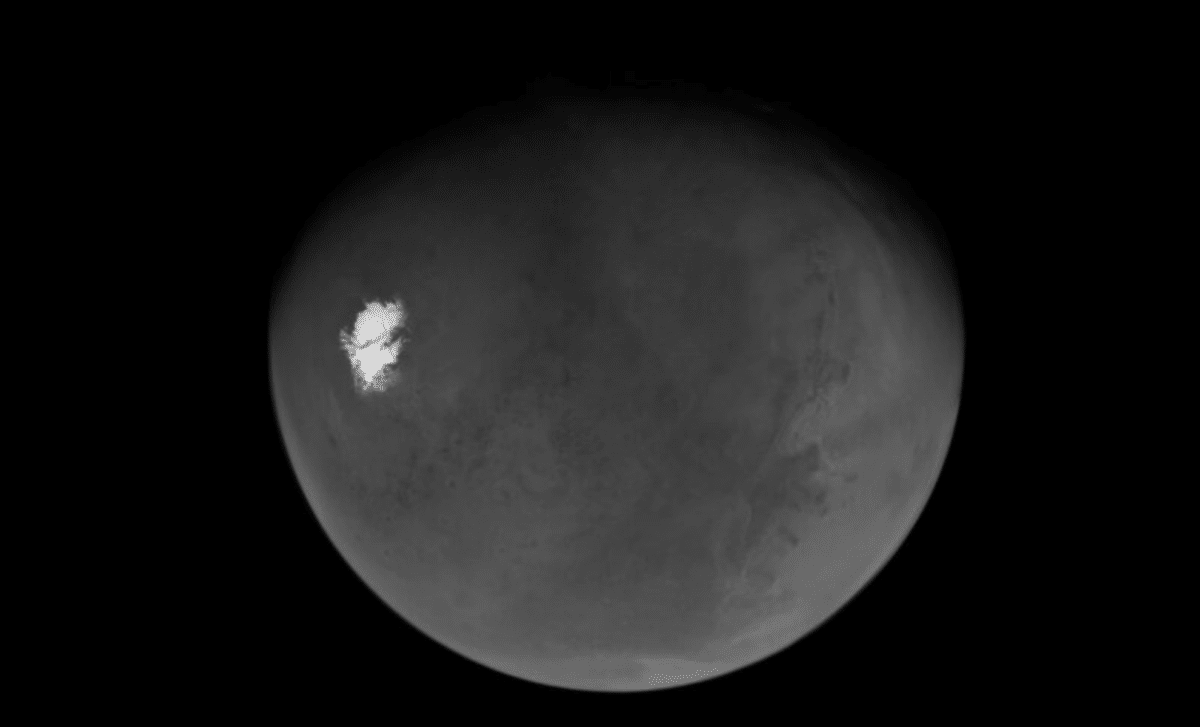
On May 15, 2026, the Psyche spacecraft achieved a historic milestone by executing a close flyby of Mars, capturing stunning imagery while receiving a much-needed velocity increase en route to its final target: the metal-rich asteroid 16 Psyche. Per NASA, this maneuver boosted the spacecraft’s speed by 1,000 mph (1,600 kph) and fine-tuned its trajectory to align with the asteroid belt, marking a key step in exploring rare metallic worlds within our solar system.
Harnessing Mars’ Gravity for a Key Trajectory Adjustment
The Mars flyby served as a textbook example of gravitational assist, with Psyche passing just 2,800 miles (4,500 kilometers) above the planet’s surface. By leveraging Mars’ gravity like a slingshot, the spacecraft accelerated to 12,333 mph (19,848 kph) and altered its path by about 1 degree. This subtle orbital change is critical to line up the spacecraft’s voyage with the slightly inclined orbit of 16 Psyche, ensuring a timely rendezvous in 2029.
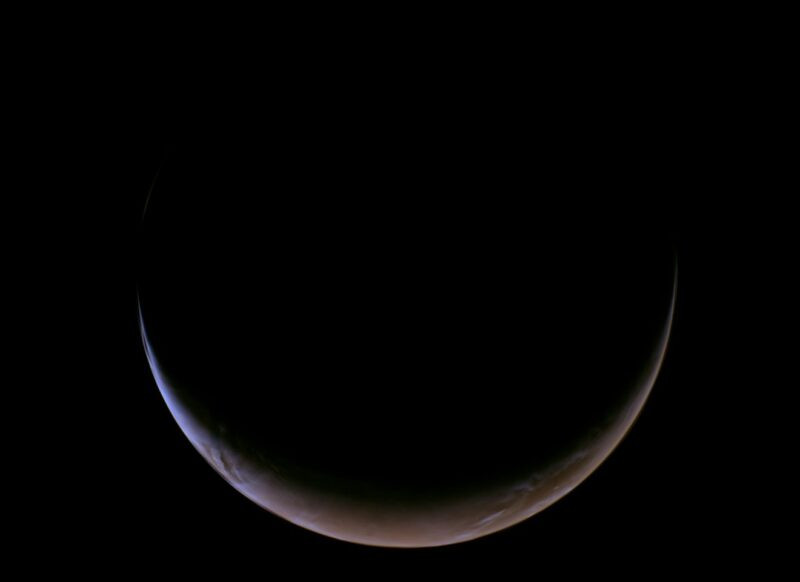
NASA highlights that such flybys accomplish more than speed gains—they also execute precise course corrections. Since 16 Psyche’s orbit is slightly tilted relative to the solar system’s plane, these gravitational maneuvers serve to optimize the spacecraft’s position for a long-term mission, conserving fuel and travel time through calculated orbital mechanics.

Remarkable Views of Mars in Transition
Psyche’s cameras documented Mars under varying lighting, from a delicate crescent phase during approach to a fully illuminated disk after closest approach. These images not only provide breathtaking views but also deliver insight into Martian atmospheric and surface features. Initial photographs taken on May 3, 2026, from a distance of 3 million miles (4.8 million km) gradually sharpened as the spacecraft drew nearer, showcasing the mission’s precise navigation and careful planning.
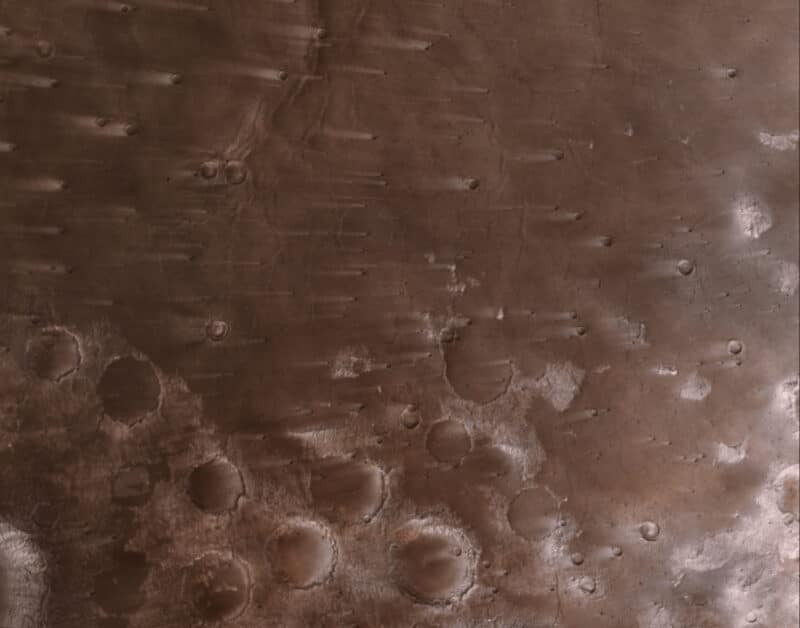
Experts emphasize the challenge of snapping clear pictures while hurtling past Mars at nearly 20,000 kilometers per hour. Each photo demands perfect timing, advanced optics, and meticulous calibration to offset motion blur, resulting in images that blend visual wonder with scientific value during planetary flyby operations.
Mission Focus: Exploring the Unique Metallic Asteroid 16 Psyche
The core aim of the Psyche mission is to study 16 Psyche, an asteroid distinguished by its abundant metals such as nickel and iron. Researchers suspect it represents the exposed core of an early protoplanet, providing a rare opportunity to investigate planetary formation processes from over 4 billion years ago. Close-up analysis will enhance understanding of planetary building blocks, asteroid belt dynamics, and the solar system’s origin story.
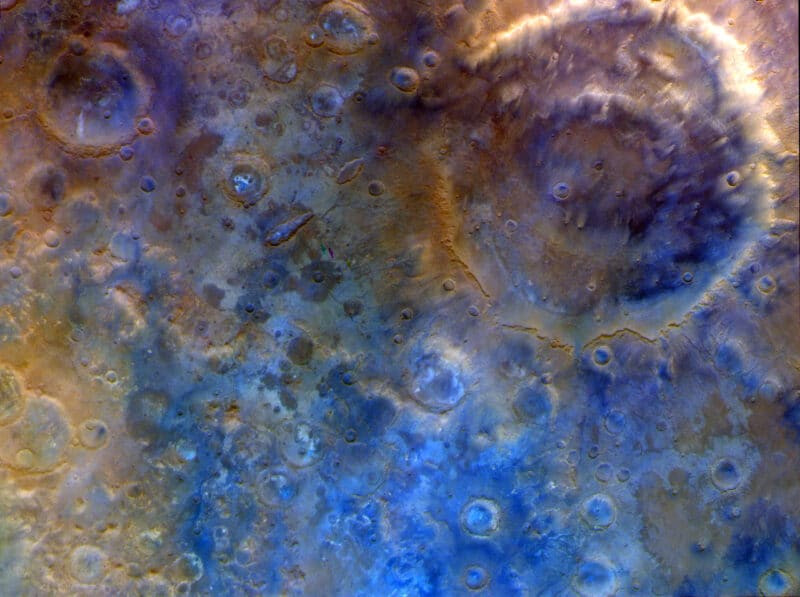
Since 16 Psyche orbits at a slight angle to the solar system's plane, straightforward travel isn’t possible. Each planetary encounter, including the Mars flyby, is carefully designed to refine speed and course corrections, guiding the spacecraft toward a precise 2029 arrival at its metallic destination.
Implications of Psyche’s Mars Encounter
This flyby exemplifies not only a technical triumph but also the ingenuity in applying planetary science principles to reach horizons beyond previous reach. By combining strategic gravity assists, carefully executed course adjustments, and high-speed imaging, the Psyche mission showcases a sophisticated interplay between engineering prowess, astronomical knowledge, and exploration vision.
NASA’s release of these flyby images confirms the mission is progressing as planned, reinforcing confidence in Psyche’s systems and trajectory. The news energizes scientists and space fans alike as the spacecraft presses onward to a destination that could enhance our understanding of planetary cores and the solar system’s early evolution.
As Psyche advances toward its target, each captured image and trajectory tweak adds to humanity’s expanding exploration narrative, diving deeper into the solar system’s metallic heart.
- Categories:
- Space




0 comments
Sign in to Comment