
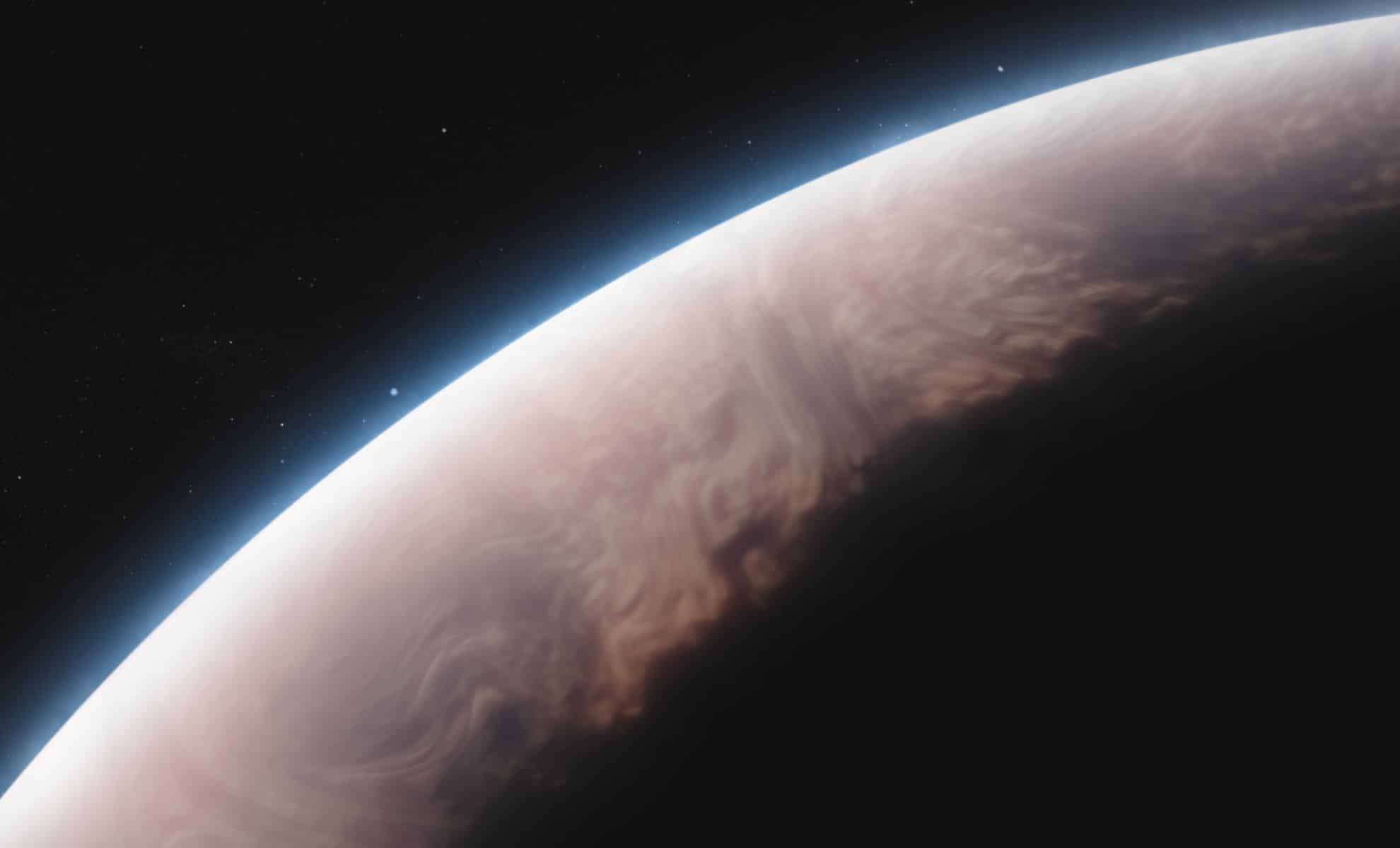
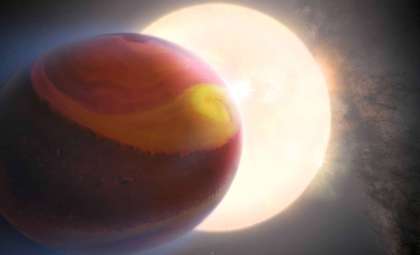
A recent publication in The Astrophysical Journal Letters by a team from Cornell University reveals that quartz clouds on hot Jupiters may refract starlight similarly to how ice crystals create atmospheric halos and sun dogs on Earth. Led by Professor Nikole Lewis and PhD candidate Elijah Mullens, the study investigates how silicate clouds on exoplanets like WASP-17 b might distort light, offering a novel tool for exploring extraterrestrial atmospheres and weather patterns with the James Webb Space Telescope (JWST). By examining light scattering through quartz clouds, astronomers could unlock clues about planetary weather systems, magnetic influences, and other atmospheric features.
This mechanism echoes a concept first introduced by Tommy Gold in 1952, which proposed that aligned dust particles in planetary atmospheres could bend light. Although initially set aside, the extreme climate of WASP-17 b provides ideal conditions for revisiting this idea. This research not only advances exoplanetary science but also introduces innovative methods for probing the atmospheres of distant planets.
How Quartz Crystals Cause Light Refraction on Hot Jupiters
Hot Jupiters such as WASP-17 b experience searing temperatures exceeding 2,000°F, causing minerals like silicates to vaporize and ascend into their atmospheres. There, these vaporized minerals condense into tiny quartz crystals at high altitudes, which then align due to the planet’s powerful winds. This alignment is key to producing optical effects observable from Earth.

“The way ice crystals create visual phenomena on Earth can be mirrored by silicate crystal alignment on these exoplanets,” Mullens explained. As starlight passes through the quartz cloud layers, it bends and polarizes in distinctive fashions. This can result in luminous arcs and shifted bright spots detectable from afar, providing insights into the dynamic atmosphere of these alien giants.
Revolutionizing Understanding of Exoplanet Atmospheres
Beyond their captivating appearance, the light-bending effects from quartz clouds hold significant scientific value. These phenomena can reveal details about atmospheric motions such as wind speeds, magnetic or electric field interactions, and cloud chemistry. By observing how starlight interacts with the quartz grains, researchers can deduce the presence of wind shear, turbulence, and forces responsible for crystal alignment.
“These effects, aside from being visually striking, offer important data about crystal behavior in exoplanetary atmospheres,” Mullens noted. This knowledge is critical for constructing accurate models of weather on hot Jupiters and could eventually extend to understanding climate systems on smaller, potentially habitable rocky planets.
The Role of JWST in Detecting Crystal-Induced Light Patterns
Although the James Webb Space Telescope (JWST) mainly observes in the infrared spectrum, it can detect the unique spectral and polarization signatures caused by aligned quartz crystals. These signatures allow scientists to piece together the structure of the crystals and atmospheric characteristics, even without direct imaging.
The work by Mullens and Lewis builds on Tommy Gold’s 1952 hypothesis, confirming that while dust alignment may not occur in the interstellar medium, it is plausible in the hot, windy environments of these exoplanets. “The 1952 idea does not apply to space between stars but fits well with the conditions found on hot Jupiters with their intense winds and dense atmospheres,” Lewis stated. This discovery highlights how distinct planetary conditions enable unique optical phenomena.
Continued JWST observations may further elucidate the interaction between quartz clouds and atmospheric forces, enhancing our grasp of light behavior under exotic extraterrestrial conditions. This knowledge could transform how planetary atmospheres and their underlying physics are studied.
Quartz Clouds Transform Our Understanding of Exoplanetary Chemistry
One of the most exciting outcomes of this research lies in its implications for atmospheric chemistry. WASP-17 b hosts a cloud composition unlike Earth’s familiar ice or the iron and corundum clouds on brown dwarfs. Quartz clouds represent a new category of high-altitude haze, shaped by the planet's intense heat and fierce winds, broadening the scope of cloud formation theories.
This finding challenges existing atmospheric models and suggests similar quartz cloud phenomena could occur on other planetary types, including rocky worlds orbiting cooler stars. “Given the 10,000-mile-per-hour winds and dense environments on these planets, it made sense that grains would line up,” Lewis remarked. These quartz clouds do more than dazzle—they serve as vital indicators of the chemical and physical processes shaping alien skies.
- Categories:
- News





0 comments
Sign in to Comment