
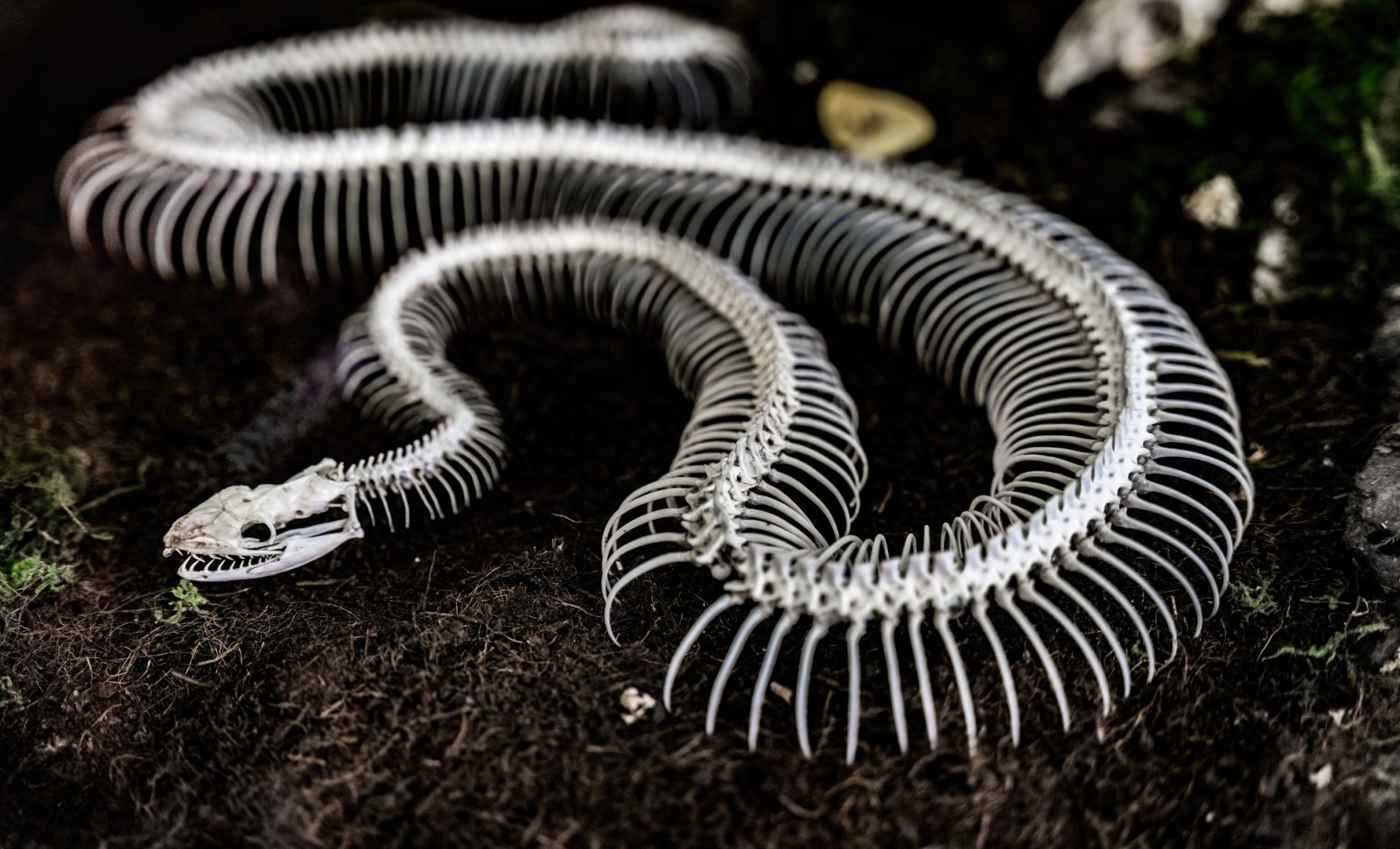
A remarkable fossil from Argentina is reshaping scientists’ understanding of snake evolution. The specimen of Najash rionegrina reveals that early snakes retained hind limbs and possessed skull bones now absent in modern species. Dating back nearly 100 million years, this discovery illuminates a previously obscured phase of their evolutionary history.
These findings suggest that the loss of limbs in snakes was a gradual process rather than an immediate change. For a long time, the early evolution of snakes has remained elusive due to scarce fossil evidence, leading to many questions about how their skeletal structures developed over time.
Ancient Snake With Legs and More Intact Skull Bones
The Najash rionegrina fossil distinctly displays hind limbs, providing clear proof that early snakes retained these features longer than once assumed. The 2019 research published in Science Advances characterizes it as a species undergoing limb reduction.

“Snakes represent one of the most dramatic examples of the evolutionary versatility of the vertebrate body plan, including body elongation, limb loss, and skull kinesis. However, understanding the earliest steps toward the acquisition of these remarkable adaptations is hampered by the very limited fossil record of early snakes,” the authors wrote.
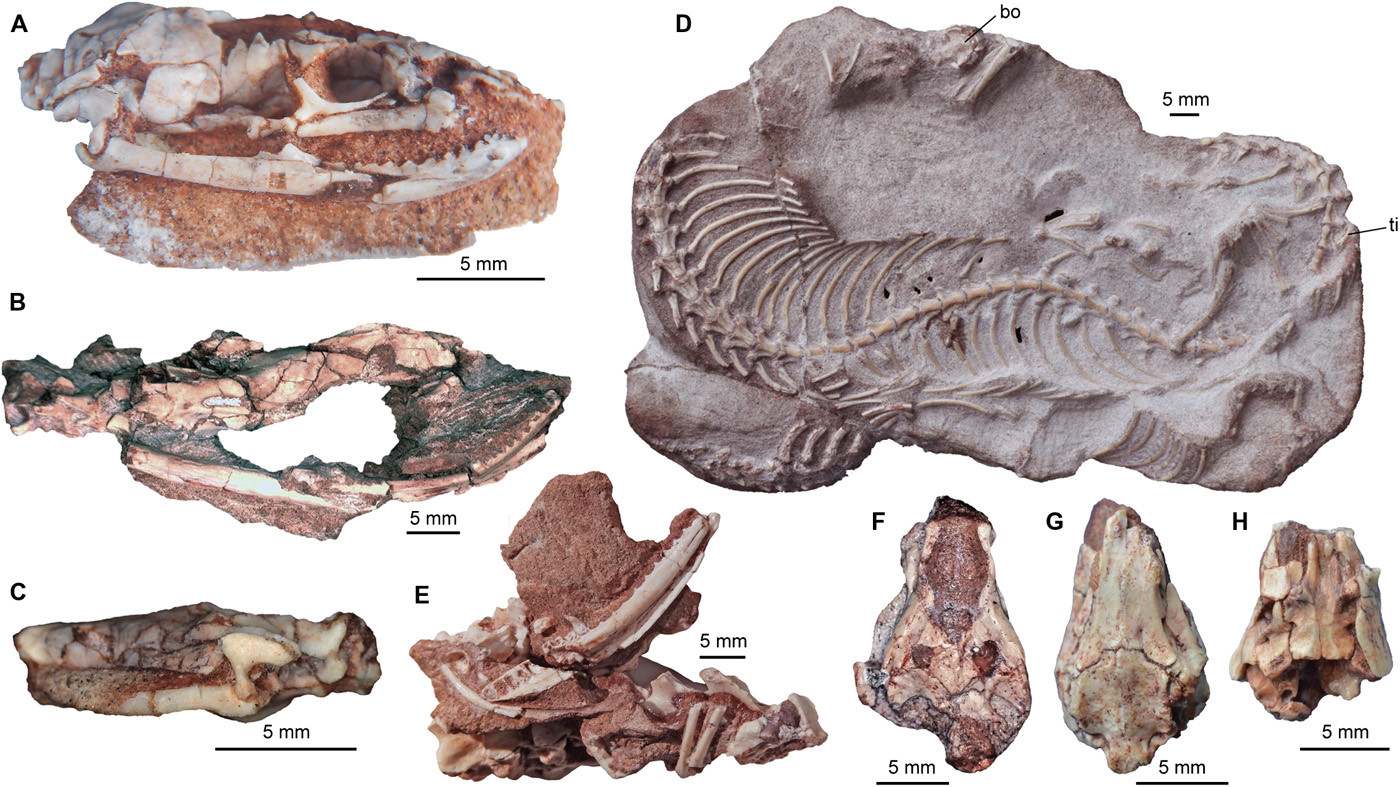
A particularly important aspect is the presence of the jugal bone, or cheekbone, still evident in the skull. This bone is nearly missing in today's snakes. Its identification in Najash resolves a long-standing confusion. Michael Caldwell, a co-author, emphasized that this finding corrects over a century of misconceptions related to the skull anatomy of these reptiles.
“This research revolutionizes our understanding of the jugal bone in snake and non-snake lizards,” he said. “After 160 years of getting it wrong, this paper corrects this very important feature based not on guesswork, but on empirical evidence.”
Advanced Imaging Unlocks Hidden Details
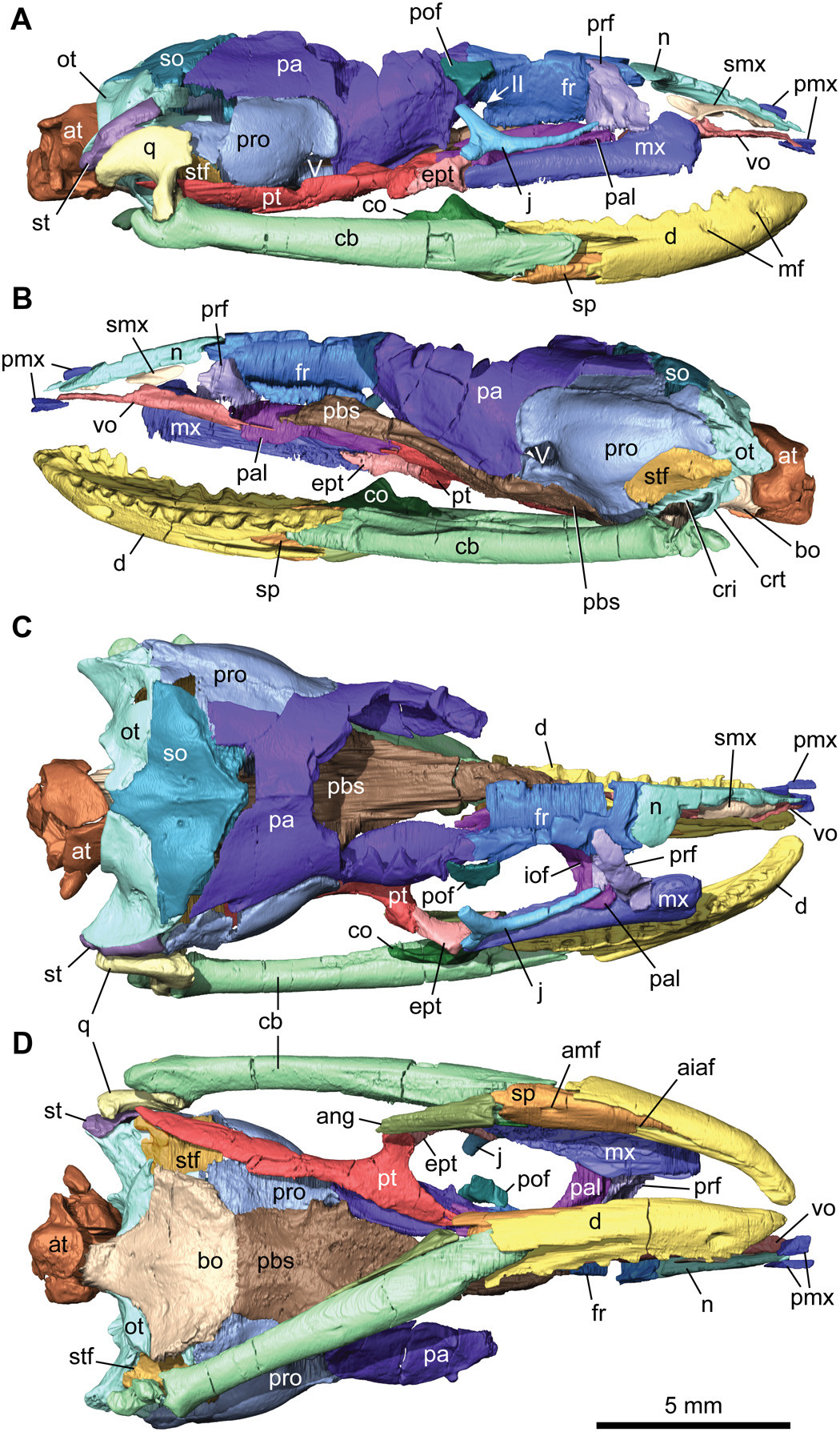
Scientists utilized micro-CT scanning to examine the fossil non-invasively, enabling a detailed reconstruction of the skull and revealing internal structures, such as nerve and blood vessel channels, concealed within the rock.
The scans uncovered features previously overlooked or misinterpreted, providing clarity on how some skull bones were gradually lost or reduced over time, allowing the development of the flexible skulls characteristic of modern ectothermic reptiles.
More Complex Snake Origins Revealed
The anatomy of Najash disputes the notion that early snakes evolved primarily as small, burrowing animals. Lead researcher Fernando Garberoglio suggests instead that their ancestors were larger-bodied predators with broad jaws.
“Our findings support the idea that the ancestors of modern snakes were big-bodied and big-mouthed — instead of small burrowing forms as previously thought,” he explained. “The study also reveals that early snakes retained their hindlimbs for an extended period of time before the origin of modern snakes which are for the most part, completely limbless.”
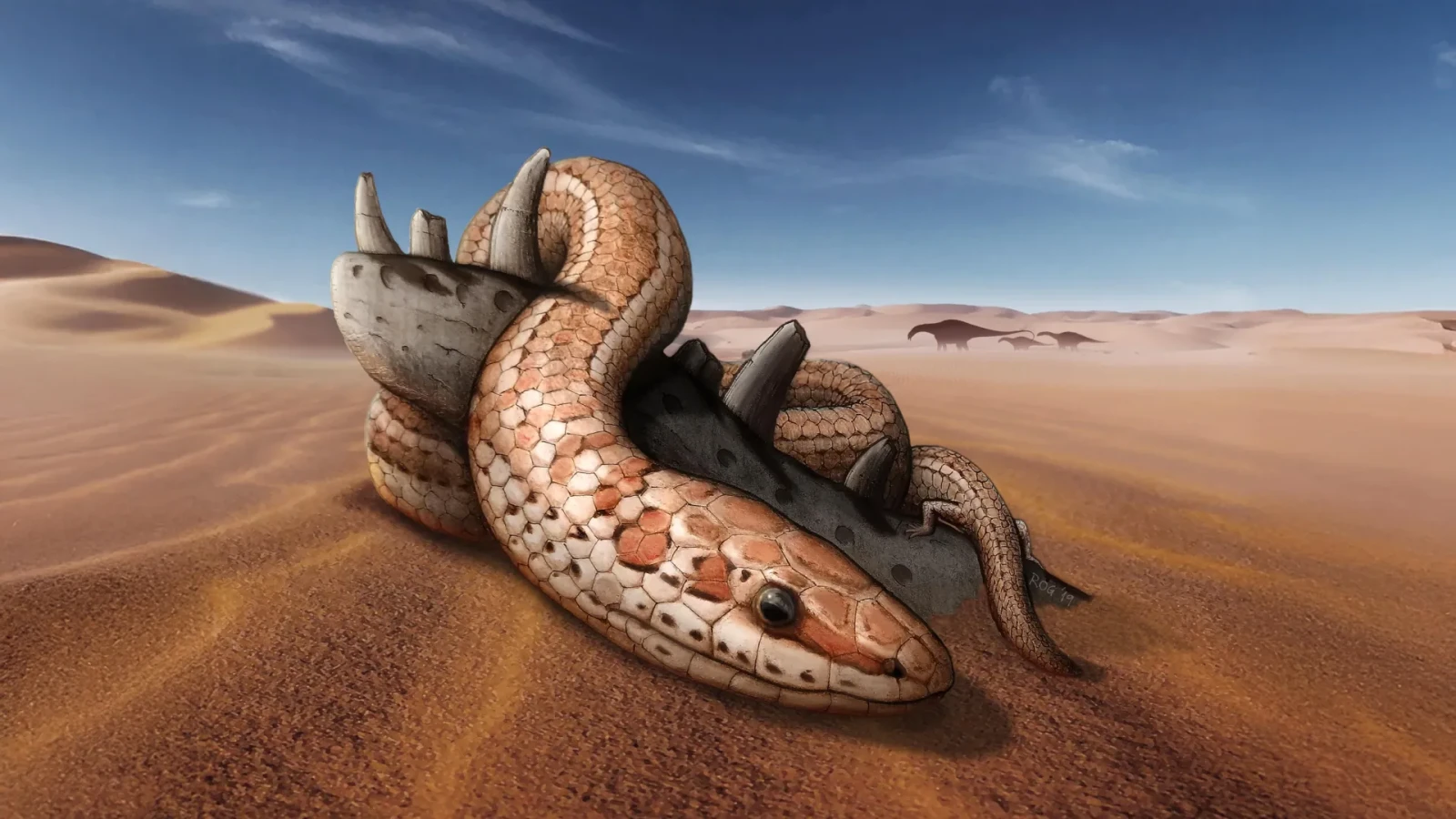
Additional discoveries bolster this nuanced picture. Fossils like Boipeba tayasuensis illustrate that some early blind snakes reached lengths of over one meter. Other research indicates these early snakes combined burrowing behaviors with diverse ecological adaptations, rather than following a single lifestyle. Collectively, these findings suggest multiple evolutionary pathways, with Najash rionegrina exemplifying a clear example of this transitional phase.
- Categories:
- Science








0 comments
Sign in to Comment