
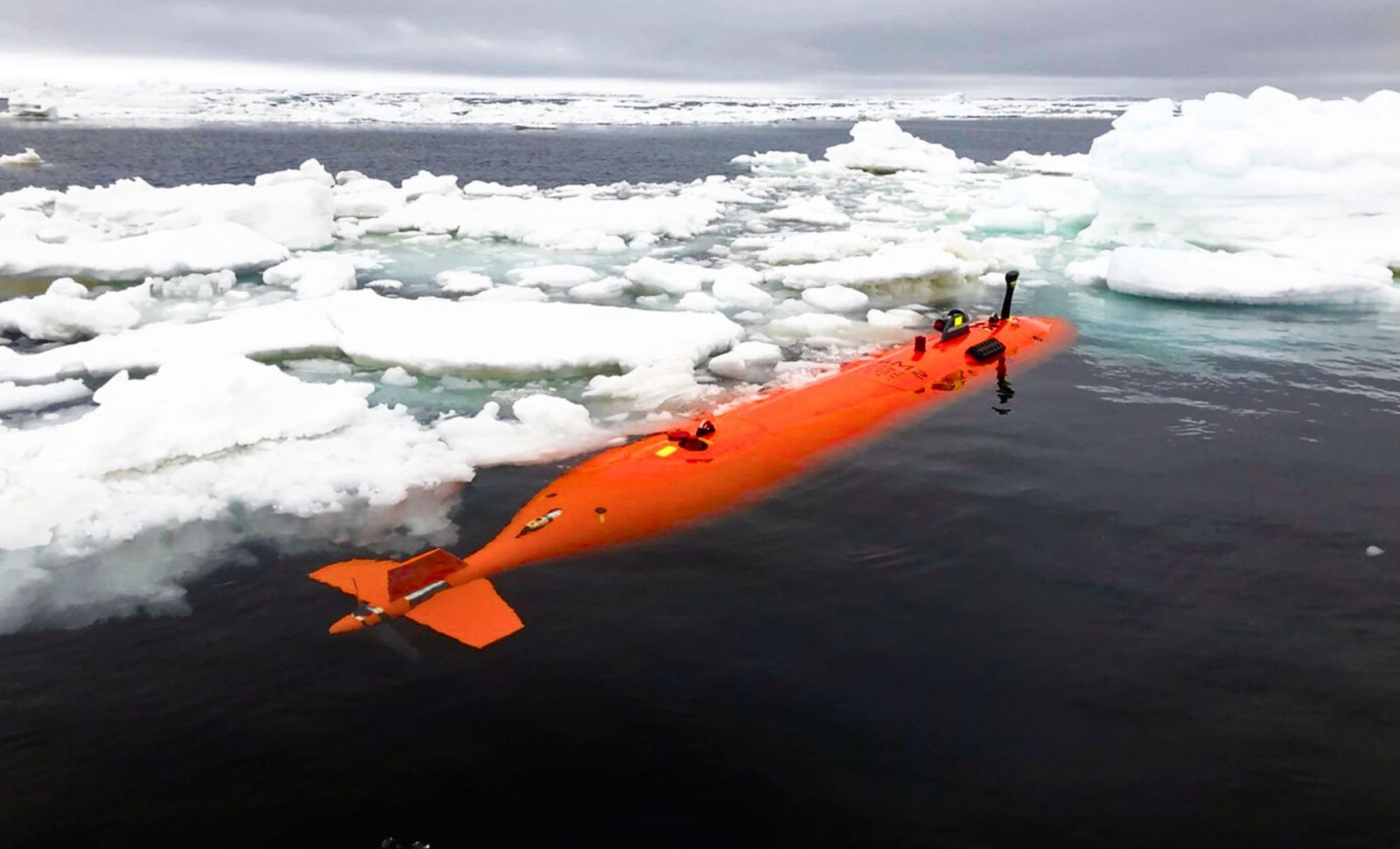
The edges of Antarctica’s ice shelves are far more dynamic than they seem. Hidden beneath the seemingly solid ice, ocean waters flow with enough warmth to carve out vast underwater cavities, gradually reshaping the foundations of the West Antarctic Ice Sheet. Much of this submerged realm has remained unexplored—until recently.
Thanks to advances in autonomous underwater technology, researchers have started to explore beneath these ice shelves. These robotic explorers navigate beneath the ice, mapping the seafloor, gauging melting, and examining the interplay between ocean currents and glacial ice—areas satellites cannot penetrate. One such expedition beneath the Dotson Ice Shelf captured the clearest views yet of an Antarctic glacier’s underside.
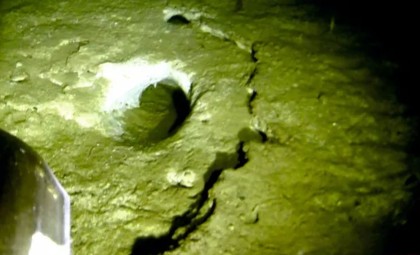
However, in a startling turn of events, the submersible vanished. Before losing communication, it recorded enigmatic formations underneath the ice.

Groundbreaking Imagery From Beneath Antarctica’s Ice
The project was part of the International Thwaites Glacier Collaboration (ITGC), a joint initiative by British and American researchers aiming to understand how West Antarctica’s ice shelves respond to variations in ocean warming. In 2022, the Swedish-built autonomous underwater vehicle Ran was deployed to survey the space below the Dotson Ice Shelf.
Over a 27-day expedition, Ran traveled more than 1,000 kilometers, producing detailed sonar maps covering over 140 square kilometers. This was the first time such intricate terrain beneath the ice had been captured.
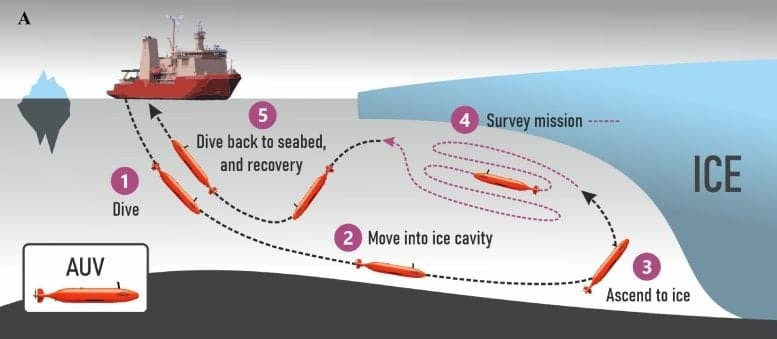
“Creating detailed maps of the ice’s underside felt like unveiling the Moon’s far side,” said Anna Wåhlin, oceanography professor at the University of Gothenburg, speaking for the British Antarctic Survey.
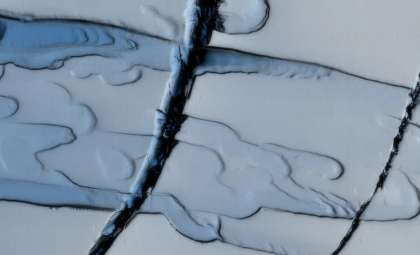
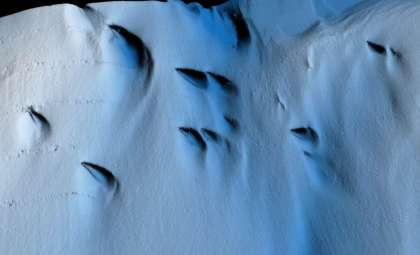
A peer-reviewed article in Science Advances reveals the ice shelf’s bottom is marked by intricate formations: stepped terraces, teardrop-shaped depressions, and elongated melt channels carved by inflowing warm waters. These features suggest localized erosion driven by the intrusion of Circumpolar Deep Water, a moderately warm ocean current along the continental shelf.
Unequal Melting Patterns Challenge Previous Assumptions
The Dotson Ice Shelf isn’t thinning uniformly. Sonar observations confirmed that melting is concentrated in distinct sections rather than spread evenly. Researchers identified two deep underwater cavities on the western side connected by narrow channels, efficiently funneling warm water beneath the ice.
This patchy melting matches earlier satellite and climate model data, which indicated accelerated ice loss on Dotson’s western edge. These focused heat flows clarify why parts of the shelf are retreating faster than others.
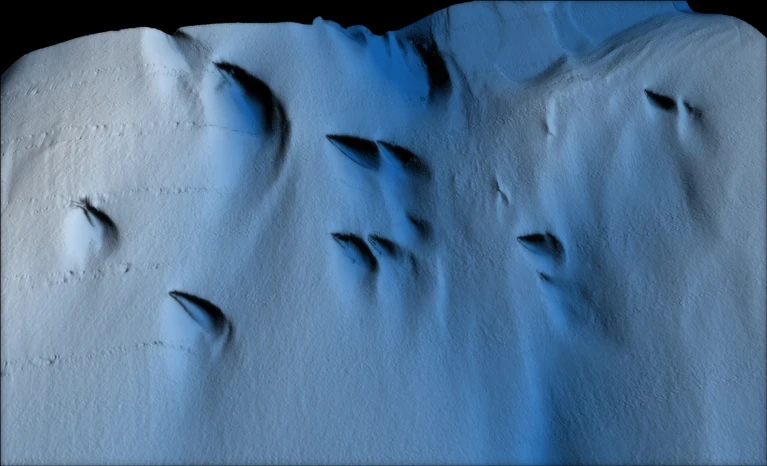
“The sonar maps created by Ran represent a major leap in our understanding of ice shelf complexity,” explained Karen Alley, glaciologist at the University of Manitoba. “Past studies hinted at this complexity, but Ran revealed a more complete, intricate landscape beneath the ice.”
Combined satellite and ocean sensor data reveal the Dotson Ice Shelf has shed nearly 390 gigatonnes of ice over two decades. As the shelf thins, it loses its grip over inland glaciers, allowing faster flow of ice into the ocean.
Decades-old fractures visible since the 1990s were found to be expanding at their bases due to turbulent water flow. These cracks serve as gateways for warm water infiltration, triggering rapid ice loss—a factor inadequately represented in many existing ice sheet models.
Loss of the Submersible During 2024 Mission
When researchers returned in early 2024 to reassess the shelf’s underside, Ran entered its scheduled 24-hour survey but never resurfaced.
Without radio signals able to penetrate the thick ice, scientists could not track the craft in real time. Despite exhaustive searches, no acoustic signals or debris were found. Its fate remains a mystery.
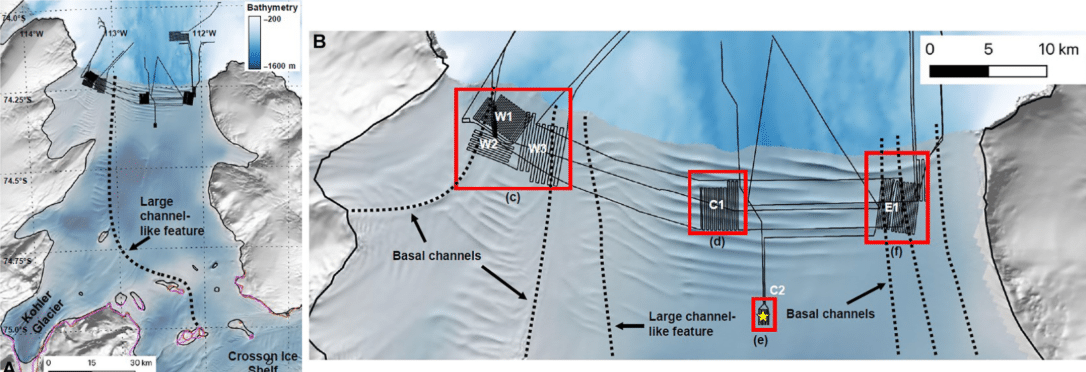
“While we retrieved invaluable data, the loss of Ran was disappointing,” Wåhlin told British Antarctic Survey News. Possible causes include technical failure or collision with an underwater ridge.
Nevertheless, the first mission's sonar data continues to shed light on basal melt processes and ice-ocean dynamics. The disappearance also prompts critical discussions about building more robust autonomous tools for extreme polar environments.
Implications for Global Sea Level
Ice shelves like Dotson act as crucial buttresses, preventing inland glaciers from advancing rapidly. Their weakening allows grounded ice to accelerate into the ocean, contributing to rising sea levels worldwide.
Research estimates indicate melting beneath Dotson contributed roughly 0.02 inches of global sea level rise between 1979 and 2017, as published in Science Advances. West Antarctica’s total ice loss during that span adds up to over 0.5 inches, a rate that continues to climb with ongoing melt acceleration.
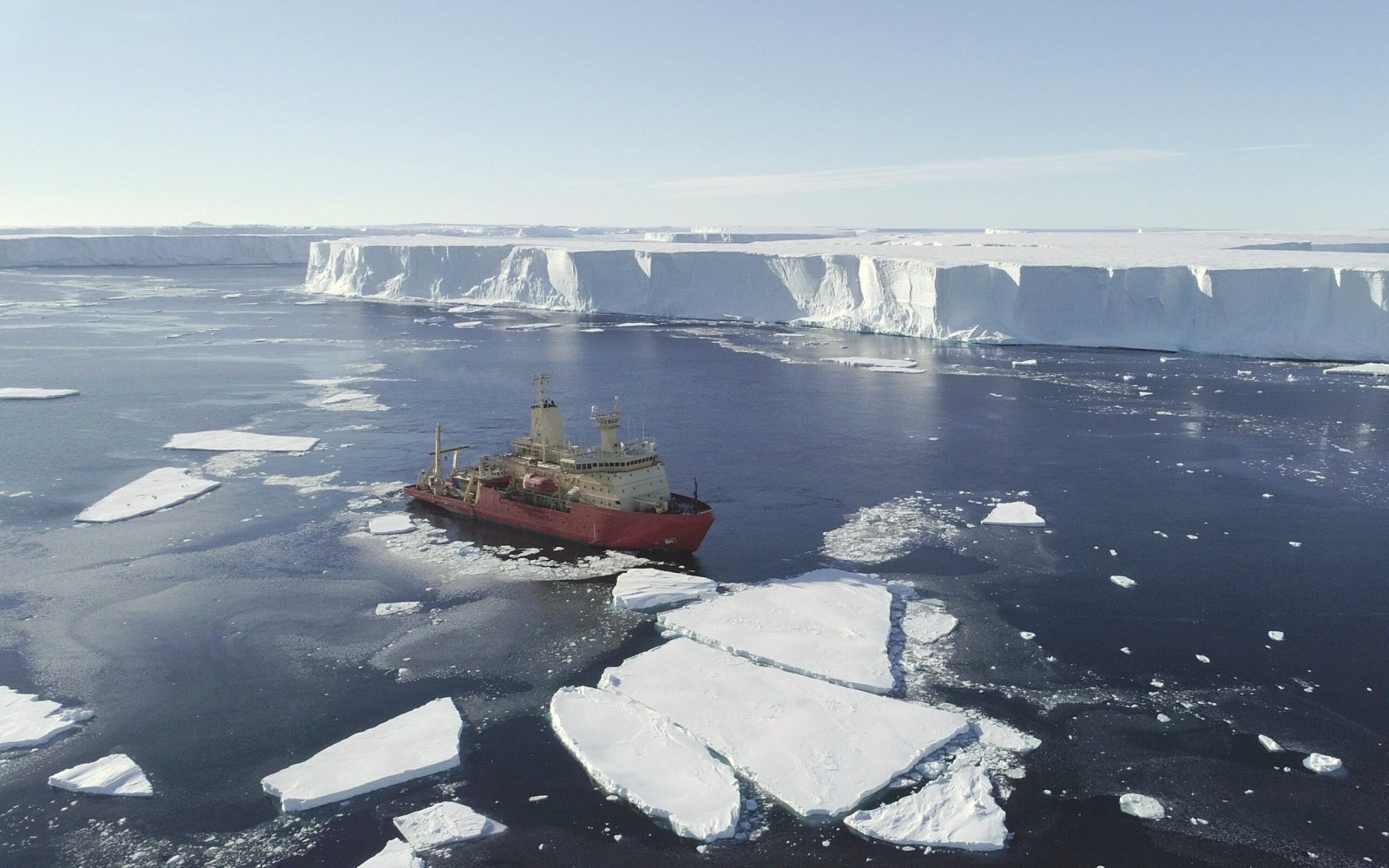
Findings from Ran underscore that melting is uneven and aggressive—warm ocean waters target fractures, cavities, and channels, driving faster ice shelf deterioration than many climate models currently incorporate.
- Categories:
- Science



0 comments
Sign in to Comment