
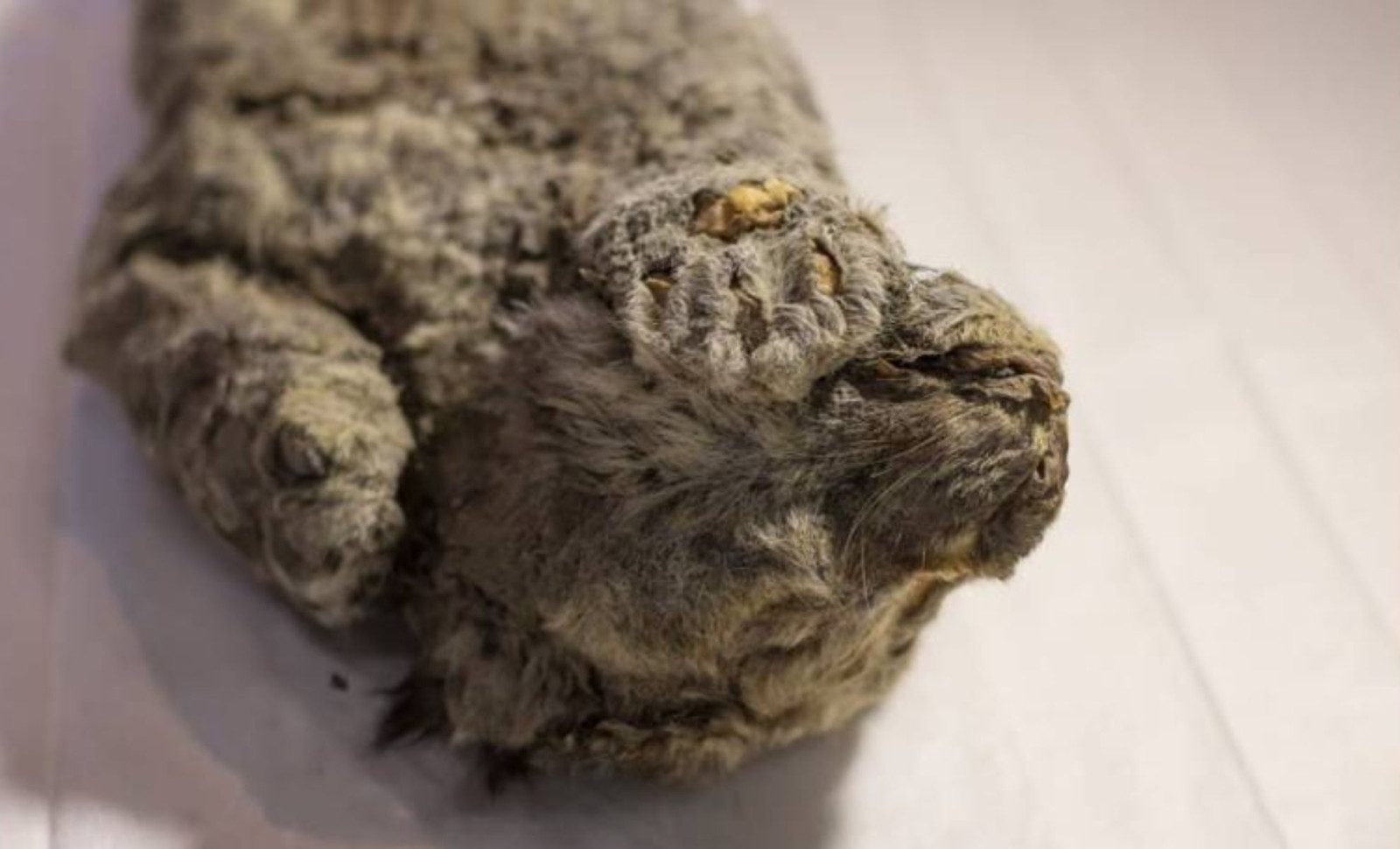
Buried deep within Siberia’s frozen ground, an ancient lion cub has been uncovered, appearing as if it never left a peaceful slumber. This Ice Age specimen, estimated to be up to 50,000 years old, was found incredibly well-preserved, igniting new interest among paleontologists focused on extinct megafauna.
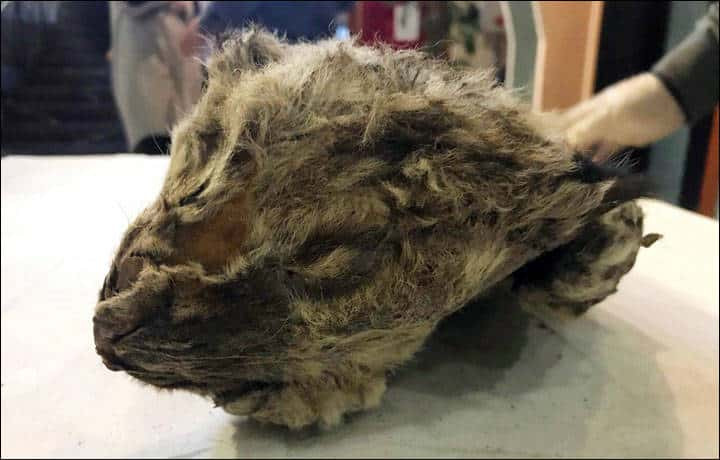
The cub, a member of the long-extinct Eurasian cave lion species, was discovered in Russia’s Abyisky district, a site known for remarkable permafrost fossil findings. Experts describe this as one of the most pristine prehistoric mammal finds from the region, with intact fur, skin, and all limbs fully present. The specimen is currently being studied at the Republic Academy of Sciences to determine more details.
Suspended in Time with Head Resting on Paw
The condition of the cub is striking. According to The Siberian Times, the cub’s body remained completely intact, with fur preserved as if untouched and no visible wounds. Its resting position, head laid gently on a front paw, has led some scientists to theorize it may have perished suddenly or was frozen quickly after death.

Dr. Albert Protopopov, head of prehistoric fauna research at the Yakutian Academy of Sciences, stated:
“It is a perfectly preserved lion cub, all the limbs have survived. There are no traces of external injuries on the skin,” he said. “That level of preservation is rarely seen, even in other Ice Age remains pulled from the permafrost.
Estimated to be between 20,000 and 50,000 years old, additional analysis will help pinpoint the cub’s exact age. Even so, its exceptional state already marks it as a significant discovery.

An Even More Pristine Relative
Frozen cave lions are not entirely new to Siberia’s permafrost. In 2015, two smaller cubs of the same species (Panthera leo spelaea) were also found under similar conditions. Unlike those newborns, which died within their first month, the new cub was roughly a year old.
This older age provides researchers with more comprehensive data: larger bones, fully developed teeth, and mature growth indicators. One scientist involved in examining the cub noted:
“Everyone was amazed then and did not believe that such a thing is possible, and now, two years later, another cave lion has been found.”
Comparing cubs at different growth stages offers scientists a clearer understanding of the extinct species’ life cycle and behavior, especially in an ecosystem once shared with mammoths and saber-toothed cats.
Could This Lead to Cloning?
It’s important to clarify that resurrecting the cave lion is not imminent. However, the possibility has gained traction. According to All That’s Interesting, Russian and Korean scientists have explored cloning attempts as far back as 2016, utilizing genetic material recovered from the 2015 cubs.
With this freshly discovered specimen offering a potentially higher-quality genome, scientific interest in cloning may revive. Currently housed in Yakutsk, the cub is under thorough examination to extract detailed genetic data.
- Categories:
- News





0 comments
Sign in to Comment