
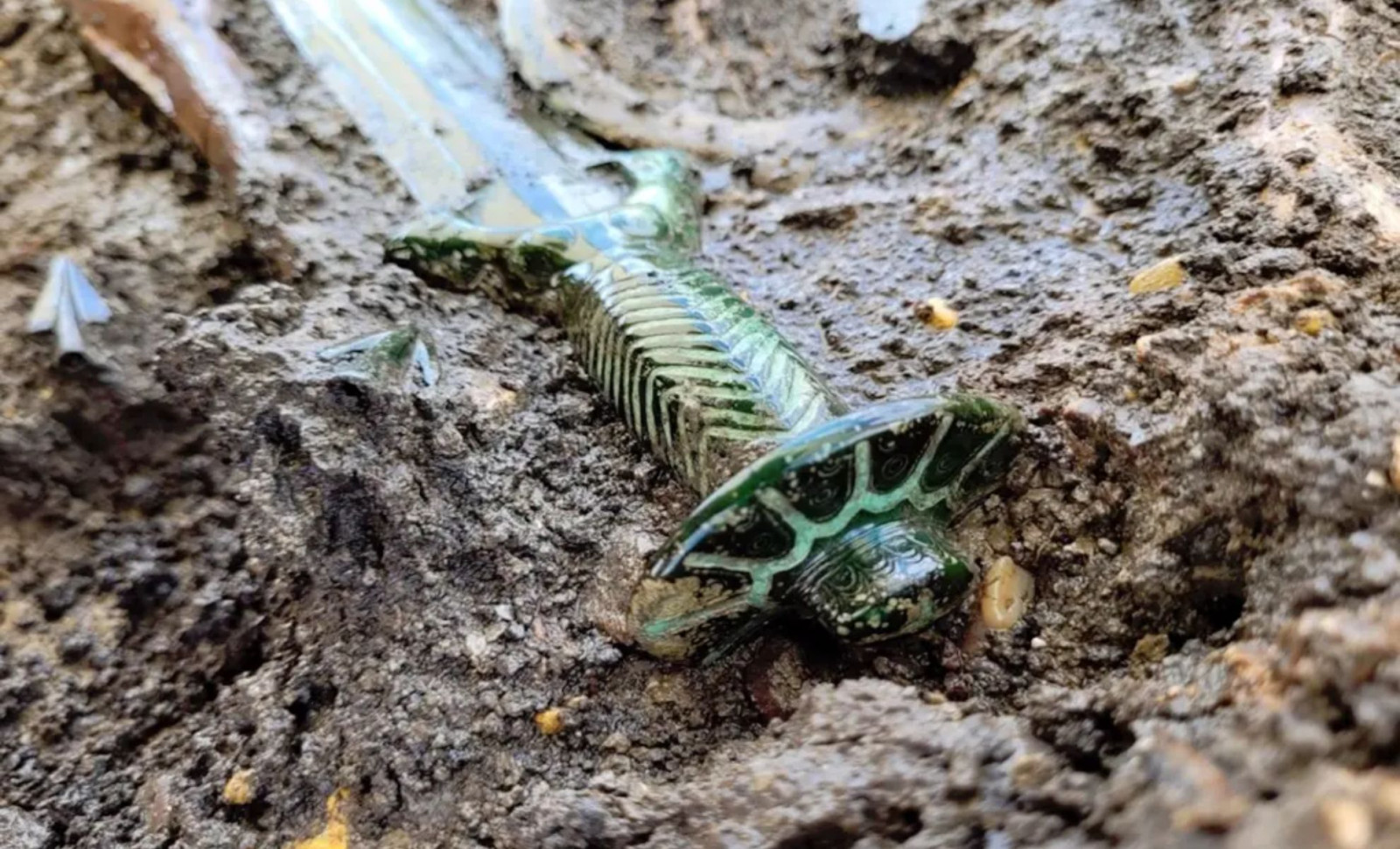
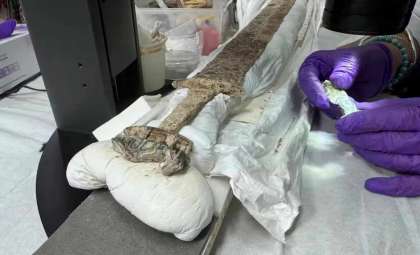
Archaeologists in Nördlingen, southern Bavaria, have uncovered a bronze sword dating back 3,000 years that has stunned experts due to its extraordinary preservation. Found within an ancient burial mound, the sword appears almost polished, leading specialists to describe it as “practically still gleaming.”
The weapon emerged during digs in a Bronze Age tomb containing the remains of three individuals: a man, a woman, and a child. Originating from the late 14th century B.C.E., this discovery is notable because many similar graves suffered looting or damage, making well-preserved swords from this era quite rare.
An Impressive Weapon From a Bygone Era
This ancient sword showcases a unique octagonal bronze hilt molded directly onto the blade—an advanced casting method that was mastered by only a few expert artisans at the time.

According to a statement from the Bavarian State Office for Monument Protection, bronze swords produced using this technique are associated primarily with two regions: southern Germany near where this sword was found, and another stretching across northern Germany and Denmark.
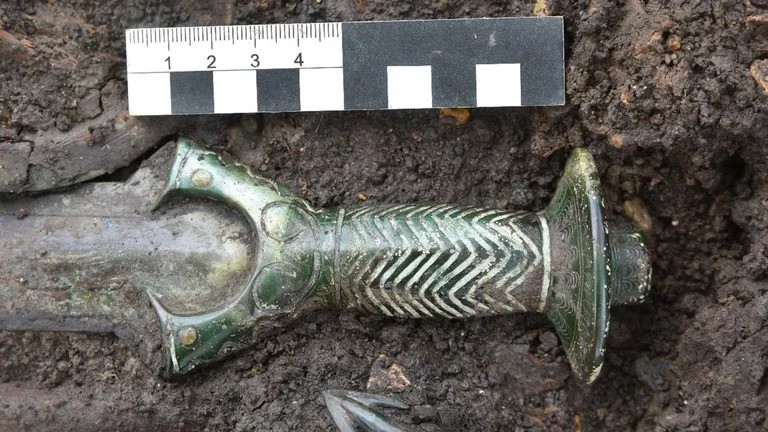
The sword’s surface shows no evidence of significant battle wear or damage, yet its structure indicates it was likely a functional weapon rather than purely ceremonial. Experts note that its weight distribution would have facilitated effective wielding.
Researchers point out that the sword’s balanced center of gravity was optimized for cutting motions, suggesting it could have been employed actively in combat despite its age.
The Sword Sheds Light on Ancient Warriors’ Practices
Scholars have long debated how bronze swords were utilized, given that bronze is softer and more vulnerable to damage than iron, making repairs difficult.
Some hypothesize that many bronze swords served symbolic purposes instead of practical battlefield use. To test this, experiments replicating Bronze Age sword duels have helped scientists assess how these weapons performed during fighting.
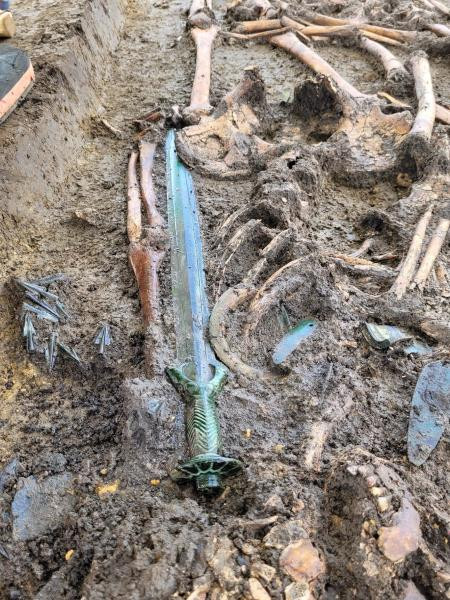
The new find from Bavaria provides additional insight. Details like the sword’s design, balance, and manufacturing quality offer valuable information about Bronze Age metalworking skills and weapon handling techniques.
As noted by Live Science, artifacts in this condition are particularly uncommon because many graves from the Middle Bronze Age have been disturbed or robbed over millennia. Discovering such a sword in a burial containing skeletal remains provides a rare glimpse into the burial customs of the time.
Ongoing Investigations into the Enigmatic Tomb
The sword remains under detailed examination, and archaeologists are continuing to analyze the burial context. Further research should provide a deeper understanding of the weapon’s origins, its manufacturing techniques, and its significance within the grave.
The presence of the three individuals—man, woman, and child—raises intriguing questions about their relationship and the sword’s relevance to them, which remains unclear.
According to Mathias Pfeil, who leads the monument protection office, this find is exceptional due to its rarity and remarkably preserved condition.
“The sword and the burial still have to be examined so that our archaeologists can classify this find more precisely,” he explained. “But it can already be said: the condition is exceptional! A find like this is very rare!”
This bronze sword represents one of the finest surviving examples of ancient metal craftsmanship from the Bronze Age.
- Categories:
- Science





0 comments
Sign in to Comment