
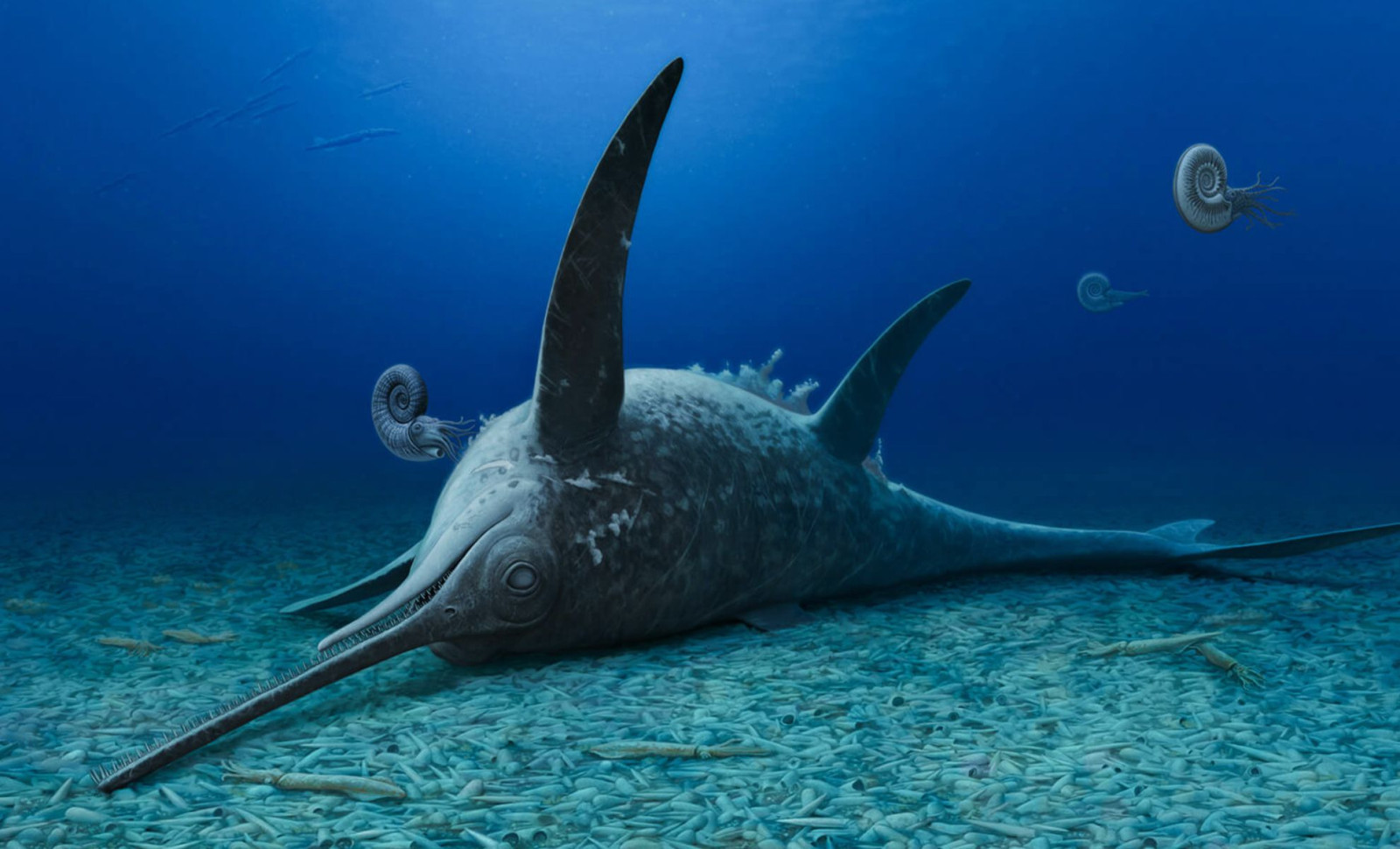
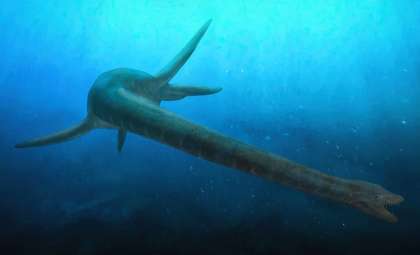
A nearly 190-million-year-old ichthyosaur fossil dubbed the “Sword Dragon of Dorset” offers an exceptionally intact skeleton, providing new insights into a critical evolutionary phase when oceanic species experienced profound transformations.
This rare specimen, identified as Xiphodracon goldencapensis, represents the first new genus of Early Jurassic ichthyosaur described in more than 100 years. The fossilized remains of this dolphin-sized reptile were uncovered in 2001 but have only recently undergone detailed analysis. Leading paleontologist Dr. Dean Lomax highlights that this finding fills a key gap in understanding ichthyosaur evolution during a significant faunal shift.
A Remarkable Discovery Along the Jurassic Coast
The southern English Jurassic Coast, renowned for its rich fossil heritage, has been a vital source of paleontological discoveries dating back to the 19th century with pioneers like fossil expert Mary Anning. What sets this latest find apart is the identification of an entirely new Early Jurassic ichthyosaur genus.

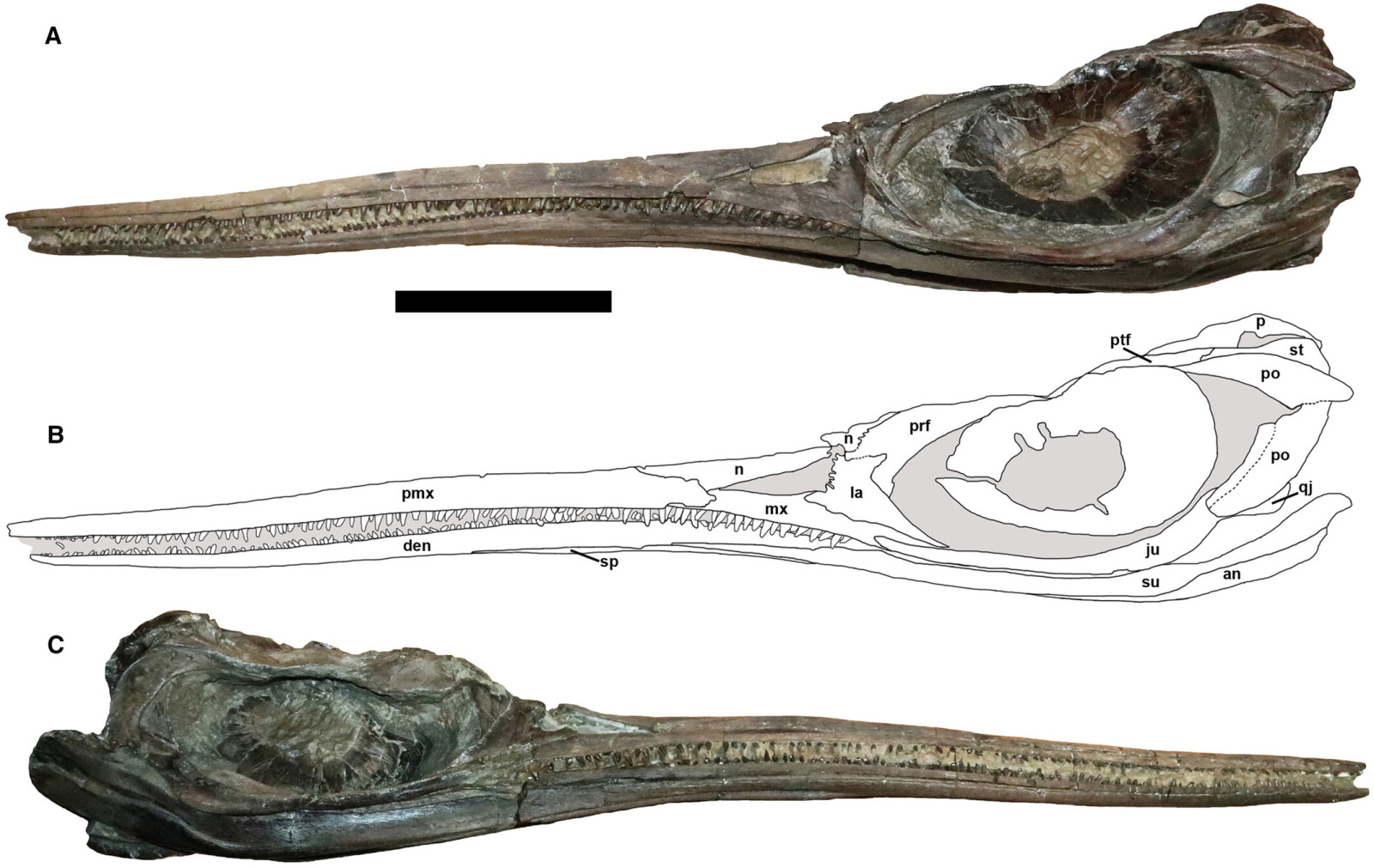
Local fossil enthusiast Chris Moore discovered the skeleton near Golden Cap in 2001. Exceptionally well-preserved, it reveals a skull with a large orbital cavity and an elongated snout resembling a sword. Measuring approximately three meters in length, the creature probably preyed on fish and squid, with researchers suggesting that remnants of its final meal may still be embedded in the fossil. As explained by Dr. Lomax:
“I remember seeing the skeleton for the first time in 2016. Back then, I knew it was unusual, but I did not expect it to play such a pivotal role in helping to fill a gap in our understanding of a complex faunal turnover during the Pliensbachian.” He explained, “this time is pretty crucial for ichthyosaurs as several families went extinct and new families emerged, yet Xiphodracon is something you might call a “missing piece of the ichthyosaur puzzle.”
Unraveling Evolutionary Transitions
The research, published in Papers in Palaeontology, is crucial as fossils from the Pliensbachian stage (about 193 to 184 million years ago) are extremely scarce. This specimen helps clarify the timing of a substantial ichthyosaur evolutionary turnover, highlighting when many ancient families vanished and new ones began to emerge.
“Thousands of complete or nearly complete ichthyosaur skeletons are known from strata before and after the Pliensbachian,” said Professor Judy Massare, a co-author of the study. ” The two faunas are quite distinct, with no species in common, even though the overall ecology is similar. Xiphodracon helps to determine when the change occurred, but we still don’t know why.”
According to Dr. Lomax, Xiphodracon is closely related to ichthyosaur species from the later Early Jurassic, suggesting that the faunal reorganization in marine reptiles took place earlier than previously believed.
A Fossil with a Story of Survival
The fossil also sheds light on the difficulties marine reptiles encountered in the Jurassic seas. Co-author Dr. Erin Maxwell from the State Museum of Natural History Stuttgart observed that the fossilized remains display evidence of serious injury or illness, indicated by malformed limb bones and dental abnormalities.
“The limb bones and teeth are malformed in such a way that points to serious injury or disease while the animal was still alive, and the skull appears to have been bitten by a large predator — likely another much larger species of ichthyosaur,” he said.
The name Xiphodracon reflects the unique physical traits of this marine reptile. The element “Xipho” refers to its sword-shaped snout, while “dracon” alludes to the traditional nickname of ichthyosaurs as “sea dragons.” Dr. Lomax shared his enthusiasm about naming the new genus, stating:
One of the coolest things about identifying a new species is that you get to name it!
Now part of the Royal Ontario Museum's collection, the fossil will be exhibited publicly, enabling broader audiences to explore this extraordinary discovery.
- Categories:
- Science



0 comments
Sign in to Comment