
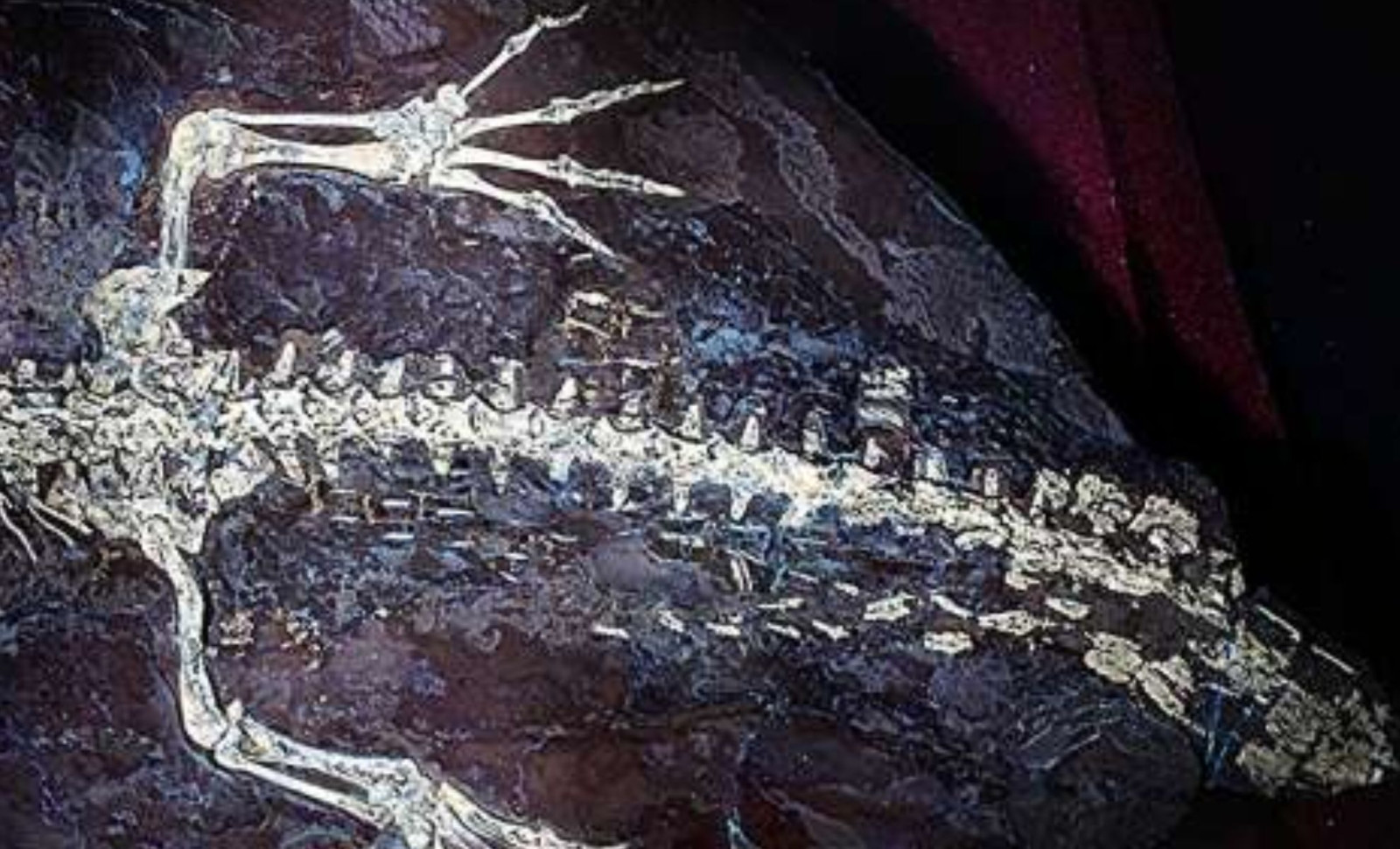
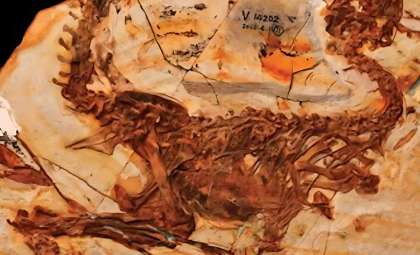
Researchers have uncovered exceptional details of the skin belonging to a small crocodile-like reptile from 125 million years ago. Using ultraviolet illumination, they were able to detect preserved skin, remnants of soft tissue, and even potential coloration on the tail of Montsecosuchus depereti, a species unearthed in the Spanish Pyrenees.
This fossil, known to science for over a hundred years, has now disclosed previously hidden features embedded within the rock matrix. Originating from the renowned Pedrera de Meià fossil locality in Catalonia, northeastern Spain, this creature perished in a lacustrine setting and was encased in sediment that hardened into limestone — conditions that remarkably preserved more than just its skeletal remains, a rarity in paleontology.
Documented in the Zoological Journal of the Linnean Society, the research centers on a roughly 50-centimeter (20-inch) specimen curated at the Museum of Natural Sciences of Barcelona. The study was spearheaded by scientists from the Institut Català de Paleontologia Miquel Crusafont.

Unearthing Hidden Details Within a Known Fossil
Although Montsecosuchus depereti has been recognized since the early 1900s, only recently did scientists discover that this fossil held overlooked anatomical information. This insight emerged after examining the specimen under ultraviolet light.
The research group explains that UV light highlights fossilized soft tissues by making them glow distinctly against the surrounding rock, revealing structures invisible under normal lighting. The results showed an unexpectedly detailed preservation of soft tissues, including scale patterns.
“UV light allows us to see details that would otherwise remain completely hidden in the rock,” said lead author Oscar Castillo-Visa.
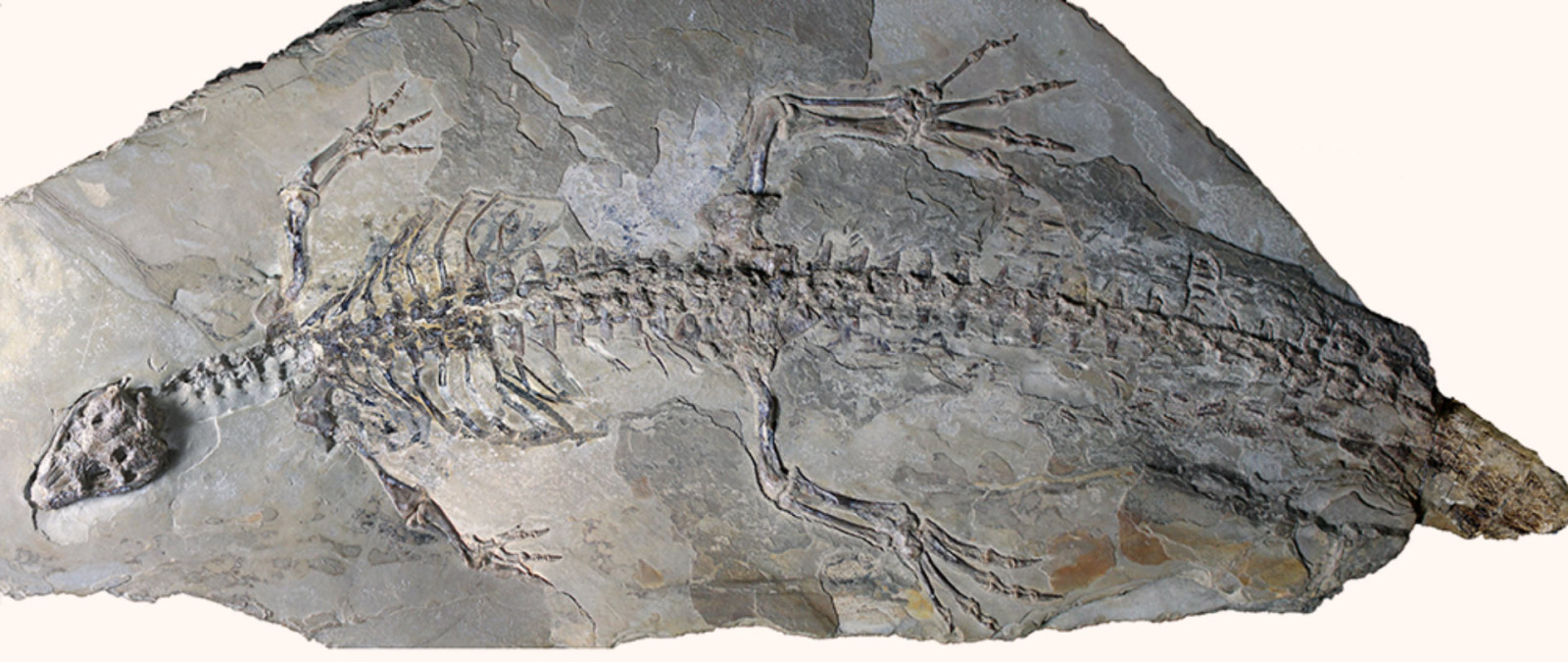
The analysis demonstrated that scale shapes and sizes varied significantly across different regions of the body. Notably, the team found no signs of the prominent tail fin characteristic of modern crocodilians, indicating anatomical differences between ancestral and extant relatives.
Evidence of Early Sensory Features in Skin
The skin preservation extended beyond external covering; researchers identified structures that likely represent sensory organs embedded within certain scales.
These sensory features were primarily located on the neck, appendages, and lateral sides of the torso and tail. In modern crocodiles, comparable structures aid in sensing touch, water disturbances, temperature variations, and chemical cues.
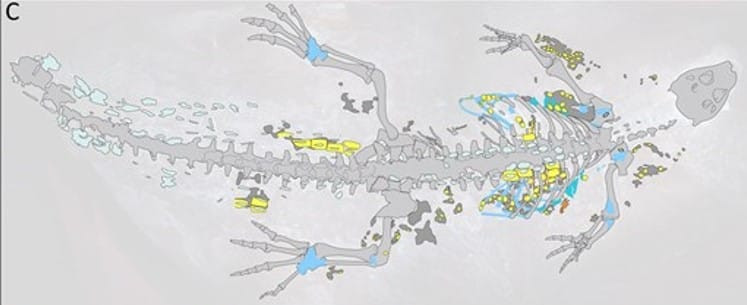
Researchers point out the prominence of these sensory-related features in smaller peripheral scales may suggest they initially localized to specific body regions before becoming widespread among later crocodilian lineages.
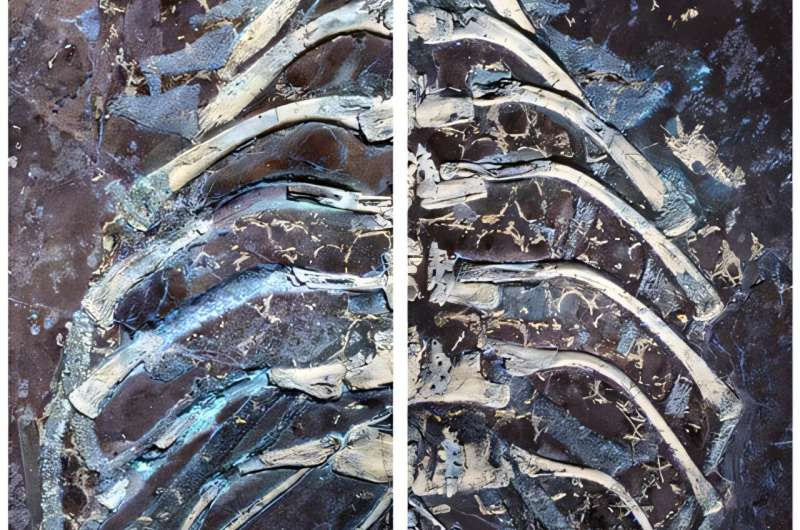
Ultraviolet imaging also uncovered preserved cartilage structures within the chest area. These observations imply that Montsecosuchus had already developed an effective breathing apparatus with similarities to that of modern crocodiles.
“These traits indicate that, despite being a primitive animal, it was already very well adapted to a semiaquatic lifestyle,” Castillo-Visa said.
Ancient Croc’s Tail Displays Potential Camouflage Pattern
The most striking revelation was observed on the tail, where UV illumination exposed alternating dark and light bands crossing multiple scales in the tail region.
According to the published study, these markings likely represent remnants of the crocodile’s original pigmentation. Researchers suggest the pattern could have functioned as disruptive camouflage, effectively obscuring the animal’s outline in its aquatic surroundings.
If validated, this discovery would make Montsecosuchus depereti the earliest crocodylomorph fossil showing evidence of coloration. Researchers remain cautious about specifying the exact hues present.
“At the moment we cannot say for sure what color the crocodile’s tail was, but it would be expected that it was not so different from current species, which also show different coloration patterns,” said co-author Albert G. Sellés.
The fossil was excavated from Pedrera de Meià, a Konservat-Lagerstätte famed for conserving delicate structures usually lost in fossilization. Over 8,000 specimens including fish, amphibians, reptiles, plants, insects, and crustaceans have been found there. Thanks to this pristine preservation, details hidden for over a century about Montsecosuchus are now coming to light.
- Categories:
- Science

0 comments
Sign in to Comment