
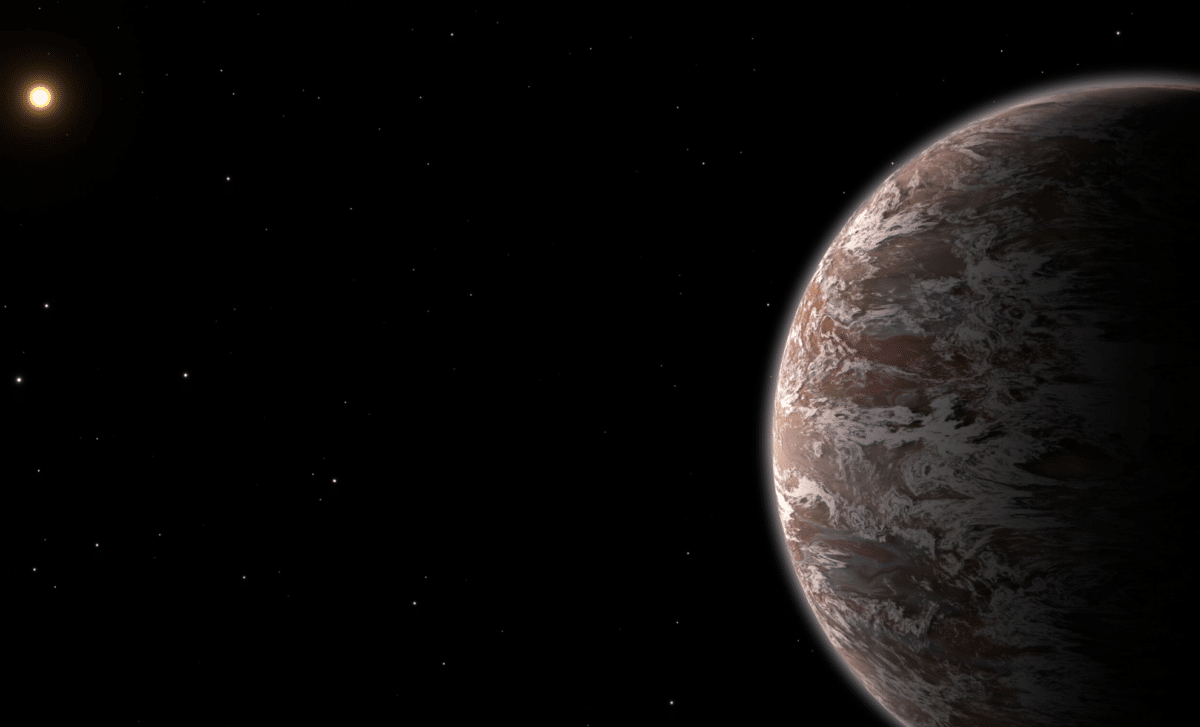
Using the James Webb Space Telescope (JWST), scientists have identified water-ice clouds in the atmosphere of the distant exoplanet Epsilon Indi Ab, an exo-Jupiter. This groundbreaking discovery, featured in The Astrophysical Journal Letters, challenges previous views about the composition and behavior of exoplanetary atmospheres and advances our understanding of planetary science beyond our solar system.
Advancements in Exoplanet Study with JWST
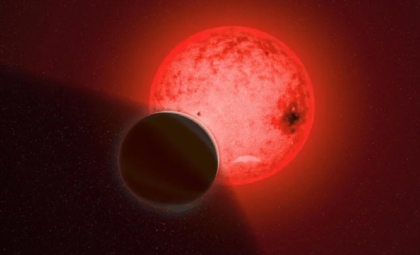
The James Webb Space Telescope is revolutionizing the study of planets orbiting other stars. Thanks to its cutting-edge imaging technology, JWST is revealing atmospheric details of faraway worlds in unprecedented detail. Among its notable findings is data collected on Epsilon Indi Ab, a gas giant closely resembling Jupiter in size but much more massive. Situated 11.8 light-years from Earth around the star Epsilon Indi A, this planet offers invaluable insights as a nearby solar-system analog.
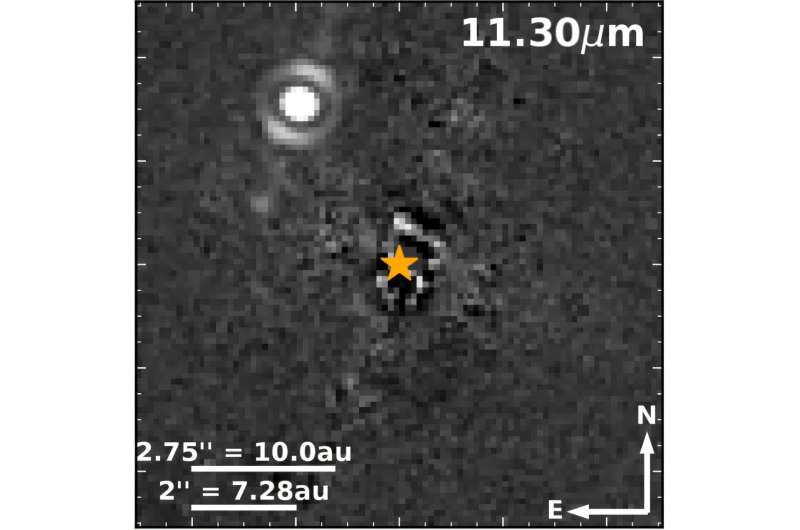
Prior attempts to examine such distant exoplanets faced obstacles due to their remoteness and elevated temperatures. Most previously studied gas giants have been much hotter than Jupiter, which complicated atmospheric analysis. The research group led by Elisabeth Matthews from the Max Planck Institute for Astronomy utilized JWST’s mid-infrared instruments to capture detailed observations of Epsilon Indi Ab, revealing unexpected features including clouds composed of water ice, a finding that reshapes our atmospheric models of distant planets.

Surprising Presence of Water-Ice Clouds
Initially, scientists anticipated that Epsilon Indi Ab would harbor ammonia clouds akin to those found on Jupiter’s upper atmosphere. However, Matthews and her team observed instead prominent, patchy clouds composed of water ice, a phenomenon not previously detected in such a remote exoplanet. This discovery challenges current atmospheric simulations that often omit cloud formations because of their complex influence on computational models.
“It’s a great problem to have,” says James Mang, a co-author of the study from the University of Texas at Austin. “It speaks to the immense progress we’re making thanks to JWST. What once seemed impossible to detect is now within reach, allowing us to probe the structure of these atmospheres, including the presence of clouds. This reveals new layers of complexity that our models are now beginning to capture.”
Published in The Astrophysical Journal Letters, this research offers critical new perspectives on cloud types in gas giant atmospheres and sets the stage for future studies of potentially habitable exoplanets.
Decoding the Nature of Exo-Jupiter Epsilon Indi Ab
Far from being an ordinary distant world, Epsilon Indi Ab is vital in studying gas giants that resemble Jupiter. Despite having a mass 7.6 times larger than Jupiter, its diameter remains similar, and its temperature fluctuates between -70°C and +20°C, a cooler range that distinguishes it from the typically scorching gas giants observed previously.
By employing JWST’s coronagraph to block out starlight from Epsilon Indi A, researchers isolated the planet’s faint emissions. Their analysis showed lower levels of atmospheric ammonia than expected, reinforcing the theory that water-ice clouds are present. “JWST is finally allowing us to study solar-system analog planets in detail,” commented Elisabeth Matthews. “If we were extraterrestrials observing our sun from afar, JWST would be the first telescope capable of detailed study of Jupiter.”
This discovery adds complexity to our comprehension of exoplanet atmospheres and pushes observational technology to new limits.
Progressing Toward Detecting Earth-Like Worlds
While JWST provides detailed insights into gas giants like Epsilon Indi Ab, the broader aim is to identify Earth-like planets with potential for life. Detecting water-ice clouds on such an exoplanet marks a crucial advancement in this endeavor. As techniques and models improve, upcoming telescopes such as the Nancy Grace Roman Space Telescope will deepen our understanding of distant planetary atmospheres.
Matthews emphasizes, “To study Earth in similar detail, far more advanced telescopes will be necessary.” Nevertheless, JWST’s contributions represent foundational progress toward uncovering life beyond our planet.
- Categories:
- Astronomy



0 comments
Sign in to Comment