
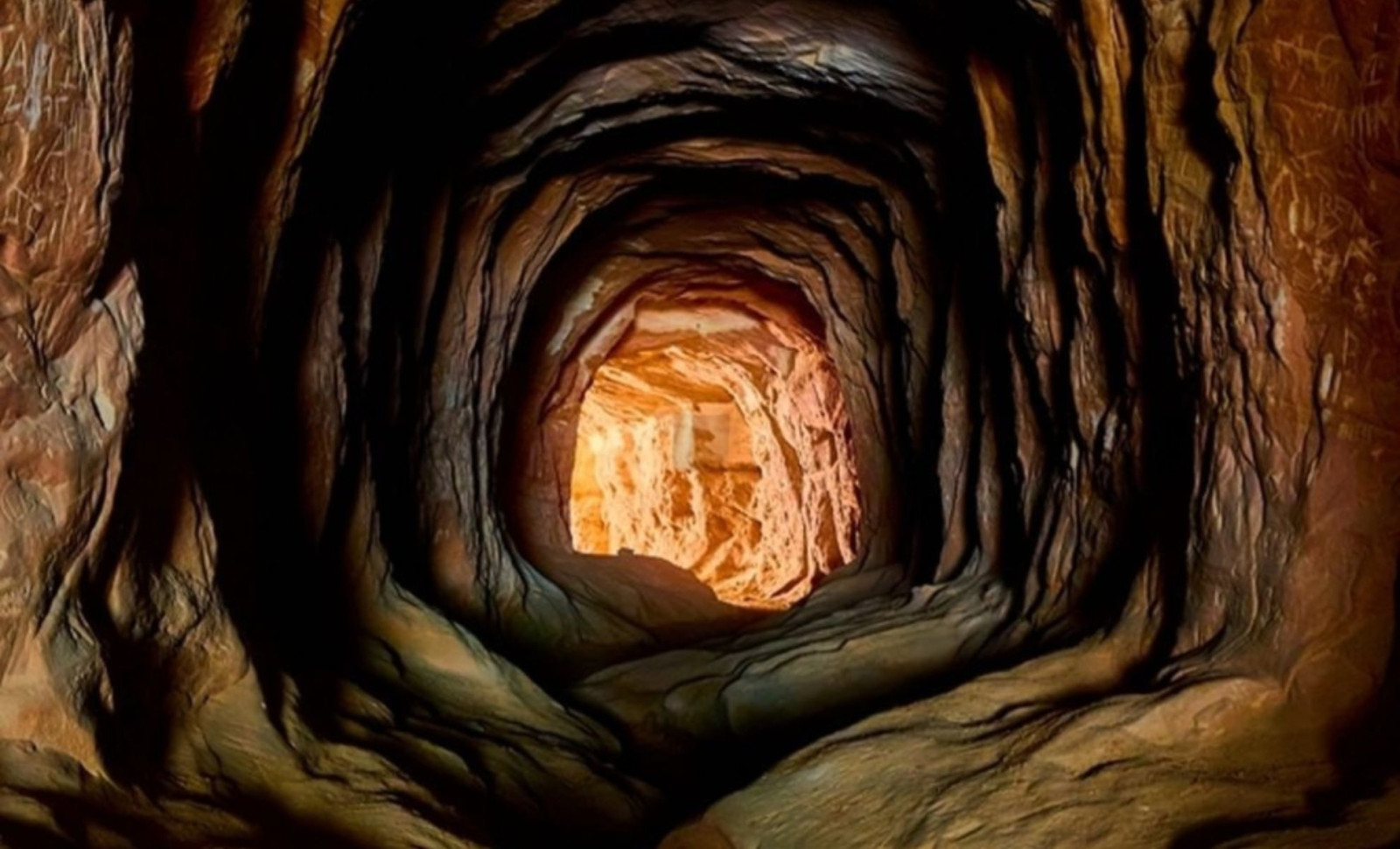
Deep within the limestone and marble formations of Namibia, Oman, and Saudi Arabia, scientists have unveiled a network of tiny tunnels—too minuscule to be seen with the naked eye but exhibiting a strikingly consistent pattern. These intricate tunnels, concealed beneath the surface yet precisely oriented within the rock, hint at the activity of a previously unknown microorganism.
Experts in geology and microbiology investigating these formations propose that these aligned, fossilized passageways may represent the remnants of an ancient, rock-consuming organism that thrived in Earth's mineral layers long ago. Published in the Geomicrobiology Journal, their research opens fresh avenues for understanding how life interacts with geological processes and its potential effects on Earth's carbon cycling.
Unusual Structures Redefining Geological Understanding
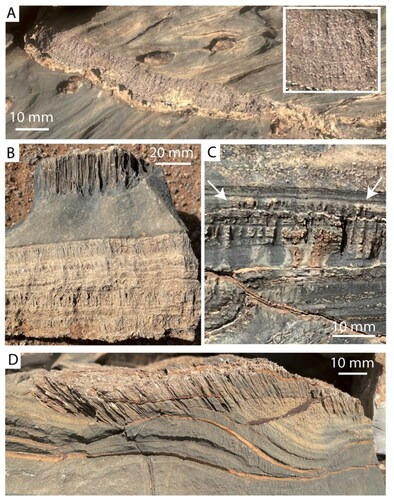
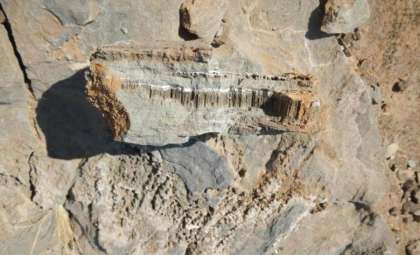
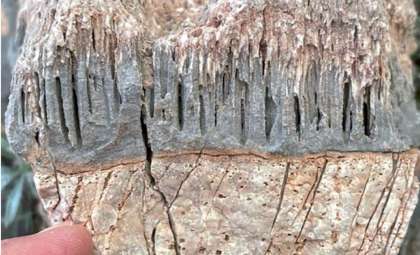
Initial detection occurred more than 15 years back when geologist Cees Passchier from Johannes Gutenberg University Mainz identified peculiar vertical arrays of microscopic tubular formations etched into desert marble. These tunnels, measuring roughly 0.5 millimeters in diameter and stretching up to 3 centimeters deep, defied established geological explanations. Comparable structures were later discovered in other arid zones, consistently maintaining vertical alignment and evenly spaced intervals.

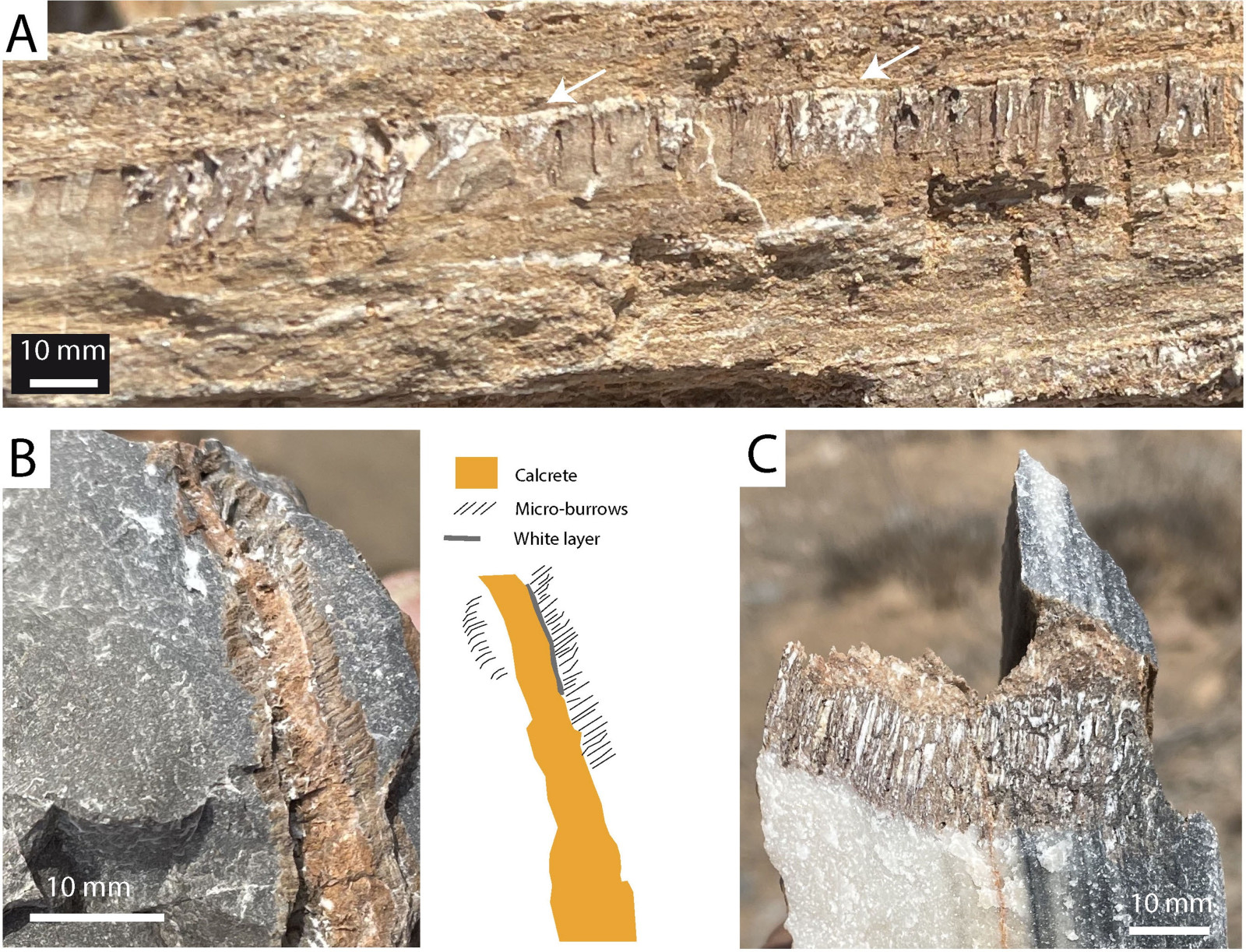
Researchers were immediately intrigued by these tunnels’ characteristics. Embedded in Cretaceous-era limestone and marble, always found within harsh desert environments, their uniform arrangement was notable: vertically oriented, precisely spaced, and shallow in depth. These tunnels consistently originated from natural cracks in the rock, suggesting that the creator had exploited weak points in the stone for excavation.
Life Beneath the Surface: An Intriguing Hypothesis
Extensive analysis excluded physical processes such as erosion or tectonics as causes, after cross-referencing multiple possibilities with the observed formations and environmental context.
“What is so exciting about our discovery is that we do not know which endolithic microorganism this is,” explained Passchier, “Is it a known form of life or a completely unknown organism?”
Consequently, the team considered a biological origin the sole plausible explanation. Subsequent chemical and isotopic evaluations of the materials within the tunnels revealed evidence indicative of organic activity—signs of an organism that had effectively mined its way through solid rock.
Geochemical Evidence for Ancient Life
Within the tunnels, researchers identified a delicate coating of calcium carbonate markedly different from the surrounding mineral matrix. This coating displayed reduced levels of iron, manganese, and rare earth elements, pointing toward a selective biological influence during formation. According to the publication in Geomicrobiology Journal, this was a critical indication supporting the involvement of living organisms.
Isotopic studies of carbon and oxygen demonstrated values inconsistent with typical limestone deposits, implying organic decomposition processes. Utilizing Raman spectroscopy, the researchers uncovered remnants of ancient organic carbon, likely originating from microbial remains.
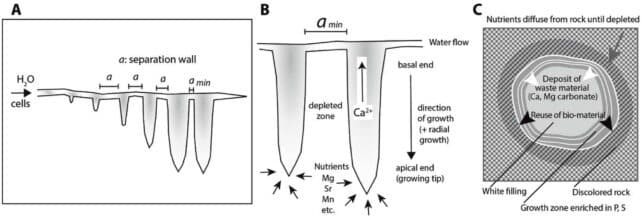
Interestingly, elements such as phosphorus and sulfur were detected lining the inner surfaces of tunnels, elements commonly linked to cell membranes and proteins. However, unlike known microbial tunnelers such as fungi or cyanobacteria, these tunnels lacked branching patterns or indications of photosynthetic activity.
Coordinated Patterns Indicate Possible Microbial Cooperation
The spatial arrangement of these tunnels also revealed remarkable organization. Rather than chaotic, overlapping burrows, the tunnels maintained a structured, grid-like layout that avoided intersecting paths.
This suggests a mechanism of chemical communication, where the microbes might have sensed nutrient availability or avoidance of waste to steer clear of previously occupied tunnels. This behavior is comparable to chemotaxis, a biological process enabling certain bacteria to move in response to chemical gradients.
The microbes may have secreted organic acids to dissolve the rock and pushed the residual material aside as they progressed. Some tunnels contain concentric mineral layers resembling growth rings, possibly reflecting periodic fluctuations in moisture or nutrient levels.
- Categories:
- Science





0 comments
Sign in to Comment