
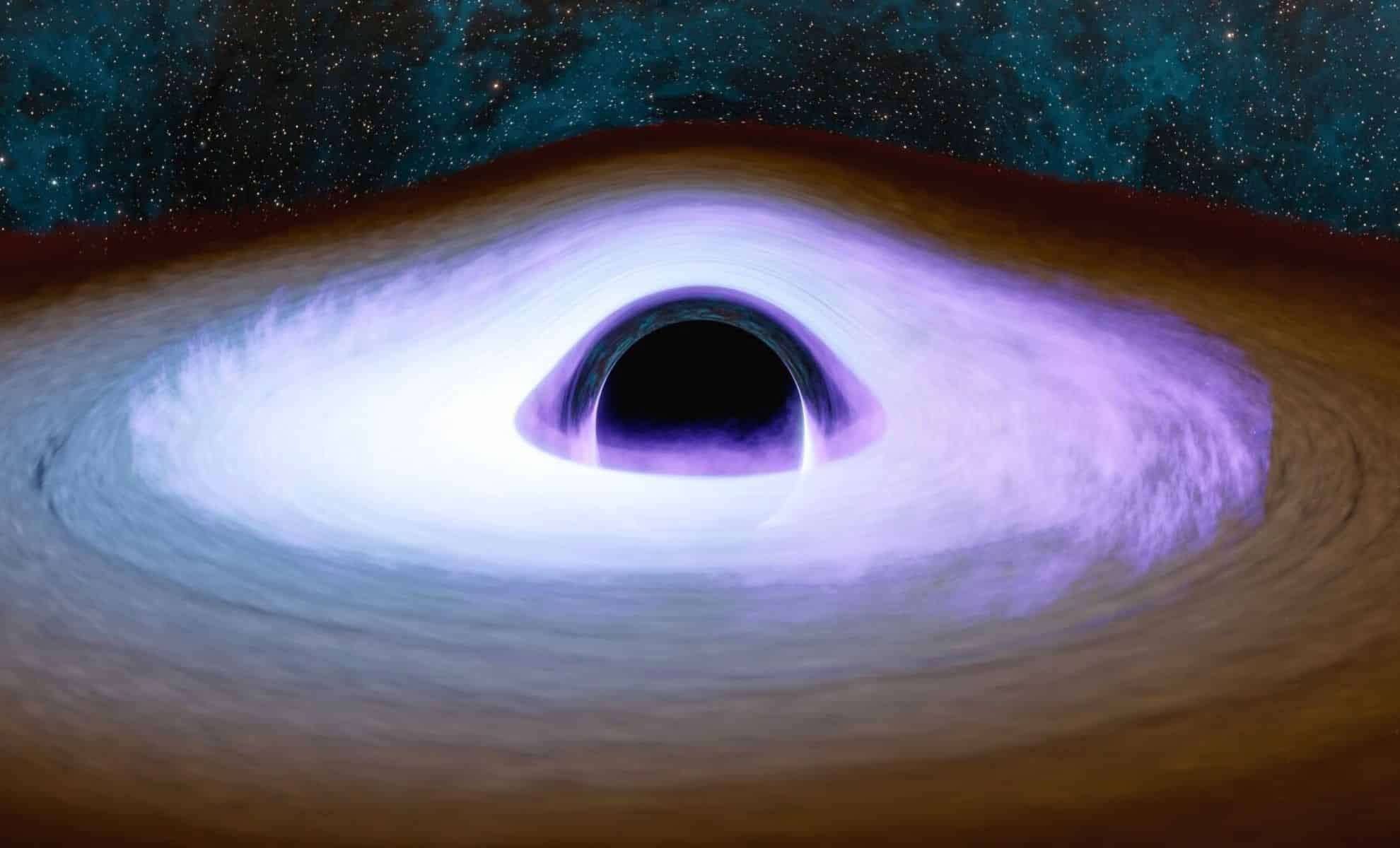
Recent advancements in astronomical technology have enabled scientists to gain unprecedented insights into the elusive coronae that surround black holes. An innovative study published in The Astrophysical Journal unveils pivotal information about their architecture and physical characteristics, shedding light on how black holes operate.
Understanding the Intense Environment of a Black Hole’s Corona
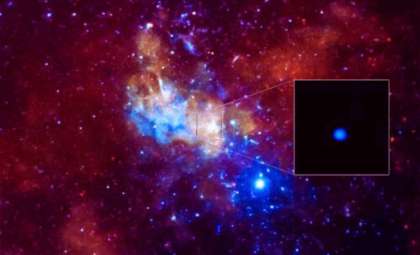
The corona around a black hole is a superheated, tenuous zone enveloping the innermost edge of the accretion disk. While the Sun’s corona reaches temperatures of several million degrees, black hole coronae soar to temperatures in the billions of degrees due to the intense gravitational forces at play near the event horizon. This region emits powerful X-rays that encode valuable information about the phenomena occurring just outside the black hole.
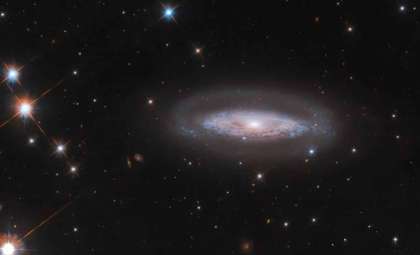
These emissions are vital for investigating active galactic nuclei (AGNs)—some of the universe’s brightest sources of light found in remote galaxies. The way we detect AGNs depends on the angle from which we observe the black hole. Some AGNs shine brightly, while others are hidden by surrounding material. The distinct features and behavior of the corona play a significant role in these variations, making its study essential for astronomers.

Primary traits of black hole coronae include:
- Temperature: Reaching up to several billion Kelvin.
- Density: Extremely sparse, nearing vacuum conditions.
- Radiation: Emission of high-energy X-rays and gamma rays.
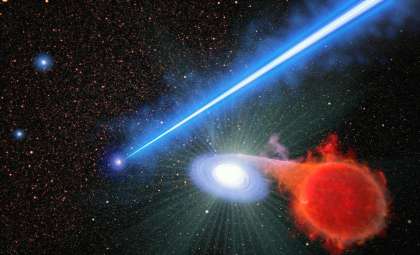
Examining the corona also helps researchers understand how black holes draw in matter from their accretion disks and generate the massive jets observed in AGNs, thereby connecting theoretical predictions with real observations of black hole systems.
Revealing the Hidden Corona with Innovative Techniques
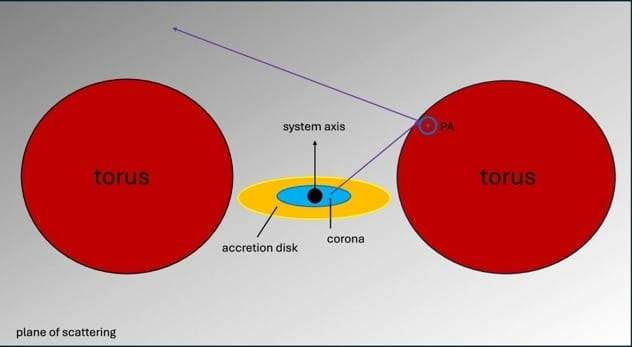
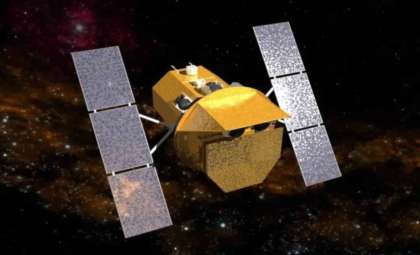
Exploring the nature of black hole coronae has been difficult because bright light from the accretion disk overshadows the faint corona emissions. However, researchers utilized NASA’s Imaging X-ray Polarimetry Explorer (IXPE) to circumvent this issue by targeting concealed black holes. In these cases, a thick doughnut-shaped cloud of gas and dust absorbs the intense radiation from the accretion disk, akin to the way the Moon obscures sunlight during an eclipse.
The team further examined X-rays scattered off the torus around the black hole. This approach allowed them to separate and analyze the corona's emissions. Observations of about a dozen obscured black hole systems, including famous objects like Cygnus X-1 in our galaxy and LMG X-1 in the Large Magellanic Cloud, revealed patterns confirming the corona’s flattened, disk-like geometry.
Black Hole Systems Investigated
The findings reveal the corona is not spherical as was previously assumed, but instead closely aligned with the accretion disk in a flattened shape. This discovery challenges former assumptions and opens new perspectives for further inquiry.
Impacts on Our Understanding of Black Hole Behavior
The identification of a disk-shaped corona transforms our comprehension of black hole surroundings. Whereas earlier models depicted the corona as a near-spherical layer enveloping the black hole, similar to the solar corona, new evidence points to a complex connection between the corona and accretion disk, with mutual dynamical influences.
This geometric alignment also influences the emission mechanisms of black holes. The flat corona, intimately linked to the accretion disk, likely plays a key role in shaping the jets of charged particles propelled from the black hole’s poles. These jets are iconic to many AGNs and are believed to have significant effects on galaxy formation by distributing energy and matter over vast scales.
Furthermore, these revelations enhance how scientists model black hole interactions. The reflection of X-rays by the torus not only uncovers the corona’s form but also allows for improved estimates of its temperature, density, and extent. Such data will refine simulations of black hole accretion and contribute to a better understanding of AGN phenomena throughout the cosmos.
- Categories:
- Space






0 comments
Sign in to Comment