
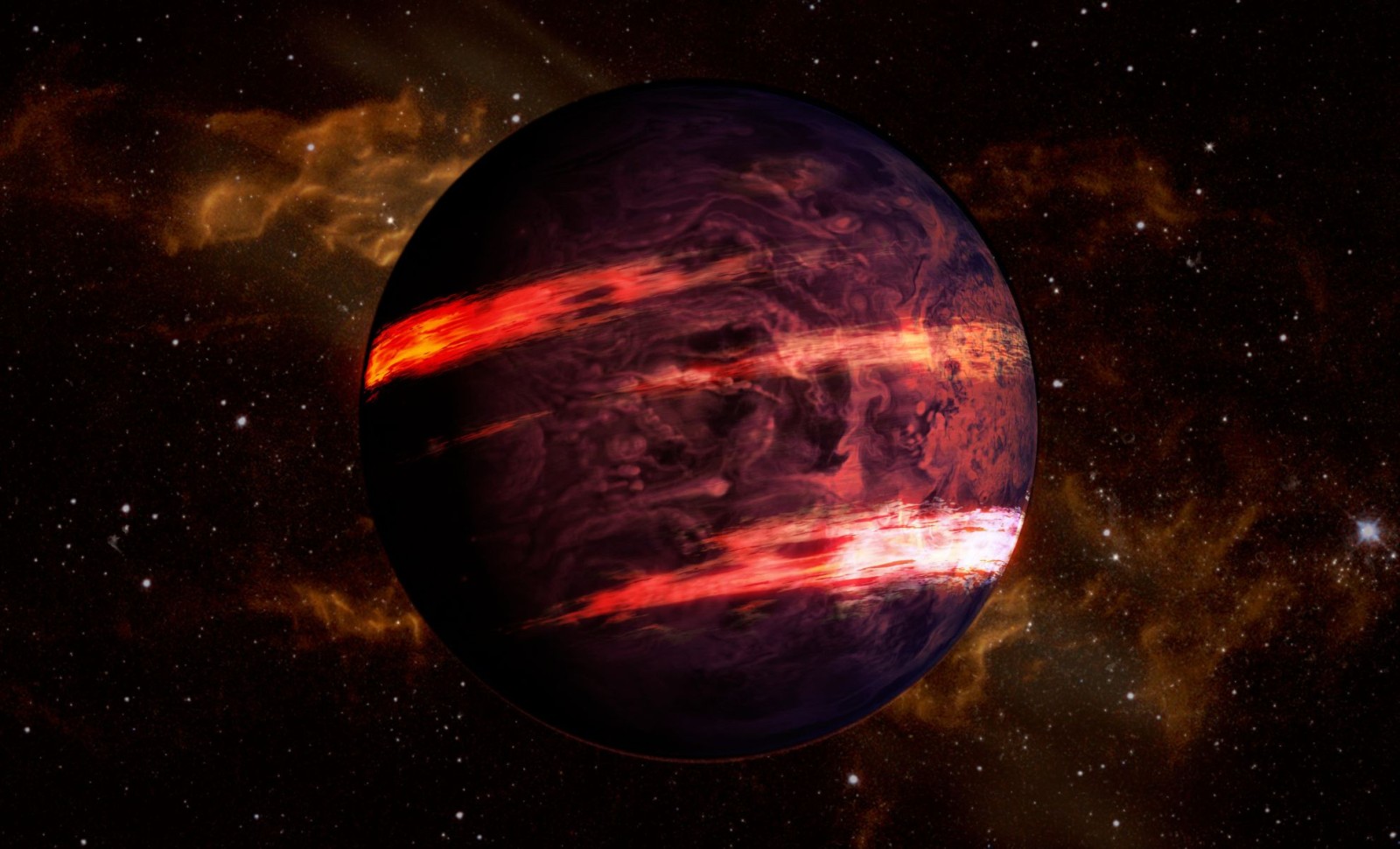
Scientists from the University of Hawai‘i at Mānoa and collaborating institutions have uncovered a distant planetary companion and a stellar partner around two youthful ultracool dwarf stars within the nearby Taurus Molecular Cloud, situated just 430 light-years away. These two gravitationally linked objects, including a planet-sized entity and a dim star, challenge current classification systems.
This discovery is part of the KOINTREAU survey—which stands for Keck Observations in the INfrared of Taurus and ρ Oph Exoplanets And Ultracool dwarfs—employing adaptive optics imaging from instruments like the Keck II and Gemini North telescopes. Published on December 4 via the arXiv preprint server, these findings represent the initial confirmed detections from the survey, enriching the scarce but growing inventory of young companions directly observed in star-forming regions.
A Massive Planetary Companion at 690 AU
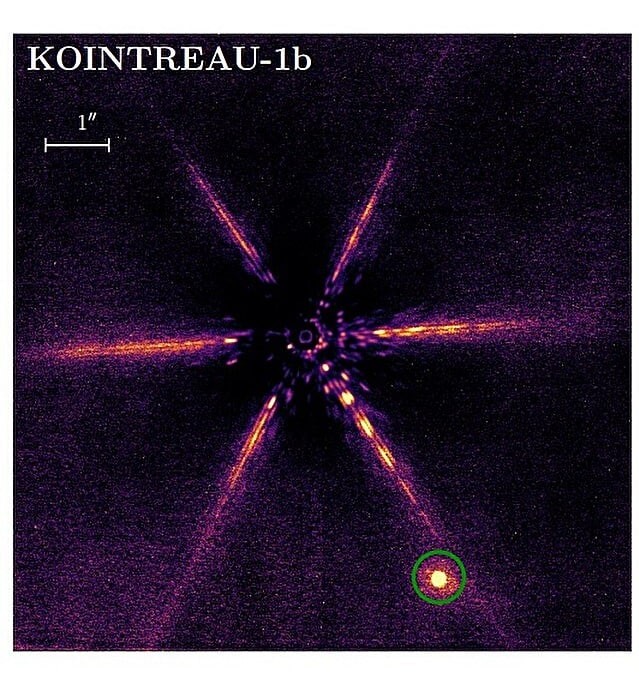
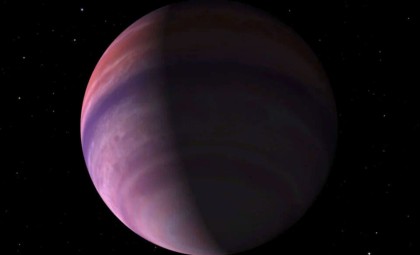
The first discovery, called KOINTREAU-1b, orbits the ultracool dwarf star XEST 17-036 at an extraordinary distance of roughly 690 astronomical units. Its estimated mass is approximately 10.6 times that of Jupiter, firmly placing it in the planetary regime. This makes it the fifth planetary-mass companion detected within the Taurus star-forming area.

The study published on arXiv reveals variations in KOINTREAU-1b’s spectral profile across different observation periods. These fluctuations suggest the possible existence of cloud formations in its atmosphere or the presence of a surrounding disk. The researchers noted:
“The slope of KOINTREAU-1b’s spectrum varies between epochs,” a sign that additional observations could help determine whether this is a structural feature or an effect of the viewing angle.
A Dim Young Star with a Disk Aligned Edge-On
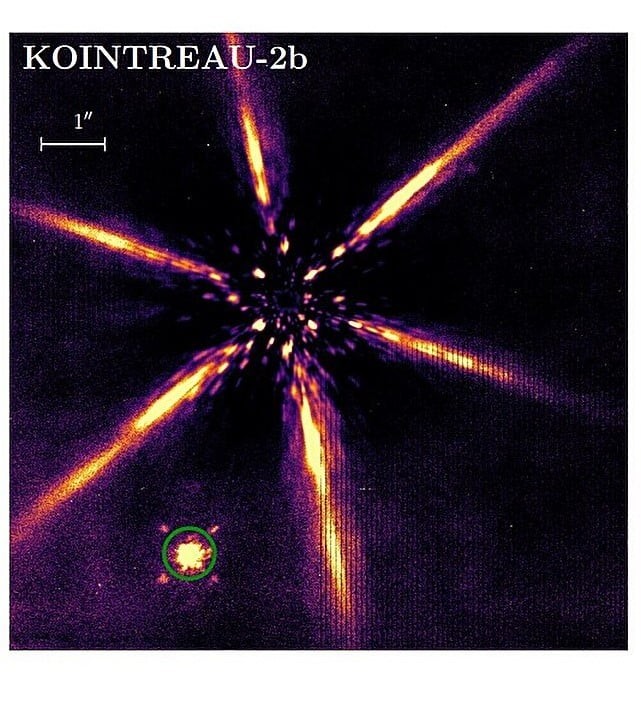
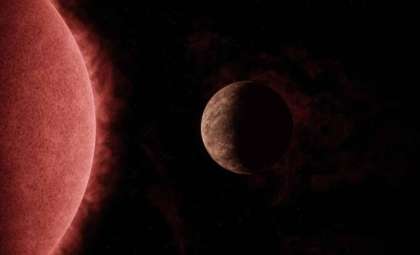
The second object, named KOINTREAU-2b, orbits the ultracool dwarf XEST 13-010 at an estimated distance of 560 AU. Unlike KOINTREAU-1b, KOINTREAU-2b is classified as a stellar body with a spectral type M4.5 but is notably faint. The current research identifies it as the dimmest known M4.5 star within Taurus.
The scientists propose that KOINTREAU-2b is a young star hidden behind an edge-on-oriented disk, where the observed light is mostly scattered. Supporting this idea is the lack of hydrogen emission lines in its spectral data, which is atypical for stars of this category. This distinct absence underscores the need for further scrutiny regarding the star's disk orientation and its formation activity.
Initial Insights from the KOINTREAU Program
Both KOINTREAU-1b and KOINTREAU-2b come from the early stages of the KOINTREAU survey, which targets young stars in the Taurus and ρ Ophiuchi star-forming zones. The project employs infrared pyramid wavefront sensing at Keck to enhance high-contrast imaging capabilities around faint, cool stellar objects.
Discovering these companions adds key data for studying the formation of substellar bodies at large orbital distances, a major unsolved problem in astrophysics. The scientists express optimism that ongoing efforts in the KOINTREAU survey will reveal additional similar objects.
“As the KOINTREAU survey continues, we hope to find more planetary-mass companions in both Taurus and Ophiuchus, providing valuable anchors for the earliest stages in the evolution of substellar objects and helping to expand the study of extremely young directly imaged companions.”
- Categories:
- Astronomy







0 comments
Sign in to Comment