
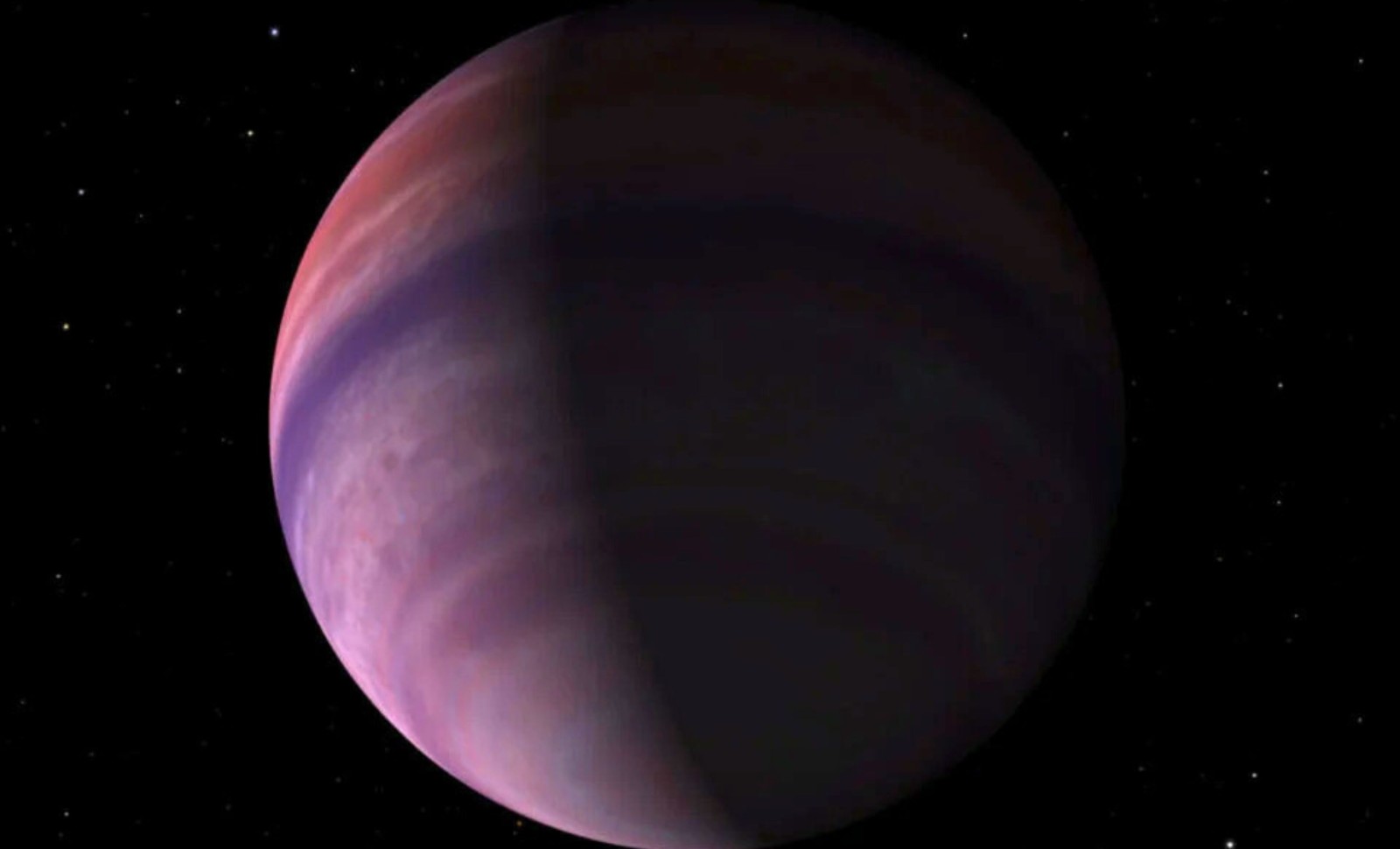
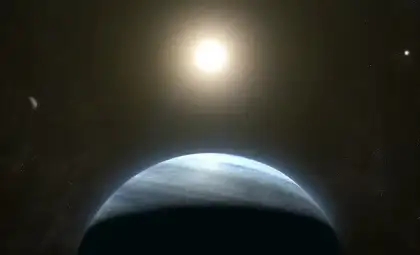
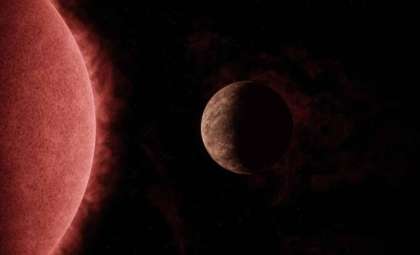
After years of dedicated observation, astronomers appear closer than ever to confirming the existence of the first true exomoon, a natural satellite orbiting an exoplanet far beyond our solar system. This potential discovery involves an enormous exoplanet named HD 206893 B, located approximately 133 light-years away. If confirmed, this would revolutionize our understanding of moons orbiting planets in distant star systems.
Despite the identification of more than 6,000 exoplanets, the search for accompanying moons has remained elusive. It’s surprising considering our technological advances, yet finding a moon in such remote systems has proven challenging. As Quentin Kral from the Paris Observatory and colleagues explain, current detection methods struggle to spot exomoons. Nevertheless, their innovative technique may have finally broken through this barrier.
A Novel Technique to Spot Exomoons
One key difficulty in identifying exomoons lies in their relatively small size compared to their host planets. The recent study posted on arXiv points out that moons generate much subtler gravitational effects than their planets, making them nearly invisible to conventional detection strategies. While the transit method has proven effective at spotting exoplanets by detecting dips in starlight, this approach is less efficient at revealing moons which only obscure a tiny fraction of light.

To overcome this, the researchers relied on astrometry, the precise measurement of minute shifts in stellar positions. Traditionally employed to study stars themselves, this method was here applied to the massive planet HD 206893 B, which has around 28 times Jupiter’s mass. By observing subtle wobbles in the planet’s trajectory, they identified a secondary disturbance that could be attributed to a moon's gravitational pull. This candidate moon, though smaller than the planet, is still enormous, with a mass roughly 0.4 times that of Jupiter.
The implication is clear: this planet could host a gigantic moon, an extraordinary find in exoplanetary science. However, the researchers emphasize that additional scrutiny and data are essential before making definitive claims.
Understanding the Challenge of Finding Exomoons
With all the advancements in astronomy, why do exomoons remain so hard to pinpoint? The answer extends beyond their modest sizes. The research team highlights:
“Moreover, there is no definition of what an exomoon is, and some ambiguity remains as to whether it may include, for instance, binary planets.” They added, “scarcity of detections contrasts sharply with the ubiquity of moons in our solar system.”
The smaller scale of moons relative to their planets means they induce only faint gravitational signals, often undetectable by existing instruments. In addition, many moons might not be large enough or sufficiently close to their planets to produce measurable effects. Despite these obstacles, efforts to locate exomoons persist.
As noted in the study, many exoplanet candidates are still pending confirmation, illustrating the difficulty of obtaining definitive evidence in this complex field.
The Future of Exomoon Research
Whether this specific exomoon candidate is ultimately verified or not, the findings mark a significant advance. They demonstrate that astrometry could revolutionize exomoon detection when combined with complementary techniques such as multi-messenger astronomy, which integrates various observational methods.
This comprehensive strategy promises greater accuracy in revealing exomoons, broadening our insight into the formation and potential habitability of moons orbiting distant worlds. Even if this discovery turns out to be a false lead, the approach itself holds strong promise for unveiling real exomoons in the near future.
- Categories:
- Astronomy




0 comments
Sign in to Comment