
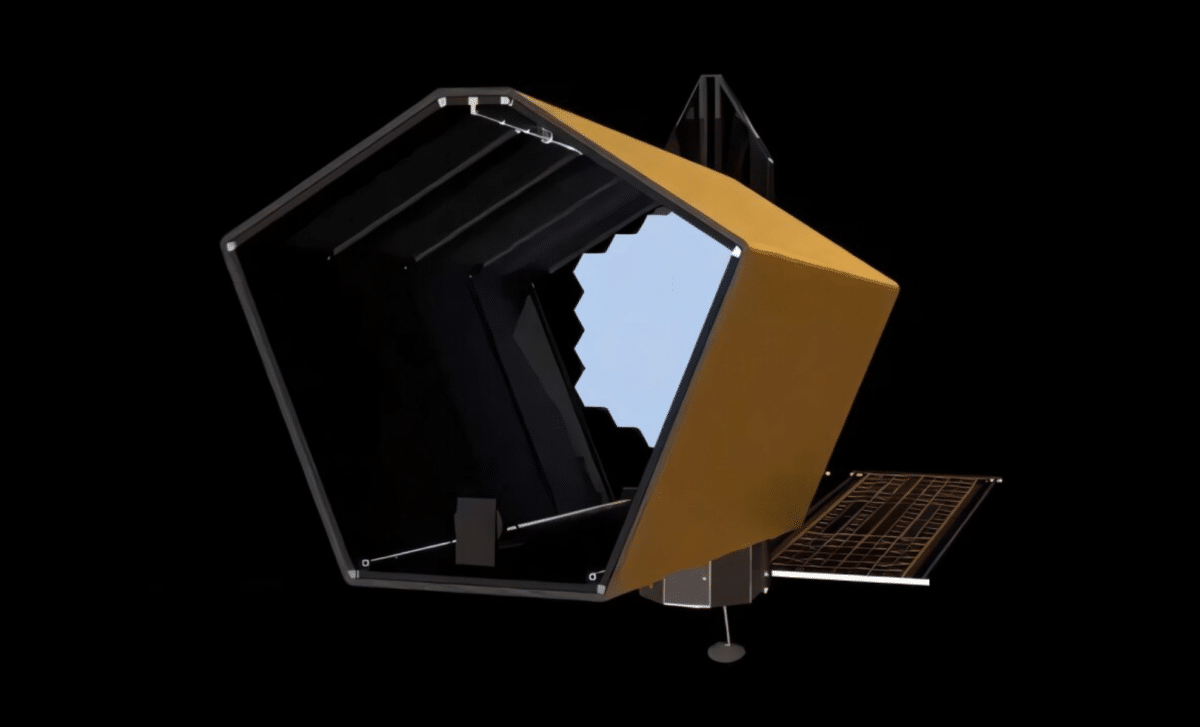
Discovering an Earth-like planet hinges not only on spotting the planets themselves but also on comprehending the stars they orbit. A recently released study on arXiv introduces a vast compilation of data detailing stellar rotation and activity. This catalog is designed to aid astronomers in selecting ideal targets for NASA’s upcoming Habitable Worlds Observatory (HWO), a flagship mission targeting direct imaging of potentially habitable Earth-sized exoplanets slated for launch in the 2040s. This resource promises to streamline star selection by minimizing uncertainties affecting future observations.
The Increasing Importance of Stellar Behavior
Locating an Earth-sized planet within the habitable zone surrounding a star is just the initial step. However, the characteristics of the host star profoundly impact both conditions on the planet and the ability of telescopes to analyze it. Phenomena such as stellar flares, magnetic fluctuations, starspots, and rotational variations can alter the starlight captured by instruments, producing signals that can mask or mimic planetary features. As the community prepares for the Habitable Worlds Observatory, prioritizing stars with well-characterized activity has become crucial. An international team addressed this by compiling decades of existing observations tracking magnetic behavior and rotation in stars nearby.
The outcome is a detailed Activity and Rotation Catalog (ARC) aimed at pinpointing the most suitable stellar candidates for forthcoming direct imaging missions. Available on arXiv, this effort consolidates stellar behavior data into a usable format for exoplanet research. The catalog shifts focus from planets alone to highlight the critical role of understanding the host stars to accurately interpret future data.

Preparing Target Lists for NASA’s Habitable Worlds Observatory
As noted by Universe Today, the Habitable Worlds Observatory represents one of NASA’s most ambitious efforts to directly capture images of Earth-sized planets within habitable zones of nearby stars. With a launch anticipated in the 2040s, astronomers are laying the scientific foundation for target selection well in advance. The newly compiled Activity and Rotation Catalog fulfills this by integrating data from multiple past studies into a cohesive database.
The team discovered that around 70% of the stars that could serve as HWO targets already have some form of measurement describing their stellar or magnetic activity. However, when considering long-duration magnetic cycles akin to the Sun’s 11-year cycle, only about 20% of these stars have been observed consistently enough to understand such variations. This represents a significant opportunity to extend monitoring campaigns, as long-term stellar fluctuations can alter the interpretation of planetary signals over decades. By identifying these data gaps, the catalog directs future observational efforts ahead of the observatory's deployment.
The Critical Role of Long-Term Stellar Cycles in Future Discoveries
This study underscores a frequently underestimated obstacle in identifying habitable worlds: the intrinsic variability of stars. From rapid fluctuations to changes unfolding over decades, stellar activity influences luminosity, magnetic fields, and radiation output, all of which shape planetary environments. These changes also complicate direct imaging and spectral analyses that astronomers rely on to characterize exoplanet atmospheres. The scientists articulate this challenge as follows:
“Understanding and constraining stellar magnetic activity is important for interpreting observed planetary atmospheres with future direct imaging missions, such as the HWO. Stellar activity can mimic or hide planetary signatures, and can affect our ability to interpret spectra that includes contributions from both the star and the planet. In this work, we aimed to assess our current understanding of stellar activity and rotation in preparation for HWO and other future direct imaging missions.”
This explanation highlights why stellar physics is inseparable from the study of exoplanets. Distinguishing atmospheric details of distant worlds requires disentangling them from the variable signals of their stars, emphasizing the necessity of comprehensive stellar monitoring.
Laying the Groundwork for Next-Gen Exoplanet Exploration
The introduction of the catalog coincides with ongoing discussions about the scientific instruments aboard the Habitable Worlds Observatory. For instance, scientists are debating whether to equip the observatory with a high-resolution spectrograph to deepen atmospheric analysis, while other research advocates greater use of astrometry for precise planetary mass measurements beyond traditional radial velocity methods. These conversations reveal that careful planning around instrumentation, target prioritization, and observation techniques will critically shape the mission’s success in detecting habitable planets. The Activity and Rotation Catalog is a vital tool that helps astronomers separate authentic planetary signals from stellar noise, raising the prospects of discovering Earth-like worlds around nearby stars in the decades ahead.
- Categories:
- Astronomy










0 comments
Sign in to Comment