
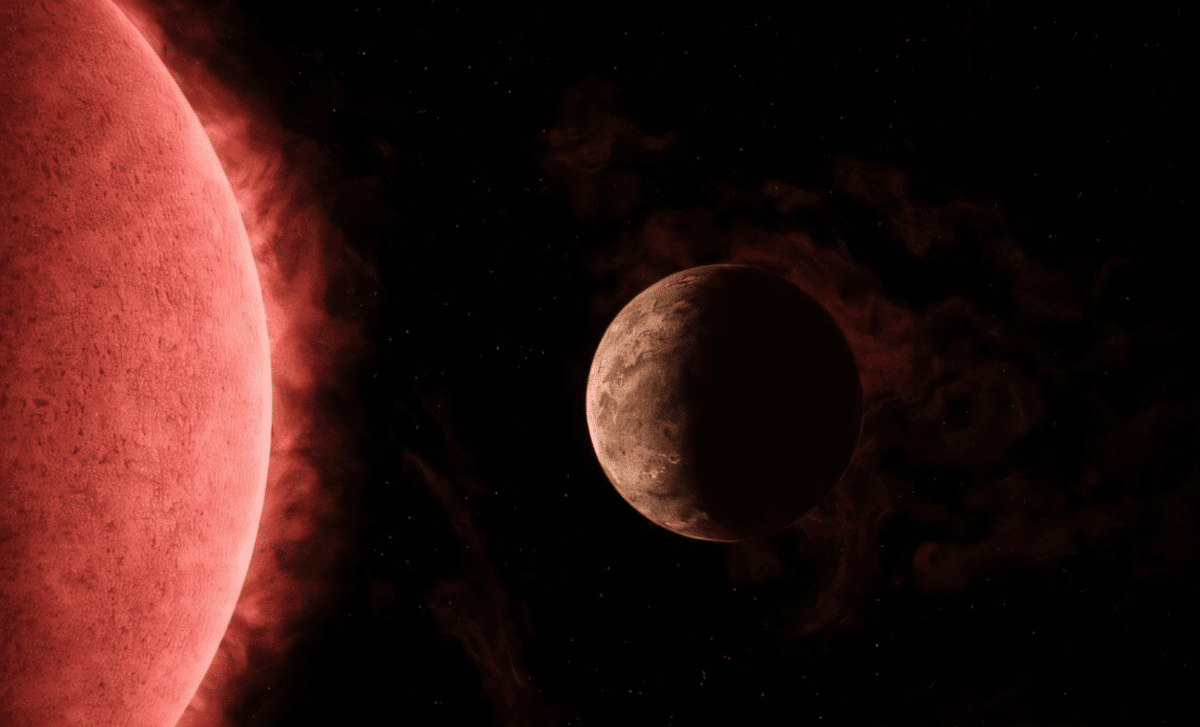
A pioneering mission led by Canadian researchers is set to transform the search for habitable exoplanets by concentrating on the galaxy's faintest and smallest stars. The POET (Photometric Observations of Exoplanet Transits) initiative, detailed in a recent publication on ArXiv, is designed to identify Earth-sized planets orbiting ultracool dwarf stars, unlocking new possibilities in the quest for extraterrestrial environments.
Targeting Tiny Stars with Huge Discovery Potential
The concept behind POET is elegantly straightforward: smaller stars make the detection of smaller orbiting planets clearer. Ultracool dwarfs—including K-type, M-type, and brown dwarfs—are considerably smaller than the Sun, often just a tenth of its diameter. This size contrast means that a planet passing in front of these stars causes a more pronounced brightness dip, making detection easier.
While the transit technique has uncovered thousands of exoplanets, focusing on these dim stars could extend detection capabilities significantly. POET aims to spot planets between 1 and 2.5 Earth radii, many in orbits conducive to liquid water. The mission prioritizes refining observation conditions over simply increasing telescope size, reflecting a shift in detecting terrestrial planets.

Using simulations, the team refined an initial list of over 7,200 potential stars down to roughly 3,000 suitable candidates within about 100 parsecs (326 light-years). From these, a curated group of 100 to 300 stars would be monitored over a year, maximizing scientific output and maintaining focus on the most promising targets.
Continuing Canada’s Legacy in Microsatellite Astronomy
As reported by Universe Today, the POET project builds upon Canada’s achievements with earlier microsatellites like MOST (2003) and NEOSSat (2013). These missions illustrated how compact, affordable satellites could yield significant scientific discoveries. MOST notably uncovered the unusually dark atmosphere of a hot Jupiter orbiting HD 209458, while NEOSSat contributed to tracking near-Earth objects and space debris.
In contrast to its predecessors, POET offers advanced features such as a 20-centimeter aperture that enhances light collection and multi-wavelength observation across near-ultraviolet, visible, near-infrared, and short-wave infrared bands. These improvements allow for finer detection of subtle stellar brightness changes essential for finding Earth-like exoplanets.
The study on ArXiv details how the upgraded technologies will enable POET to surpass earlier efforts in both sensitivity and flexibility, marking it as a vital tool in the future of exoplanet exploration.
Advancing Atmospheric Studies and Search for Life Signs
A key advantage of the POET mission lies beyond discovery—atmospheric examination. Earth-sized worlds around ultracool dwarfs tend to orbit quickly, enabling frequent transits and numerous observation opportunities.
The research emphasizes the mission’s greater significance with this statement:
“Newly-discovered Earth-sized planets around the nearest ultracool dwarfs would be excellent targets for atmospheric characterization. With orbital periods <7 days, these are likely to be in the habitable zones of their ultracool host stars. They would automatically become top-priority targets for biosignature gas searches with the Webb Space Telescope, or with the Habitable World Observatory further in the future. Hence, POET could deliver some of the most promising Earth analogues for the search for extrasolar life.”
This connection to powerful space observatories like the James Webb Space Telescope and the upcoming Habitable Worlds Observatory highlights POET’s strategic role. Instead of operating solo, the mission will contribute to a collaborative space science network by providing high-quality candidate planets for atmospheric and biosignature studies.
Why Searching Ultracool Dwarfs Matters for Finding Life
For a long time, ultracool dwarfs were not a main focus due to observational difficulties and doubts about their habitability. New findings now indicate they may host numerous undiscovered planets. Their dimmer output pushes habitable zones closer to the star, increasing chances to catch transit events and making these stars ideal survey targets.
The POET mission embodies a broader shift in exoplanet research—looking beyond solar analogues to environments unlike our own. By incorporating these smaller, cooler stars, astronomers widen the search scope for worlds that might harbor life.
Should it succeed, POET will identify nearby Earth-like planets amenable to detailed atmospheric studies, potentially revealing chemical signs of biological activity and advancing humanity’s search for life beyond Earth.
- Categories:
- Astronomy







0 comments
Sign in to Comment