
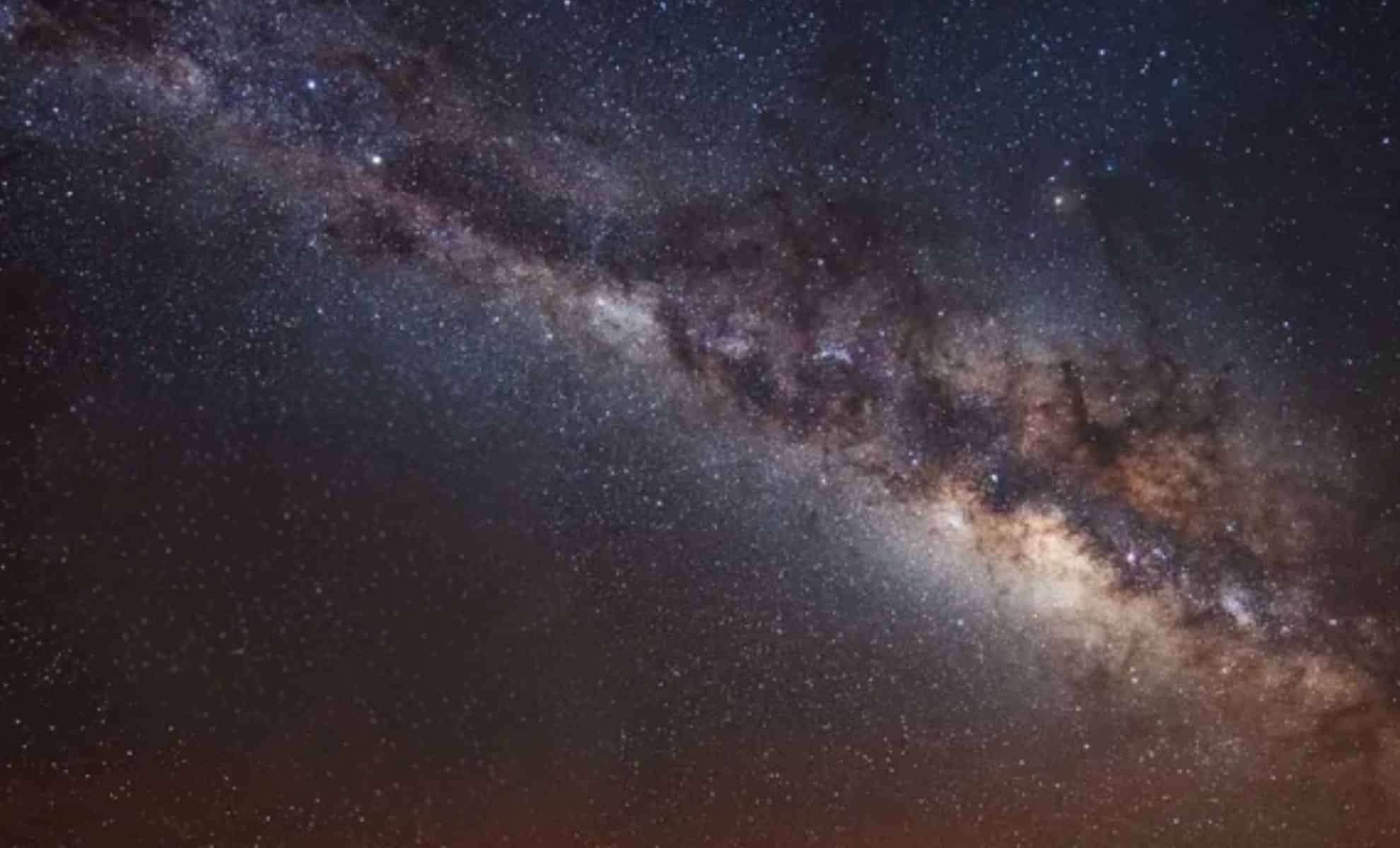
Astronomers have made a landmark finding by identifying a seldom-seen exoplanet located near the outer limits of our galaxy. This discovery hinged on the principles of Einstein’s general relativity. The planet, designated AT2021uey b, was detected through gravitational microlensing—a process where the gravity from a massive body like a planet bends and amplifies the light of a background star. Documented in Astronomy & Astrophysics in May 2025, this milestone represents a major advance in probing distant planetary systems beyond the reach of traditional detection techniques. The exoplanet lies about 3,200 light-years away, orbiting a faint, low-mass star.
Discovering a Gas Giant on the Milky Way’s Outskirts
Located at the far edge of our galaxy, AT2021uey b is especially noteworthy. It is a gas giant comparable in size to Jupiter and stands as the third planet identified in this remote galactic zone. This region has comparatively few heavy elements, which were long believed vital for planet creation. This finding challenges that assumption, indicating planet formation may occur in environments previously deemed unlikely. Such insights can reshape existing theories about how planetary systems develop across different galactic locales.
Orbiting an M dwarf star—a small and cooler type of star—AT2021uey b completes one revolution every 4,170 days, roughly 11 Earth years. The host star has about half the Sun’s temperature, producing much less light than our star. This discovery disputes conventional views about gas giants forming mainly near bright, massive stars, expanding the possibilities for where planets might form and thrive in the cosmos.

Gravitational Microlensing: A Key Technique for Finding Hidden Exoplanets
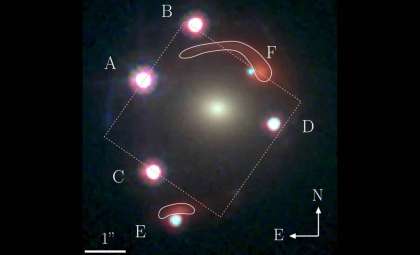
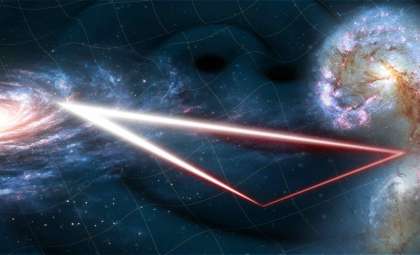
The uniqueness of this discovery largely stems from the detection method: gravitational microlensing. This technique captures fleeting brightness boosts when the gravity of an intervening planet curves space-time, enhancing the light from a distant star. The Gaia space observatory first recorded this event in 2021, when the planet’s presence briefly intensified the star’s brightness.
Rooted in Einstein’s theory of general relativity, which depicts gravity as the distortion of space-time by mass and energy, this method reveals planets invisible through other approaches by observing their gravitational influence on passing light. Despite its power, gravitational microlensing is rarely used since such perfect alignments between stars and lensing objects are infrequent, and resultant brightening events are fleeting.
“Detecting these events demands a blend of expertise, patience, and a bit of luck,” said co-author Marius Maskoliūnas of Vilnius University in Lithuania. “You must monitor vast quantities of data while waiting for the rare moments when the source star and lens align exactly. Ninety percent of stars vary in brightness for other reasons, so only a tiny fraction produce the microlensing signal.”
Expanding Our Understanding of How Planets Form
The existence of AT2021uey b compels scientists to reconsider prevalent models of planetary formation. Traditionally, gas giants like Jupiter were believed to emerge closer to their stars under warmer, gas-rich conditions. However, Edita Stonkutė, leader of this microlensing investigation, highlighted a broader perspective:
“The initial discovery of a gas giant orbiting close to a sun-like star surprised astronomers,” she remarked. “As more data came in, we realized many planetary systems differ drastically from our own, prompting shifts in planetary formation theories multiple times.”
This discovery hints that the processes forming gas giants can unfold in diverse settings unlike those in the solar system, opening new pathways to study the varied architectures of planetary systems throughout the galaxy.
- Categories:
- News





0 comments
Sign in to Comment